5 Fast Fixes to Stop a Towel Slipping on Your Yoga Mat
Reposition your towel so it covers your real pressure points, switch to a quick-dry or silicone-backed towel, and anchor the corners under your mat or with a strap. Most slipping comes down to two fixable problems: a towel that was never positioned to hold your hands and feet, and a towel that is past its saturation point. Fix placement and swap towels before they soak through, and the slipping mostly stops.
TL;DR:
- For vinyasa or power classes, fold a towel under your palms; hot yoga needs full length coverage beneath both hands and feet.
- Anchor all four towel corners under the mat, or use corner straps; a thin rug underlay adds friction when the towel still creeps.
- Replace a towel when it feels heavy or your hands start sliding, since a soaked towel turns slick; keep a dry backup nearby.
- Quick dry microfiber stays grippier than cotton when damp, while silicone backing anchors the towel but adds bulk and cannot prevent eventual saturation.
- Wipe mats after sessions and clean them every one to two weeks with mild soap; avoid harsh cleaners that can strip surface texture.
Table of Contents
- Fast Fixes to Stop a Towel Slipping Mid-Class
- Which Towel Materials Actually Grip Better
- How to Clean Mats and Towels to Restore Grip
- DIY Hacks When You Don’t Have a Specialty Towel
- Why Product Choice and Testing Matter for Grip
- What to Look for in a Slip-Resistant Towel or Mat
- What Actually Works Once You Strip Away the Marketing
- Towels and Mats Built to Handle a Sweaty Practice
- FAQ
- Sources
Fast Fixes to Stop a Towel Slipping Mid-Class
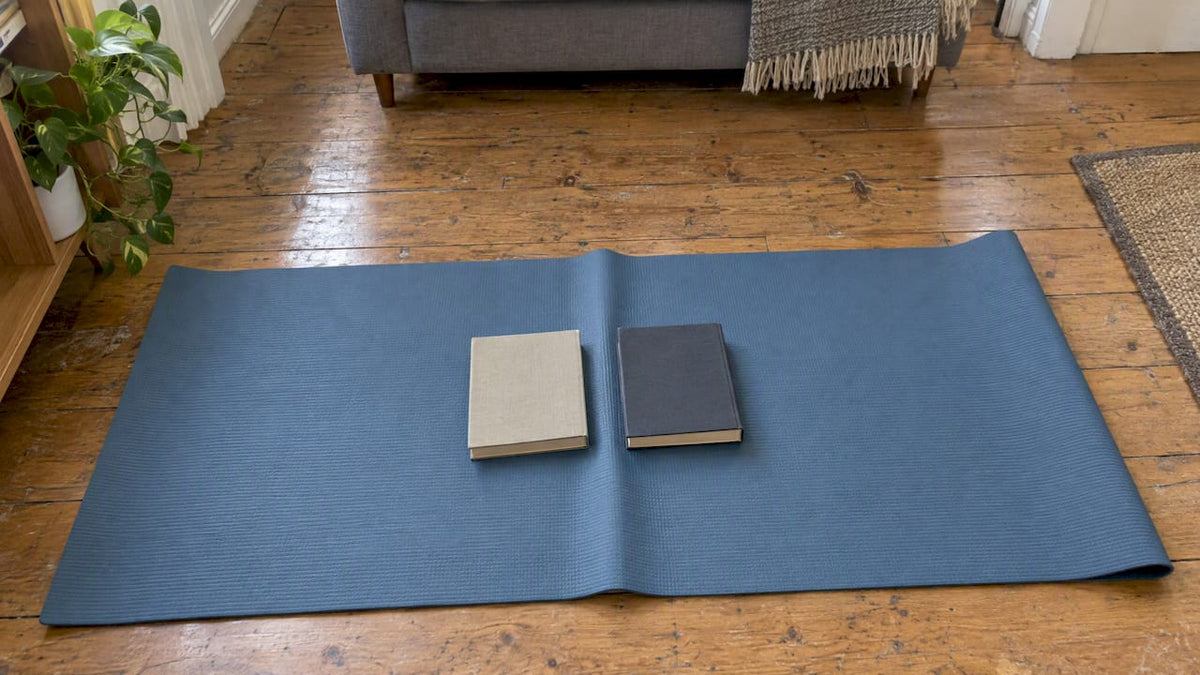
The fix depends on what kind of class you are in and where your sweat pools. For vinyasa or power classes, a top-of-mat towel folded under your palms handles most of the slide. For hot yoga, you want a full-length towel since sweat pools under your feet as much as your hands.
Try these in order when a towel starts creeping during practice:
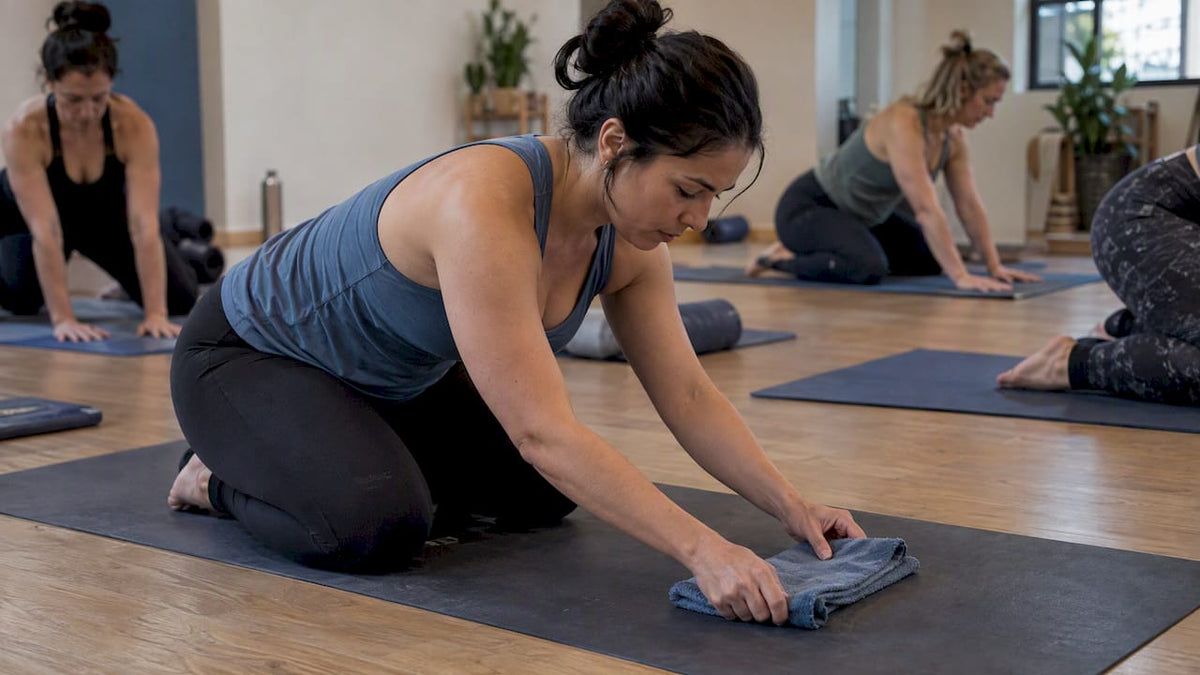
- Fold an extra layer under your forefeet and palms, since doubled fabric grips better than a single flat sheet.
- Tuck all four corners firmly under the mat edges before you start, not just the top two.
- Add a thin non-slip rug underlay strip between towel and mat for extra friction.
- Use Velcro or elastic corner straps if your towel has loops or tabs built in.
- Keep a dry backup towel at the edge of your mat and swap it in once the first one feels heavy.
A light silicone-grip spray can help in a pinch, but test it on a small corner first since some sprays leave a residue that attracts dust over time.
Swapping towels matters more than most people realize. Towels hit a saturation ceiling once they are fully soaked, and a waterlogged towel turns slicker than a dry one. If you notice your hands sliding again after 20 minutes of hard flow, that is usually the towel, not your form. Community discussions about sweat and slipping consistently point to folding small towels under the palms and swapping towels mid-class as reliable, no-cost fixes that work as well as buying new gear.
Pro Tip: Keep a second, dry hand towel folded in your bag during hot yoga. Swapping it in the moment your grip towel feels damp through saves the rest of your practice.
Which Towel Materials Actually Grip Better
Plain cotton towels absorb sweat but offer almost nothing in the way of grip once they’re damp. Microfiber quick-dry towels perform better because the fabric wicks moisture away from the surface instead of letting it pool, which keeps the texture rougher and grippier for longer. Towels with a silicone-dot or rubberized backing go a step further: the backing grips the mat itself, so the towel stays put even when the top layer is soaked.
There are trade-offs. Silicone-backed towels tend to be heavier and bulkier to pack for travel, and some practitioners find the backing slightly less comfortable under bare skin than plain microfiber. Every fabric, backed or not, eventually hits a saturation point during a long hot class. The backing buys you time against slipping, but it does not make a towel waterproof.
When shopping, check product descriptions for:
- Backing type (silicone dots, rubberized grid, or none).
- Corner tabs or loops for anchoring to mat straps.
- Full-body size versus hand-towel size for your typical class length.
- Explicit quick-dry or moisture-wicking claims in the material description.
A firsthand review of a popular skid-resistant yoga towel reported a large improvement in grip compared with a standard towel, which lines up with what the fabric science suggests: texture and backing matter more than thickness alone. Our guide to hot yoga towels walks through sizing and backing choices in more detail.
How to Clean Mats and Towels to Restore Grip
A mat that feels slick is often dirty, not defective. Oils, dead skin, and dried sweat build up on the surface and fill in the texture that gives rubber and foam their tack. Restoring grip usually just means getting that film off without damaging the material.
Safe routines that work across most mat and towel materials:
- Spot-clean with a damp cloth and a small amount of mild soap after sweaty sessions.
- Mist lightly with a diluted vinegar and water solution for a deeper clean, then wipe dry.
- Air-dry mats flat or hung, never folded while damp, to avoid trapping moisture in creases.
- Wash microfiber towels on a gentle cycle and skip fabric softener, which coats fibers and reduces grip.
Avoid harsh detergents, and avoid soaking or machine-washing mats that aren’t labeled for it. Vendor care guidance for rubber mats warns that aggressive cleaning methods can strip the surface texture that creates tack in the first place.
Community troubleshooting threads about ungrippy mats report that a simple spritz of water followed by a wipe and firm press on the surface often restores tack between full cleanings, as noted in Ask MetaFilter discussions on grippy mats. For most home practice, a quick wipe-down after every session plus a deeper clean every one to two weeks keeps both mat and towel performing.
DIY Hacks When You Don’t Have a Specialty Towel
You don’t need to buy new gear to solve slipping tonight. A slightly dampened microfiber towel grips better during light sweating, while a bone-dry cotton towel works fine for gentler practices where moisture stays minimal. Save full dampening for towels designed to activate with water.
Try these before reaching for your wallet:
- Cut a strip of non-slip rug underlay to your mat’s width and lay it beneath the towel for instant extra grip.
- Fold the towel’s leading edge under itself and tuck it beneath the mat’s top edge so it can’t creep forward during sun salutations.
- Thread a spare yoga strap under the mat’s front edge and loop it over the towel corners to hold everything in place.
- Lightly mist a plain towel with water before class if it tends to stay dry and slide, since forum advice on hand slipping in downward dog notes that slight dampening activates grip in some microfiber fabrics.
Skip anything permanent. Spray adhesives, tape residue, and strong chemical treatments can void a mat’s warranty and degrade the surface faster than the sweat ever would.
Why Product Choice and Testing Matter for Grip
We pair towels and mats based on how they actually behave together during practice, not just how they look on a shelf. A towel that grips beautifully on one mat surface can slide on another, so matching backing type to mat material matters as much as the towel alone.
Our product pages and blog content focus on that pairing problem directly: which towel backing works with which mat surface, how sizing affects coverage during longer hot classes, and when a bundle makes more sense than buying pieces separately. We also publish maintenance guidance alongside product listings so the gear keeps performing instead of degrading after a few sweaty months.
For readers who want the fuller breakdown, our guide to overcoming a slippery mat and our roundup of hot yoga towel picks go deeper into specific backing types, sizing, and care schedules than we can cover in a single section here.
What to Look for in a Slip-Resistant Towel or Mat
Not every towel marketed as “non-slip” earns the label once sweat actually hits it. The features that matter most are a silicone-dot or rubberized backing that grips the mat surface directly, corner tabs or loops that let you anchor the towel physically, and a quick-dry microfiber weave that resists the saturation ceiling longer than plain cotton.
Full-length towels designed specifically for hot yoga tend to outperform generic gym towels because they’re cut to cover both hand and foot zones without bunching. A towel with reinforced backing stays anchored even as the surface layer gets damp, which is the main failure point for plain cotton. If you practice hot yoga regularly, prioritize backing type and corner anchoring over softness or color. Those two features are the ones doing the actual work when a class gets sweaty, and they are also the easiest to check from a product description before you buy. A mat with strong native texture and a slightly tacky natural rubber surface also reduces how much the towel problem even comes up, since less of the slide starts at the mat level in the first place.

What Actually Works Once You Strip Away the Marketing
Most advice about towel slipping treats it as a shopping problem first, but if you want to choose between styles like Yin or restorative for your practice, Alege azi: Yin sau restorative, mobilitate sau reset nervos la Zodia Craiului can help clarify what suits your needs best. It isn’t. The cheapest, fastest fix is behavioral: fold the towel correctly, tuck the corners, and swap it out before it saturates. People skip this because it takes attention mid-class, and attention is exactly what’s in short supply during a tough flow.
The overrated fix is a silicone spray or grip product applied as a one-time solution. It helps for a session or two, then residue builds up and performance gets inconsistent. The underrated fix is simply owning two towels instead of one and rotating them, which solves the saturation problem completely without buying anything exotic.
If you only do one thing differently, prioritize the swap-before-soaked habit over any product upgrade. Good gear helps, but it buys you time against physics. It doesn’t suspend it.
— Nicholas
Towels and Mats Built to Handle a Sweaty Practice
We carry quick-dry, non-slip Jagger towels with microfiber construction built for hot yoga, along with the Cassady towel for practitioners who prefer a different size or weave. Both are designed around the backing and drying features that actually reduce slipping instead of just looking grippy on a shelf.
If the mat itself is the real problem, our 6mm non-slip eco mat gives you a tackier natural surface to begin with, so the towel has less work to do. Between towels, mats, and accessories, our full collection covers the pairing from both ends:
- Quick-dry, silicone-backed towels for hot and sweaty classes.
- Eco-friendly non-slip mats with natural grip built into the surface.
- Straps and accessories for anchoring towels securely during practice.
Browse the full lineup at Yune Yoga to find a pairing that fits your practice.
FAQ
What is a mat grip towel?
A mat grip towel is a yoga towel designed to lie over your mat and absorb sweat while staying in place, usually through a textured or microfiber surface and sometimes a silicone-dot backing. It’s meant to replace or reinforce your mat’s natural grip once sweat builds up during practice.
How can I prevent my yoga mat from slipping?
Clean the mat surface regularly to remove oils and sweat residue, since buildup is a common cause of lost tack, as troubleshooting discussions on ungrippy mats point out. Pairing a clean mat with a quick-dry towel that’s anchored at the corners handles most remaining slip.
How can I make my yoga mat grippy again?
Spot-clean with a damp cloth and mild soap, or mist lightly with a diluted vinegar solution, then let the mat air-dry completely before your next session. Avoid harsh detergents or soaking, since vendor care documentation warns these can strip the texture that creates grip.
Why do people put a towel on their yoga mat?
A towel absorbs sweat so it doesn’t pool on the mat surface and create a slippery film, which matters most in hot yoga or any class with heavy sweating. It also gives hands and feet a dedicated, washable layer that’s easier to maintain than cleaning the mat after every session.
Sources
- I tried the cult-favorite yoga towel with “skid-less technology” that keeps you from sliding off my mat — and it made a huge difference for me
- Beginner - sweat, slipping in poses
- Yoga mat is not grippy - yogamat exercisemat sticky