

Master the Cat/Cow Yoga Pose: A Step-by-Step Guide for Beginners
Ever feel a bit stiff after sitting for too long? Or maybe you just want to add a simple, effective movement to your day? The cat/cow yoga pose is a fantastic option. It's super basic, which is why it's great for beginners, but it does a lot for your body. Think of it as a gentle wake-up call for your spine. We'll walk through exactly how to do it and why it's so good for you.
Key Takeaways
- The cat/cow yoga pose involves two simple, flowing movements that are great for beginners.
- It helps make your spine more flexible and can relieve tension in your back and neck.
- This pose also strengthens your wrists and core muscles.
- Practicing cat/cow can help improve your posture and body awareness.
- You can easily fit the cat/cow yoga pose into your routine as a warm-up, cool-down, or for daily practice.
Understanding The Cat/Cow Yoga Pose
What Is The Cat/Cow Yoga Pose?
The Cat/Cow yoga pose, often practiced as a pair, is a gentle, flowing movement that's a staple in many yoga classes, especially for beginners. It involves alternating between two poses: Cow Pose (Bitilasana) and Cat Pose (Marjariasana). This dynamic sequence is designed to warm up the spine and improve its flexibility. It's a fantastic way to connect your breath with movement, making it accessible and beneficial for almost everyone. You'll typically start on your hands and knees, creating a tabletop position, and then move through the arching and rounding of your spine with each breath.
Sanskrit Names For Cat And Cow Poses
In Sanskrit, the language of ancient India where yoga originated, these poses have specific names. Cow Pose is known as Bitilasana (pronounced bit-ill-AH-sun-uh), derived from 'Bitila' meaning cow. Cat Pose is called Marjariasana (pronounced mar-jar-YAH-sun-uh), from 'Marjari' meaning cat. Practicing them together, they are often referred to as Marjariasana-Bitilasana.
Ease Of Practice For Beginners
One of the best things about the Cat/Cow sequence is how easy it is to get started with. It doesn't require a lot of strength or flexibility right off the bat. You're essentially on your hands and knees, which is a stable and familiar position for most people. The movements themselves are simple: arching your back up towards the ceiling and then letting your belly drop towards the floor. This makes it a perfect pose to begin your yoga journey with, helping you to become more aware of your body and your breath without feeling overwhelmed. It’s a great way to gently wake up your body, especially if you've been sitting for a long time.
This pose is like a gentle massage for your spine. It helps to wake up all the little muscles and joints that might have gotten stiff from daily life. By moving with your breath, you're not just stretching; you're also calming your mind and getting rid of some of that everyday tension.
Key Benefits Of The Cat/Cow Yoga Pose
This simple yet effective yoga pose offers a surprising number of advantages, especially for those new to the practice. It's not just about moving your spine; it's a full-body tune-up that can make a real difference in how you feel day-to-day.
Spinal Flexibility And Tension Relief
One of the most noticeable benefits of Cat/Cow is how it helps loosen up your spine. By moving through the arching (Cow) and rounding (Cat) motions, you're essentially giving your vertebrae a gentle massage. This movement helps to increase the range of motion in your spine, which can be a lifesaver if you spend a lot of time sitting or hunched over a desk. It's a fantastic way to combat that stiff, achy feeling that can creep into your neck and back.
Strengthening Wrists And Core
While it might not feel like a strenuous workout, Cat/Cow does engage your muscles. Your wrists are bearing weight, which helps to build strength and stability in that joint. Plus, as you move between the poses, you're encouraged to draw your belly button towards your spine, giving your core muscles a gentle workout. This core engagement is key for supporting good posture.
Stimulating Internal Organs
The gentle compression and expansion of your abdomen during the Cat/Cow flow can help to stimulate your internal organs. Think of it as a mild internal massage that can aid digestion and circulation. It's a subtle benefit, but one that contributes to overall well-being.
Enhancing Overall Well-Being
Beyond the physical, Cat/Cow is a great way to connect with your breath and become more aware of your body. The rhythmic movement paired with mindful breathing has a calming effect, helping to reduce stress and quiet a busy mind. It's a practice that brings you back to the present moment, leaving you feeling more centered and refreshed.
This pose is a wonderful starting point for anyone looking to improve their physical comfort and mental clarity. Its accessibility means almost anyone can give it a try and start reaping the rewards.
Preparing For Your Cat/Cow Yoga Pose Practice
Before you dive into the Cat/Cow pose, it’s a good idea to get your body ready. Think of it like stretching before a workout – it just makes everything feel better and safer.
Gentle Preparatory Movements
Let's start with some simple movements to wake up your spine and joints. You can do these while still seated or standing.
- Wrist Circles: Gently rotate your wrists in both directions. This helps warm up those important joints that will be bearing some weight.
- Shoulder Rolls: Roll your shoulders forward a few times, then backward. This loosens up your upper back and neck.
- Neck Tilts: Slowly tilt your head from side to side, bringing your ear towards your shoulder. Be gentle here, no need to force it.
Importance Of Wrist Joint Health
Your wrists are going to be pretty busy in the tabletop position, so giving them some attention beforehand is smart. If you’ve ever had wrist pain or just feel a bit stiff, these little warm-ups can make a big difference. Taking a moment to prepare your wrists can prevent discomfort later on. Sometimes, just being aware of how your wrists feel is half the battle.
Seated Torso Rotations
This is another great way to get your spine moving before you get on your hands and knees. Sit comfortably, either cross-legged on the floor or on a chair with your feet flat. Place your hands on your knees.
- Inhale and lengthen your spine.
- As you exhale, gently twist your torso to the right, keeping your hips stable. You can place your left hand on your right knee and your right hand behind you for a gentle assist.
- Inhale back to center.
- Exhale and twist to the left.
- Repeat this a few times, moving with your breath. This helps to warm up the muscles along your spine and prepares them for the Cat/Cow movement.
Step-By-Step Instructions For Cat/Cow Yoga Pose
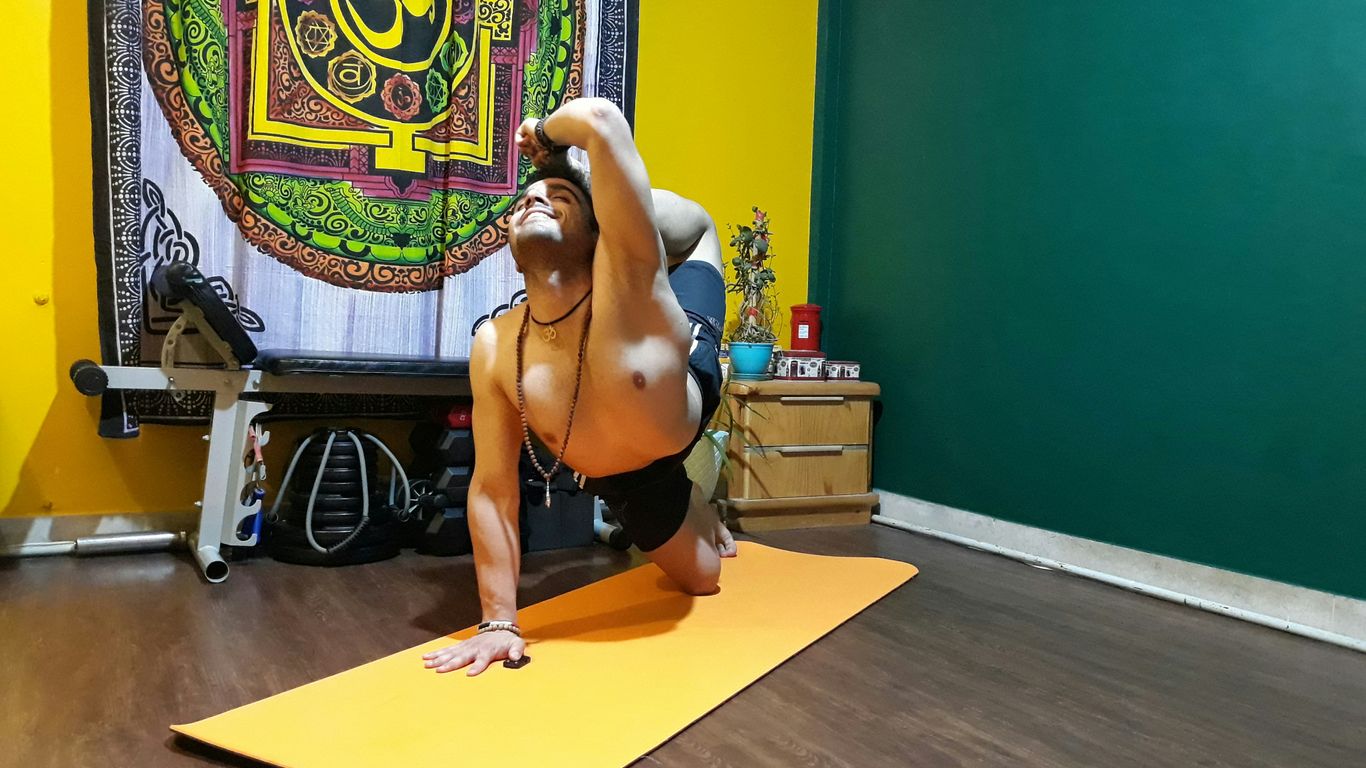
Getting into the Cat/Cow pose is pretty straightforward, and it's a great way to get your spine moving. You'll want to start on your hands and knees, which is often called the tabletop position. It’s like you’re getting ready to crawl, but with a bit more intention.
Establishing The Tabletop Position
First things first, find a comfortable spot on your mat. Come down onto your hands and knees. Make sure your hands are directly under your shoulders, and your knees are right under your hips. Your fingers should be spread wide, pressing into the mat. Your shins and the tops of your feet should be flat on the floor. This alignment is key to supporting your wrists and spine. It's a good idea to have your knees about hip-width apart. Take a moment here to feel grounded. You can gently look forward, keeping your neck in a neutral position. Take a deep breath in and let it out.
Moving Into Cow Pose
Now, as you inhale, begin to let your belly drop towards the mat. As your belly sinks, gently lift your chin and chest towards the ceiling. Arch your back, but don't force it. Think about tilting your tailbone up towards the sky. This is Cow Pose. You should feel a nice stretch along the front of your torso. Hold this for a breath or two, really feeling the expansion.
Transitioning To Cat Pose
When you're ready, exhale and start to round your spine upwards towards the ceiling. Tuck your chin towards your chest, drawing your navel in towards your spine. Imagine you're an angry cat stretching its back. Your shoulder blades should spread apart. This is Cat Pose. Feel the stretch along your back and the engagement in your core. Hold this for a breath.
Completing The Cycle
Continue to flow between Cow Pose on the inhale and Cat Pose on the exhale. Aim for about five to six rounds, or as many as feels good for your body. The movement should be smooth and connected to your breath. You're essentially creating a gentle wave through your spine. After your last round, gently return to the neutral tabletop position. You can rest here for a moment before moving on to your next pose or activity. This simple flow is a fantastic way to prepare your body for deeper yoga stretches.
Here's a quick recap:
- Tabletop: Hands under shoulders, knees under hips.
- Cow Pose (Inhale): Belly drops, back arches, chin lifts.
- Cat Pose (Exhale): Spine rounds up, chin tucks, navel draws in.
Remember, the goal isn't to force extreme positions. It's about moving with your breath and paying attention to what your body needs. If you feel any discomfort, especially in your wrists or knees, don't hesitate to modify the pose. You can always place a folded blanket under your knees for extra padding or try resting on your forearms if your wrists are sensitive.
Tips For Proper Form And Alignment
Getting the Cat/Cow pose right is all about paying attention to the little things. It might seem simple, but a few key adjustments can make a big difference in how it feels and what you get out of it. Let's break down how to really nail the alignment.
Aligning Hands and Knees
First off, let's talk about where you place your hands and knees. You want your hands to be directly under your shoulders. Think of it like stacking blocks – your wrists, elbows, and shoulders should form a straight line. This setup gives you a stable base and helps protect your wrists from too much pressure. Your knees should be about hip-width apart, directly under your hips. This creates a nice, even tabletop shape. It's easy to let your knees drift too wide or too close together, but keeping them at hip-width helps keep your pelvis stable.
Engaging Your Core
This is a big one. Even though you're on your hands and knees, your core muscles are working hard. Try to gently pull your belly button towards your spine. You don't need to suck it in super tight, just a gentle engagement. This helps support your lower back, especially when you're arching your back in Cow pose. It also prevents you from just dumping all your weight into your lower spine. Keeping that core connection makes the movement much more controlled and beneficial.
Mindful Breath Synchronization
This is where the magic happens. Cat/Cow isn't just about moving your body; it's about moving with your breath. As you inhale, gently arch your back, let your belly drop, and lift your gaze slightly for Cow pose. Then, as you exhale, round your spine towards the ceiling, tuck your chin to your chest, and let your head hang heavy for Cat pose. The breath should lead the movement, not the other way around. Try to make the inhale and exhale smooth and even, guiding you through each pose. This connection helps calm your mind and makes the practice feel more fluid. You can find more on coordinating breath and movement in yoga here.
Listening To Your Body
This might be the most important tip of all. Yoga is not about pushing yourself into a shape that doesn't feel right. If you feel any pinching or sharp pain, especially in your wrists or lower back, ease up. Maybe you need to bring your hands a little further forward, or perhaps you need to round your spine a bit less in Cat pose. If your wrists are bothering you, try making fists and resting on your knuckles, or place a folded blanket under your palms for some cushioning. For your knees, a folded blanket can also provide extra padding. Always honor your body's signals and adjust as needed. It's better to do a modified pose with good alignment than a full pose with strain.
Modifications And Variations For Cat/Cow Yoga Pose
Cat/Cow is pretty accessible as it is, but sometimes you need to tweak it a bit. Maybe your wrists are feeling a little sensitive, or perhaps your knees need some extra padding. That's totally fine! The beauty of yoga is its adaptability. We can adjust the pose to fit our bodies, not the other way around.
Modifications For Comfort
If you find that placing weight on your hands and wrists is uncomfortable, there are a few ways to make it easier. You can try placing your forearms on the floor instead of your hands. This takes some pressure off the wrists. Another common tip is to fold up a blanket or a thicker mat and place it under your knees. This provides a bit more cushioning, especially if you're practicing on a hard floor. For those who might have issues with balance or find the tabletop position challenging, using fists instead of flat palms can offer a different kind of support.
Here's a quick look at some common modifications:
- Wrist Sensitivity: Rest on forearms or use fists for support.
- Knee Discomfort: Place a folded blanket or mat under your knees.
- Balance Issues: Experiment with fist placement for a more stable base.
Seated Cat/Cow Variation
Don't have a yoga mat handy, or maybe you prefer to practice seated? No problem! You can do a version of Cat/Cow right from a chair. Sit tall with your feet flat on the floor. Place your hands on your knees. As you inhale, arch your back, drop your belly, and lift your gaze (Cow Pose). As you exhale, round your spine, tuck your chin to your chest, and draw your navel in (Cat Pose). This seated variation still works wonders for spinal mobility and is a great option for a quick stretch at your desk or anywhere you can find a seat. It's a fantastic way to keep your spine moving throughout the day, even when you're not on the mat.
Increasing The Challenge
Once you're comfortable with the basic Cat/Cow, you might want to explore ways to deepen the practice. You can focus more on the breath-movement connection, making each transition more deliberate. For instance, really draw your belly button towards your spine as you exhale into Cat Pose. This engages your core muscles more intensely. Some practitioners like to add leg extensions or arm movements during the pose to build more strength and coordination. You could try extending one leg straight back as you move into Cow Pose, or lifting an opposite arm forward. Just remember to keep your breath steady and your movements controlled. This is a great way to explore the full range of motion in your spine.
When you're ready to explore variations, think about how you can add more sensation or challenge. This might involve holding a pose for an extra breath, or perhaps moving with more intention. The goal is to listen to your body and find what feels right for you on any given day.
Integrating Cat/Cow Yoga Pose Into Your Routine
So, you've gotten the hang of Cat/Cow, which is awesome! Now, let's talk about how to make this simple yet effective pose a regular part of your life. It's not just for dedicated yoga classes; you can weave it into your day pretty easily.
As A Warm-Up
This is probably the most common way people use Cat/Cow, and for good reason. It's fantastic for waking up your spine and getting your body ready for more movement. Think of it as a gentle nudge to your back, neck, and core, telling them, "Hey, we're about to move, so let's get limber!"
- Gentle Spinal Awakening: The fluid motion between arching and rounding helps increase blood flow to your vertebrae, easing any stiffness.
- Body Awareness Check-in: It's a great moment to notice how your body feels before you start any other activity. Are you tight anywhere? A little stiff? Cat/Cow helps you tune in.
- Core Activation: Even though it feels gentle, the transitions engage your abdominal muscles, which is a nice way to prep your core for action.
As A Cool-Down
After a workout or a long day, your body might feel a bit tight or achy. Cat/Cow can be a soothing way to wind down. It helps release some of that built-up tension, especially in your back and neck, without requiring a lot of effort.
The rhythmic nature of Cat/Cow, paired with mindful breathing, can have a really calming effect. It's like a mini-meditation for your spine, helping to quiet a busy mind and bring a sense of ease to your body.
Daily Practice For Posture
Let's be real, most of us spend a lot of time sitting – at desks, in cars, on couches. This can lead to some not-so-great posture habits. Regularly practicing Cat/Cow, even for just a few minutes each day, can make a noticeable difference in how you hold yourself. It helps to counteract the effects of prolonged sitting by encouraging a more neutral and aligned spine. Think of it as a daily reset button for your posture, helping you stand a little taller and feel a bit more balanced throughout your day.
Keep Moving with Cat-Cow
So there you have it! Cat-Cow is a pretty simple move, but it does a lot. It helps wake up your spine, makes you feel a bit more limber, and can even help with that slouch you get from sitting too much. You can do it pretty much anywhere, anytime you feel a little stiff or just need a moment to breathe. Don't overthink it; just move with your breath and see how your body feels. Keep practicing, and you'll notice a difference in how you move and feel throughout your day.
Frequently Asked Questions
What exactly is the Cat/Cow yoga pose, and why is it called that?
The Cat/Cow pose is actually two poses done together: Cat Pose and Cow Pose. They're named this way because the movements mimic the way a cat arches its back when scared and a cow stretches its belly. It's a very simple and gentle way to move your spine.
Is this pose good for people who are new to yoga?
Absolutely! Cat/Cow is known as an easy pose, making it perfect for beginners. It's a great way to start learning how your body moves and how to connect your breath with your movements.
What are the main health benefits of doing the Cat/Cow pose regularly?
Doing Cat/Cow regularly helps make your spine more flexible and can relieve tension in your back and neck. It also strengthens your wrists and core muscles, and some people find it helps with digestion and just makes them feel better overall.
Are there any reasons someone shouldn't do this pose?
Yes, it's important to be careful if you have certain health issues. If you have a serious back or neck injury, a herniated disk, or problems with balance or osteoporosis, you should talk to your doctor or a yoga instructor before trying this pose.
How can I make the Cat/Cow pose easier if it feels difficult?
If your wrists or knees hurt, you can make modifications. Try placing your forearms on the floor instead of your hands, or put a folded blanket under your knees for extra padding. You can even do a seated version of the pose in a chair.
How should I breathe when doing the Cat/Cow pose?
Breathing is key! When you arch your back and lift your head (Cow Pose), you should inhale deeply. When you round your spine and tuck your chin (Cat Pose), you should exhale completely. Matching your breath to the movement helps you relax and get the most out of the pose.

