

Jade yoga mats: How to choose, use, and care for the right mat
Key Takeaways
Jade yoga mats are best understood as grippy natural-rubber mats that reward thoughtful selection and care.
- Natural rubber can provide a secure, grounded feel, but it may have a noticeable initial odor.
- Choose thickness and size around your joints, balance, available floor space, and carrying habits.
- Hot, sweaty practices call for reliable traction and a cleaning routine that does not leave residue.
- Travel models and extra-thick mats solve different problems, so portability and cushioning should not be treated as the same feature.
- Check allergies, return terms, warranty coverage, and replacement signs before making a final decision.
Understand what sets jade yoga mats apart
A yoga mat is a simple piece of equipment, but its material changes how it feels under the hands and feet. Jade yoga mats are commonly associated with natural rubber, a grippy surface, and a more substantial feel than very thin synthetic mats. The right choice depends less on a general ranking and more on how those traits fit your practice.
Natural rubber construction and environmental considerations
Natural rubber comes from rubber trees, so it is a plant-derived material rather than a conventional plastic surface. That distinction may matter to shoppers trying to reduce reliance on PVC or synthetic plastics, although a natural material is not automatically the lowest-impact option in every part of its life cycle. Consider manufacturing, shipping, useful lifespan, and eventual disposal together.
The material also deserves a practical check before purchase. Natural rubber can be a poor match for someone with a latex sensitivity, and the mat should be kept away from conditions that could accelerate deterioration. Read the maker’s care and material information rather than assuming every rubber mat behaves identically.
Grip, cushioning, and stability in practice
Rubber often feels springy and grounded, with enough cushioning for ordinary kneeling and seated work without feeling like a soft exercise pad. Grip is especially noticeable when you press through the fingers, spread the toes, or move between poses. Still, traction depends on clean contact: lotion, dust, moisture, and floor movement can all change the experience.
A stable mat does not replace careful technique. It gives you a more predictable base, which can make transitions feel less distracting and lets you judge your alignment by what your body is doing rather than by chasing a sliding surface.
Texture, odor, and break-in expectations
A new rubber mat may smell strongly at first. That odor usually becomes less prominent with ventilation and regular use, but the timeline varies, so unpacking it a few days before class is sensible. A surface can also feel different after several sessions as manufacturing residue wears away and your hands become familiar with its texture.
Do not try to rush the process with harsh solvents, heavy fragrances, or abrasive scrubbing. Those shortcuts can damage the surface and leave behind a film that makes traction worse. Airflow and gentle cleaning are usually the safer starting points.
How they compare with PVC and synthetic mats
PVC and other synthetic mats can offer a broad range of textures, weights, prices, and cleaning instructions. A rubber mat may feel more naturally grippy, while a synthetic option may be easier for someone avoiding latex or wanting a different surface response. Neither material wins for every practitioner.
When comparing options, pay attention to actual dimensions, thickness, odor, material disclosures, and the return policy. A useful outside perspective is this JadeYoga Harmony comparison, but treat any test as one set of conditions rather than a guarantee for your own room or practice.
Choose the right JadeYoga mat
The model name is only the beginning of the decision. Think about where the mat will live, how often it will be carried, and whether you value a firm foundation or extra padding. If you practice in a studio and at home, a versatile everyday mat may be worth its weight; if you move between hotel rooms and parks, portability can matter more.
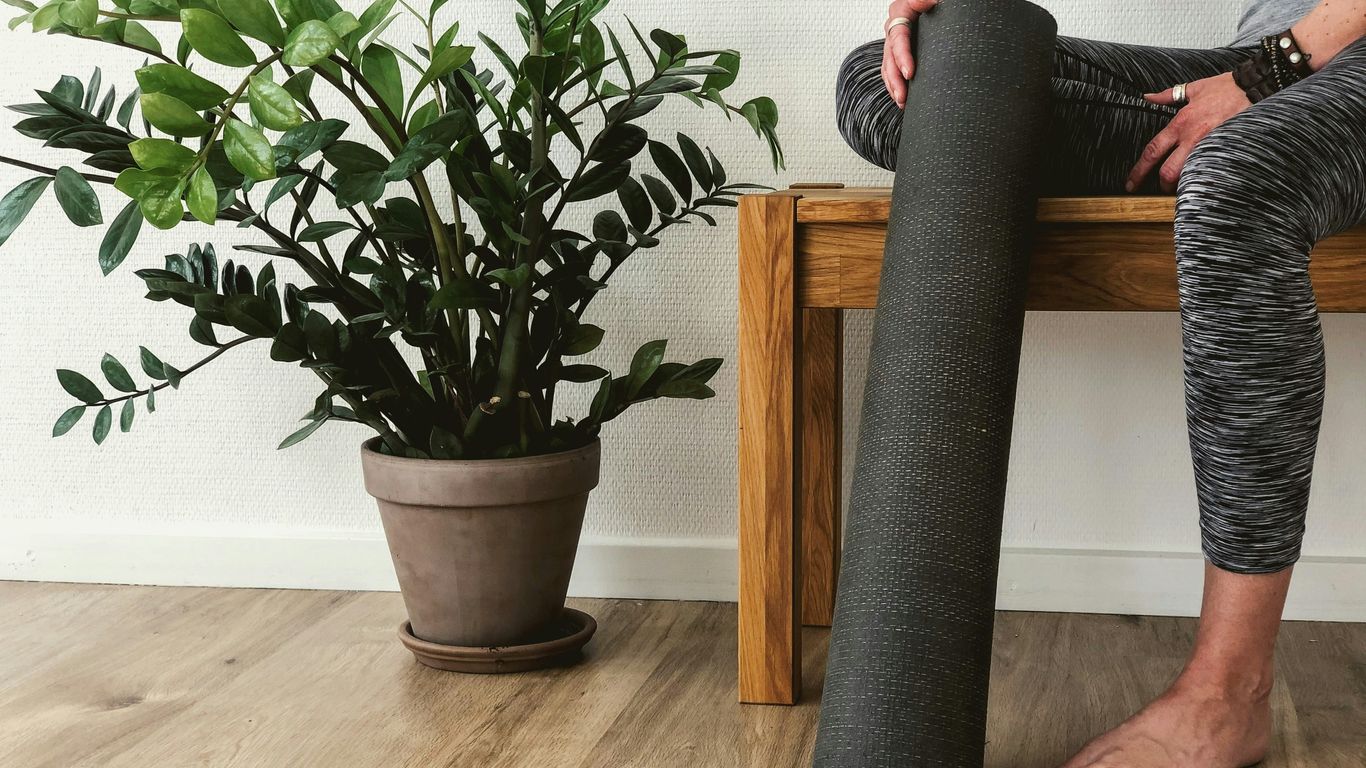
Jade Harmony for balanced cushioning and versatility
The Harmony is the familiar all-purpose reference point in this range, with documented grip and comfort as central qualities. It makes sense for someone who wants one mat for flowing classes, floor-based work, and regular home practice. Compare its feel with the JadeYoga Harmony Mat before buying, especially if strong initial odor is a concern.
A balanced mat should still be judged against your body and floor. Spend a few minutes in downward-facing dog, a lunge, and a seated pose if a retailer or studio allows testing; those positions reveal more than simply standing on the mat in a store.
Jade Travel for portability and compact storage
A Travel model deserves consideration when carrying space is the deciding factor, but do not assume the name tells you every specification. Confirm its packed dimensions, weight, thickness, and folding or rolling instructions on the current product page. A thinner mat may be convenient while offering less separation from a hard floor.
For travelers, portability also includes what happens after practice. A mat that fits in a personal bag, dries readily, and does not need elaborate accessories may be more useful than one that feels luxurious but stays at home.
Jade Voyager for minimal weight and packability
The Voyager name suggests a travel-oriented choice, yet the practical question is how much cushioning and ground feel you are willing to trade for a smaller load. Check the current specifications rather than relying on older reviews or assumptions based on the name. If you regularly practice on firm floors, consider whether a towel or secondary layer will be needed.
A compact mat is most successful when you actually bring it. For flights, commuting, and spontaneous sessions, a modest surface that fits your routine can outperform a heavier mat that is left behind.
Extra-thick options for added joint support
Extra thickness can feel kinder under knees, wrists, and hips, especially during restorative poses or floor exercises. It can also make balancing poses less precise because your feet sink farther from the floor. Test the compromise in both a kneeling pose and a standing balance before choosing based on thickness alone.
If extra cushioning is your priority, compare the mat’s density and stability as well as its measurement. A thick but unstable surface may be less comfortable in practice than a moderately cushioned mat with a firm base.
Match the mat to your yoga practice
The best mat changes with the session. Sweat, pace, floor type, and time spent on the ground all affect what feels supportive. Start by describing your real practice honestly, including the classes you attend most often rather than the style you hope to try someday.
Choosing a mat for hot yoga and sweaty sessions
Heat and moisture expose weak traction quickly. Look for a surface that remains predictable as your hands become damp, and keep a towel nearby if sweat collects beneath your palms. Even a naturally grippy surface benefits from clean skin and a mat free of lotion or oil.
After class, avoid rolling up a wet mat immediately and sealing it in a bag. Let it air out first, because trapped moisture and body oils can make odors and surface wear more noticeable.
Selecting support for restorative and gentle yoga
Gentle and restorative practices spend more time on knees, hips, backs, and elbows, so cushioning can take priority over the thinnest possible profile. A softer feel is useful, but you still want enough stability to move without the mat bunching or shifting. Props can add targeted support without requiring an unusually thick mat everywhere.
If your practice is mostly seated or reclined, a slightly heavier everyday mat may be reasonable. If you alternate between restorative work and standing flows, choose a middle ground instead of optimizing for only one class.
Finding stability for standing balances and transitions
Standing balances reward a surface that feels consistent under pressure. Try slow transitions, single-leg poses, and wide stances when evaluating a mat; these movements reveal whether the surface feels secure or overly yielding. Keep the mat flat and centered so instability is not caused by a curled edge.
A steady foundation matters more than decorative details when your practice includes frequent weight shifts. Texture, floor contact, and your own footwear-free grip should be considered together.
Considering home, studio, and travel use
Home practice gives you control over the floor and storage, while studio use may require carrying the mat and cleaning it between classes. Outdoor sessions introduce grit, uneven ground, and sun exposure, so a protective layer can be worthwhile. Travelers should prioritize a packed size they will genuinely tolerate.
For a portable alternative, the Jagger Yoga Mat is described as a 6mm, non-slip mat with studio-strong grip and joint-friendly cushioning. That kind of comparison is useful when your decision is really about convenience rather than loyalty to one material.
Check fit, comfort, and practical specifications
A mat can feel excellent and still be wrong for your room, body, or commute. Before checkout, look beyond the headline thickness and color. Measurements, weight, surface finish, and care instructions are the details that shape daily satisfaction.
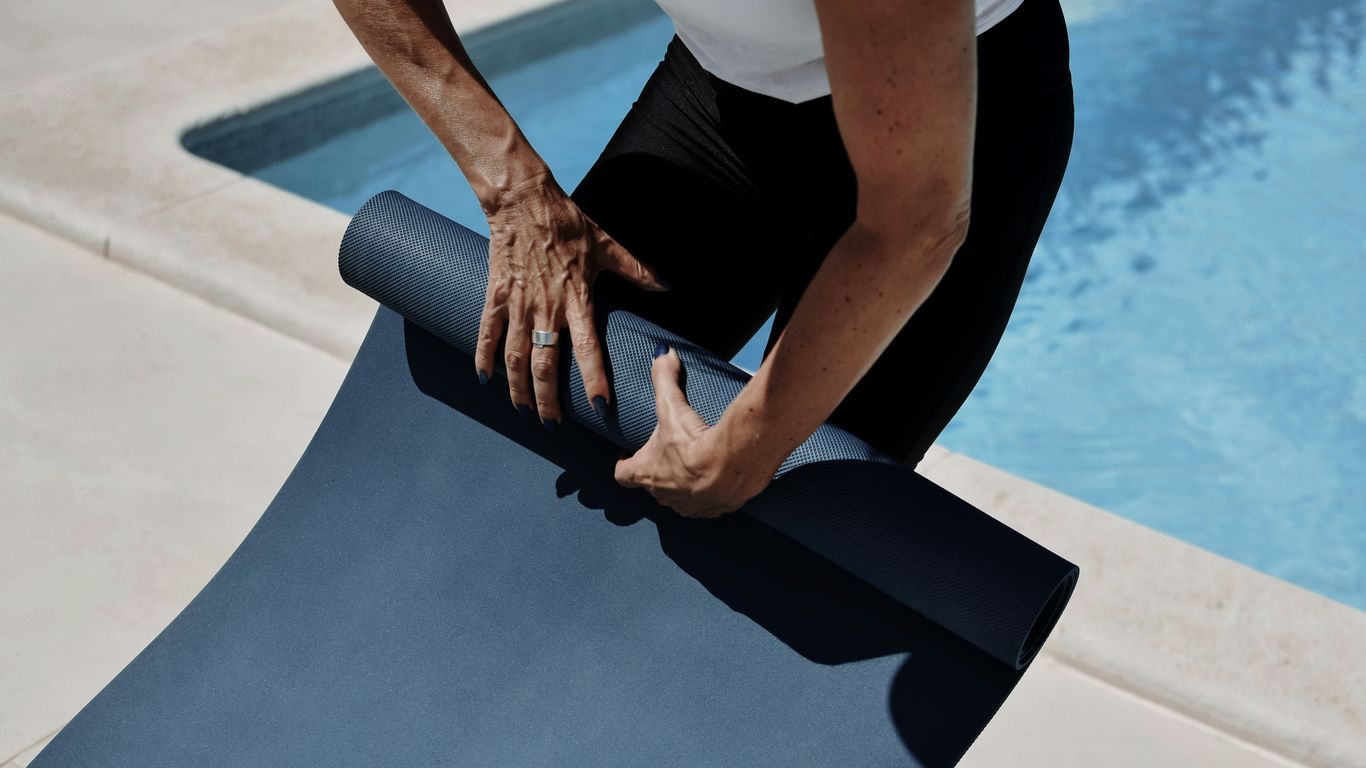
Comparing mat dimensions and personal space
Standard dimensions suit many people, but taller practitioners or those who move widely may want extra length or width. Measure the clear floor area at home, including space for transitions and nearby furniture. In class, a larger mat can be comfortable but may crowd shared studio space.
A useful test is to lie down fully, then extend arms and legs as you would in practice. If your hands or feet regularly reach the floor, a longer mat may prevent distracting repositioning.
Evaluating thickness against balance and joint comfort
Thickness is a comfort decision with a stability consequence. Thin mats preserve floor feedback and pack easily, while thicker mats provide more padding but can feel less direct under the feet. Your preferred balance depends on the poses you do and the surfaces beneath you.
The table below gives a starting framework, not a substitute for trying a mat in person.
| Approximate profile | Usually suits | Main trade-off |
|---|---|---|
| Thin | Travel and firm-floor practice | Less cushioning |
| Medium | Mixed flows and everyday use | Moderate packed size |
| Extra-thick | Kneeling and restorative work | Softer balance response |
Use these categories to narrow the field, then check the exact product measurement. Two mats with similar labels can still feel quite different because density and texture are not captured by thickness alone.
Understanding weight and carrying requirements
Weight becomes obvious when you walk to class, carry luggage, or store the mat vertically. A heavier rubber mat may stay planted and feel substantial, but it can be tiring to transport. A lighter model is easier to bring along, though you may notice more floor texture or need an additional towel for comfort.
Think in terms of the whole kit: mat, strap, towel, water bottle, and clothing. If the mat makes the overall load inconvenient, its performance may not matter because it will not make the trip.
Selecting colors and finishes for everyday use
Color is personal, but finish has a practical role. A textured surface can disguise small marks, while a pale or smooth finish may make dust and residue easier to spot. Choose something you enjoy seeing, then verify whether the printed or coated surface has special care instructions.
The Moab Plains 6mm mat offers an example of how color, cushioning, double-sided grip, and easy cleaning can be considered together. The broader lesson is to assess appearance alongside the habits that keep the mat usable.
Use jade yoga mats safely and effectively
Good setup prevents many common frustrations. Give a new mat time to settle, place it on a suitable floor, and notice how your hands respond before attempting demanding sequences. Small adjustments are more useful than forcing a surface to behave in conditions it was not designed for.
Preparing a new mat before its first class
Unpack the mat in a well-ventilated area and inspect it for curled edges, manufacturing residue, or damage. Follow the maker’s cleaning directions and allow the surface to dry completely before rolling it for storage. A short, easy practice is a better first test than a long heated class.
You can also mark which side faces up if both sides look similar. That simple habit prevents repeated experimentation and helps the mat develop a consistent routine.
Improving traction during demanding sequences
Clean, dry contact is the foundation of traction. Wash and dry your hands, remove oily skincare before practice, and use a dedicated yoga towel if sweat becomes the limiting factor. Repositioning the hands slightly can help, but sliding should not be treated as something to push through.
When a surface remains slippery, slow the sequence and investigate the cause. Residue from an unsuitable cleaner can be just as disruptive as sweat, and aggressive scrubbing may make the problem worse.
Positioning the mat on different floor surfaces
Hard, clean floors usually give a mat the most reliable base. On carpet, the mat may shift or develop uneven pressure; outdoors, grit can affect both traction and longevity. Clear debris first and avoid placing rubber in prolonged direct heat or sunlight.
If the floor itself moves, no amount of surface grip will fully solve the problem. A non-slip underlayer or a different practice location may be the safer fix.
Managing natural rubber sensitivities and allergies
Anyone with a known latex or rubber sensitivity should review material information carefully and consult a qualified medical professional when uncertain. Stop using the mat if you develop itching, redness, or other concerning symptoms, and do not assume that washing will remove an allergy risk. A latex-free material may be a more appropriate direction.
Material questions are worth resolving before purchase, not after an uncomfortable class. Keep the packaging and receipt until you know the surface works for you.
Clean and maintain your mat
Care is mostly about consistency rather than elaborate products. Wipe away sweat after practice, avoid leaving the mat damp in a closed bag, and follow the manufacturer’s instructions for deeper cleaning. These habits preserve feel while making the mat more pleasant to use.
Wiping the surface after regular practice
After ordinary sessions, use a soft cloth with the cleaner recommended for the mat’s material. Work across the surface without soaking it, paying attention to hand and foot placement areas. If you practice frequently, a quick wipe is easier and gentler than waiting for visible buildup.
Keep separate cloths for the mat and household cleaning, and avoid returning the mat to its strap while the surface is still wet. Residue left behind can change traction at the next session.
Deep-cleaning without damaging the rubber
Deep cleaning should be occasional and mild. Skip bleach, solvents, abrasive pads, and unapproved essential-oil mixtures unless the care instructions specifically allow them. Too much water can also seep into seams or remain trapped when the mat is rolled.
Test any approved solution on a small, less visible area first. If the texture changes, stop and return to the simplest care method recommended by the maker.
Drying and storing the mat correctly
Let the mat dry flat or loosely draped in a shaded, ventilated place. Keep it away from radiators and prolonged direct sun, then roll it with the practice surface facing outward if the instructions call for that orientation. Avoid tight compression for long periods when it causes permanent curling.
A breathable storage spot is preferable to a hot car or sealed plastic container. Before the next session, unroll the mat early enough for edges to settle.
Recognizing when the mat needs replacement
Replace a mat when it stays slippery despite appropriate cleaning, develops deep cracks, sheds material, or no longer lies flat. Persistent odor accompanied by visible deterioration is another reason to stop using it. Small cosmetic marks are not necessarily a problem, but damage in weight-bearing areas deserves attention.
Record when you bought the mat and how often you use it. That simple record helps distinguish normal aging from a sudden change caused by storage, heat, or an incompatible cleaner.
Decide whether a jade yoga mat is worth buying
Value is personal and practical. A premium-feeling mat can be worthwhile if it improves consistency and lasts through frequent practice, while an expensive purchase may disappoint if it is too heavy, too firm, or unsuitable for your sensitivity. Compare the total experience rather than one appealing feature.
Weighing performance against price
Start with the problems you want the mat to solve: slipping, insufficient cushioning, awkward transport, or a surface that is difficult to clean. Then ask whether the proposed mat addresses those problems without creating a new one. Paying more for grip is not useful if the mat will mostly be carried long distances and left at home.
Read specifications and return terms before treating reviews as decisive. The Jade Harmony Yoga Mat is one reference point for grip, cushioning, and natural-rubber construction, but your own floor and practice remain the final test.
Accounting for durability and long-term value
Durability depends on use, care, storage, and exposure to heat or sunlight. A mat used several times a week may justify a higher initial cost if its traction and comfort remain dependable. A less expensive mat can be the better value for occasional or short-term use.
Calculate cost per session rather than focusing only on the checkout total. Also consider whether the mat’s weight and cleaning needs will affect how often you practice.
Checking warranty, returns, and retailer policies
Keep your receipt, packaging, and order details until you have tested the mat at home. Check what a warranty covers, how long returns remain available, whether the item must be unused, and who pays return shipping. These details matter particularly when odor, material sensitivity, or dimensions cannot be judged from a product photograph.
Good research sometimes means separating unrelated advice from the question at hand. Pages about wedding photography, wildlife exclusion, day trading, ABA therapy costs, and Virtual Threads in Java may appear in a broad search, but none should replace the mat’s own specifications and policies.
Identifying who may prefer another type of mat
Another material may suit you better if you have a natural-rubber sensitivity, need an especially light mat, dislike rubber odor, or practice mainly on rough outdoor surfaces. Some people also prefer a very smooth finish or more pronounced cushioning. Those preferences are valid; the goal is a reliable practice surface, not a particular label.
For a latex-free direction, the Juniper Yoga Mat is described as a PER option with cushioning and ground feel. Compare material disclosures carefully, since “eco-friendly” is not a complete substitute for checking what a product is made from.
Conclusion
The right jade yoga mats choice comes down to the intersection of grip, cushioning, material comfort, maintenance, and real-life portability. Test the feel when possible, read the specifications closely, and choose a mat that makes regular practice easier rather than more complicated.
Frequently Asked Questions
Are jade yoga mats made from natural rubber?
Many jade yoga mats are associated with natural rubber, but confirm the exact material and care information for the model you are considering.
Do natural-rubber mats smell when new?
They can have a noticeable rubber odor when new. Ventilation and gentle, approved cleaning usually help it become less prominent over time.
Are thicker yoga mats better for sore knees?
Extra thickness can provide more padding, but it may reduce balance stability. Choose based on both joint comfort and how steady you feel while standing.
Can a yoga mat be used for hot yoga?
Yes, provided its surface remains stable with moisture and is cared for appropriately afterward. A towel may improve comfort and traction during very sweaty sessions.
How should a rubber yoga mat be cleaned?
Use a soft cloth and the cleaner recommended for that material. Avoid harsh solvents, abrasive tools, and storing the mat while it is damp.
How long should a yoga mat last?
Lifespan varies with frequency of use, storage, heat, sunlight, and cleaning. Replace it when traction, structure, or surface integrity has noticeably deteriorated.
What should I check before buying a yoga mat online?
Review dimensions, thickness, weight, materials, care instructions, warranty terms, and return conditions. These details are often more useful than appearance alone.

