

Integrating exercises and yoga for a balanced fitness routine
Key Takeaways
Integrating physical training styles is a smart way to build a comprehensive fitness routine. This article breaks down how to combine strength work with restorative movement to support your goals.
- Combining diverse training styles enhances overall bodily function.
- Incorporating yoga improves mobility while lifting builds foundational strength.
- Strategic scheduling prevents burnout and optimizes growth phases.
- Proper gear ensures safety across different movement environments.
- Active recovery techniques sustain performance over the long term.
Understanding the difference between traditional exercises and yoga
Many fitness enthusiasts often find themselves questioning how two seemingly distinct worlds—high-intensity training and the slow, deliberate nature of yoga—can exist within the same week. Traditional exercises focus on progressive overload and explosive power to change physical composition, whereas the practice of Yoga as Exercise centers on alignment, stillness, and breath control. Finding the common ground between these two requires an understanding of how they translate to physical longevity.
Exploring cardiovascular and strength training intensity
Traditional weight room work is often measured by intensity, rep counts, and total volume aimed at hypertrophy or strength gain. By contrast, yoga often uses body weight to challenge the muscles in isometric holds, which forces the body to stabilize in ways that aren't possible with static heavy lifting. When you combine exercises and yoga, you bridge the gap between pure raw output and fine-tuned motor control.
The focus on mindfulness and breath in yoga practice
While lifters might focus on their set finish line, yoga teaches a process-oriented mindset where the breath acts as an anchor regardless of the physical strain. This psychological shift can be a major asset when you are tackling your final set of heavy squats. Developing this internal awareness allows for better technique enforcement during challenging lifts, because you have practiced staying present even when the body feels taxed.
How functional mobility differs from static stretching
Static stretching is a tool for cooling down, but functional mobility is an active practice of exploring your full range of motion under load or through specific sequences. Understanding this allows you to stop seeing flexibility as just reaching for toes and start seeing it as the capacity for your joints to operate safely. Your movement quality improves significantly when you stop forcing ranges of motion and start earning them through balanced work.
Benefits of combining resistance exercises and yoga
Building a body that is both strong and mobile creates a resilient foundation for any physical challenge you might encounter. When you integrate these practices, you teach your muscles not only how to fire during a lift but also how to lengthen and stabilize through complex transitions, providing a much higher ceiling for performance.
Enhancing functional strength through combined training
Functional strength is not just about moving external loads; it is about the coordination between your nervous system and your muscle fibers during complex patterns. By supplementing traditional sessions with deep, intentional movement, you cultivate a body that is capable of maintaining stability under pressure. This dual approach ensures your gains are balanced and usable in daily life.
Reducing injury risk by improving joint range of motion
Stiffness is often the precursor to strain, especially when lifting heavy consistently without offsetting that work. Incorporating yoga poses for back, core, and hip mobility into your routine helps ensure that joints remain lubricated and tissues don't remain locked in shortened positions. Over time, this decreases the likelihood of common overuse injuries that are frequent in strictly linear training programs.
Boosting mental focus and discipline during heavy lifting
There is a profound carryover from the concentration required to hold a balanced pose to the focus needed before a heavy bench press attempt. By regularly training your brain to ignore distractions and return to the task at hand through regular yoga, you naturally improve your performance in the weight room. It creates a seamless link between intentional effort and execution.
Designing a hybrid workout schedule
Structuring a hybrid week requires you to listen to your body rather than simply following a rigid, unchanging calendar. The key is to order your sessions in a way that respects your central nervous system's recovery needs while maximizing the time spent on both goals.
Alternating days for high-impact training and restorative flows
The most effective way to avoid exhaustion is to stagger high-intensity lifting days with days dedicated to longer, lower-intensity flows. This provides your body with the necessary recovery hours to rebuild muscle tissue while keeping your joints moving and your blood flowing toward working areas.
Integrating short yoga sequences as dynamic warm-ups
Instead of viewing yoga as a separate three-hour block, treat it as a tool for preparation by spending ten minutes moving through flow sequences before lifting. This primes the nervous system, wakes up dormant muscle groups, and prepares the joints for the heavy work ahead by increasing blood flow to the target areas.
Balancing heavy strength cycles with low-impact recovery sessions
When your training cycle hits a peak intensity phase, prioritize yoga-based flows that focus on deep relaxation rather than power. This balance helps you maintain your strength gains without tipping into the over-reaching zone that leads to stagnation. It is a systematic way of balancing your physical output.
Addressing physical limitations and modifications
Everyone faces unique challenges, whether they are working around a chronic injury or dealing with general fatigue. Adaptations are not failures; they are a sign of professional-level awareness of your own body's requirements.
Adjusting yoga poses to accommodate muscle soreness
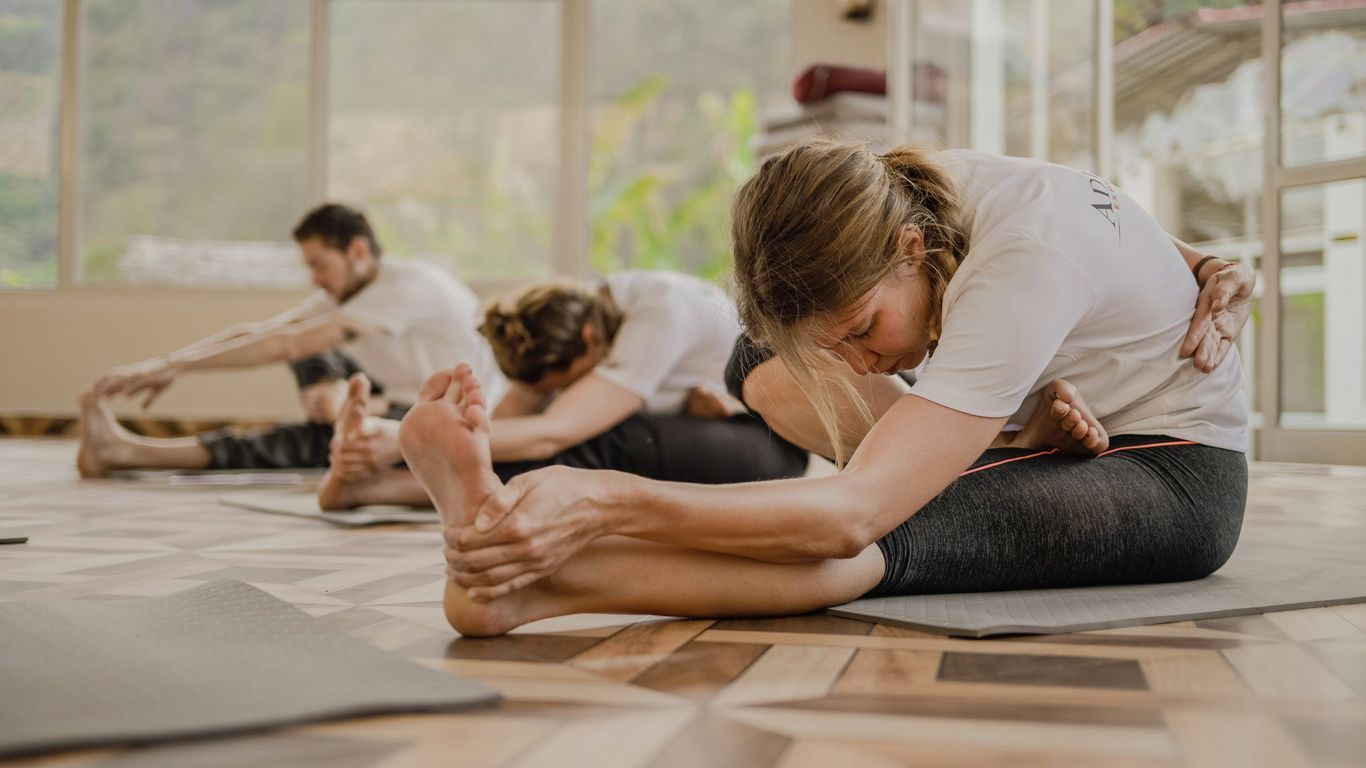
When your legs are heavy from a barbell session, deep lunges in a yoga flow might feel counterintuitive and stiff. Consider modifying these poses, perhaps using blocks or keeping the movement shallower, to work within your current capacity without pushing through actual pain. The goal is to facilitate recovery, not to add more stress.
Adapting weightlifting techniques for chronic joint sensitivity
Joint sensitivity is a common hurdle, but it shouldn't stop you from building muscle. You might find that reducing the range of motion slightly or transitioning from a barbell to dumbbells allows you to keep the intensity high while giving your joints the breathing room they need to stay healthy.
Recognizing signs of overtraining to prevent burnout
Keeping track of how your body reacts to combined stressors is essential for longevity in either practice. To help you structure your week effectively, consider this comparison table to gauge when you should ramp up or scale back your efforts.
| Training Volume | Recovery Needs | Recommended Yoga Focus |
|---|---|---|
| High Intensity | High | Yin / Restorative flows |
| Medium Intensity | Moderate | Balanced dynamic flows |
| Low Intensity | Low | Mobility and strength work |
It is helpful to adjust your schedule based on these factors, so you can train hard when your body is truly ready to handle it.
Essential gear for diverse training sessions
Having the right environment for your movement is as important as the movement itself, whether you are in a gym or on your mat at home. When you switch between these modes, you need gear that is as versatile as your goals.
Selecting the right supportive footwear for cardio movements
You need a stable, supportive shoe for cardio-heavy or high-impact lifting tasks to ensure your foundation is solid. Investing in the right footwear protects your ankles and keeps your feet aligned, allowing you to focus on your form without worrying about stability.
Choosing high-traction mats for stable yoga practice
A mat that supports your grip is non-negotiable when transitioning into a sweat-inducing practice. The Janus Yoga Mat offers the kind of moisture-responsive grip that makes every flow feel more secure and grounded. This allows you to focus on your breath and alignment without constant readjustment.
Using versatile resistance bands for transitional stability exercises
Portable equipment like resistance bands bridges the gap between stability work and traditional strength training movements. These tools help:
- Activate primary muscle groups before heavy sessions take place.
- Add intensity to bodyweight movements without bulky gym equipment.
- Provide a scalable tension level that can be adjusted in seconds.
- Serve as a tool for guided stretching to aid in cooldowns.
Integrating these bands allows you to maintain progress whether at home, at the gym, or traveling for work.
Optimizing recovery through yoga and active rest
Recovery is the period where your actual progress occurs, and yoga is one of the most effective tools for turning passive downtime into active restorative health. The goal is to move the body in a way that encourages repair without causing additional damage to tissues.
Implementing Yin yoga techniques for deep tissue relief
Yin yoga holds positions for extended periods, which helps in accessing the deep layers of connective tissue that standard dynamic exercises don't reach. This practice effectively signals the parasympathetic nervous system to take over, shifting the body into a state of optimal repair and stress release.
Incorporating dynamic yoga flows to improve blood circulation
Movement-based yoga flows help pump blood through the body, which aids in flushing out metabolic waste products like lactic acid from previous intense workouts. By staying dynamic, you keep your joints and tissues supple and ready for the next cycle of heavy effort, rather than letting your muscles tighten up during rest days.
Synchronizing nutritional intake with restorative stretching routines
Your muscles need the right fuel to repair correctly after a sequence of restorative stretching. Pairing a nutrient-dense snack with restorative work helps stabilize blood sugar and ensures that your body has the materials it needs to repair the micro-tears caused by your resistance cycles. It creates a complete recovery loop for your muscles.
Conclusion
Merging strength training with mindful movement is ultimately about listening to your body to achieve a more robust and capable physical state. By finding the right balance between the intensity of lifting and the restorative focus of yoga, you build a sustainable routine that supports your long-term fitness goals. Embracing this synergy allows you to progress without sacrificing your well-being, paving the way for a healthier and more energized life.
Frequently Asked Questions
Can people combine resistance exercises and yoga safely?
You can safely integrate both practices by gradually building volume and ensuring that your rest days remain truly restorative rather than just switching to a different form of intense movement.
How often should I practice yoga if I lift weights daily?
Practicing shorter, restorative sequences 3 to 4 times a week is generally enough to gain the mobility benefits without interfering with your capacity to lift effectively.
What if I feel too sore to do yoga after gym sessions?
If you feel significantly sore, stick to light mobility work or restorative movements on a mat, which can actually help decrease stiffness compared to just sitting still.
Is it better to lift before or after a yoga session?
If you prefer high-intensity lifting, perform that first when energy levels are highest, and use yoga specifically for the warm-up and cool-down phases of your workout day.
Do I need to be flexible to start doing yoga?
The goal of beginner-friendly yoga exercises is specifically to improve your flexibility over time, so starting with limited range of motion is perfectly fine as long as you follow safe, guided movements.
How can I track my progress with hybrid training?
Focus on metrics like personal bests in the weight room alongside improvements in joint range of motion and consistency in your yoga flow practice.
What is the primary role of yoga in a fitness routine?
Yoga serves to balance out the high-tension environment of traditional lifting by cultivating mindfulness, improving mobility, and promoting active recovery for stressed muscle tissues.

