
How to Use Yoga Mat Gym Workouts Effectively
A yoga mat is one of the most versatile pieces of fitness equipment you can own. When you use yoga mat gym workouts as your primary training method, you get a full-body session targeting strength, flexibility, and endurance with nothing more than your bodyweight and six feet of space. The standard term for this training style is floor-based resistance training, and it covers everything from planks and push-ups to hollow body holds and mobility flows. The right mat, the right exercises, and a structured routine are all you need to build real fitness results.
How to use yoga mat gym workouts: choosing the right mat
The mat you choose directly affects your safety and performance. Standard yoga mats measure 3–5mm thick, which works well for slow-flow yoga but falls short during HIIT or plyometric training. Thicker hybrid mats in the 6–12mm range offer better joint cushioning and durability for daily use. That extra thickness protects your knees, wrists, and hips during high-rep bodyweight sets.
Grip is the second critical factor. Textured, grippy surfaces prevent slipping even when your hands are sweaty during intense sessions. A mat that slides mid-plank or bunches during mountain climbers creates real injury risk. Look for mats with open-cell natural rubber or textured PVC surfaces for the best traction.
Key yoga mat features to evaluate before buying:
- Thickness: 6–12mm for high-intensity floor workouts; 3–5mm for yoga-only practice
- Grip surface: Textured or open-cell rubber for sweat resistance
- Material: Natural rubber or TPE for durability and eco-friendliness
- Size: Standard 68-inch length covers most adults; 72-inch or longer for taller practitioners
- Weight: Lighter mats (under 4 lbs) travel well; heavier mats stay put on hard floors
The difference between a yoga mat and a cross-training mat matters more than most people realize. Hybrid fitness mats combine the cushioning of a gym mat with the grip of a yoga mat. They handle burpees, jump squats, and core circuits without tearing at the edges or curling at the corners.
Pro Tip: Roll your mat out on a hard floor and press your palm flat against it. If your hand slides more than an inch, the grip is too weak for vigorous gym workouts.
What gym exercises can you do on a yoga mat?
Mat workouts effectively target every major muscle group using 15–45 minute sessions structured around 3 sets of 10–15 reps or 30–45 second holds. That structure mirrors what you would do with free weights, just without the equipment. The exercises below cover strength, cardio, and mobility in one complete system.
Strength and bodyweight exercises
- Push-ups: 3 sets of 10–15 reps. Keep your core tight and lower your chest to within an inch of the mat. Modify by dropping to your knees if needed.
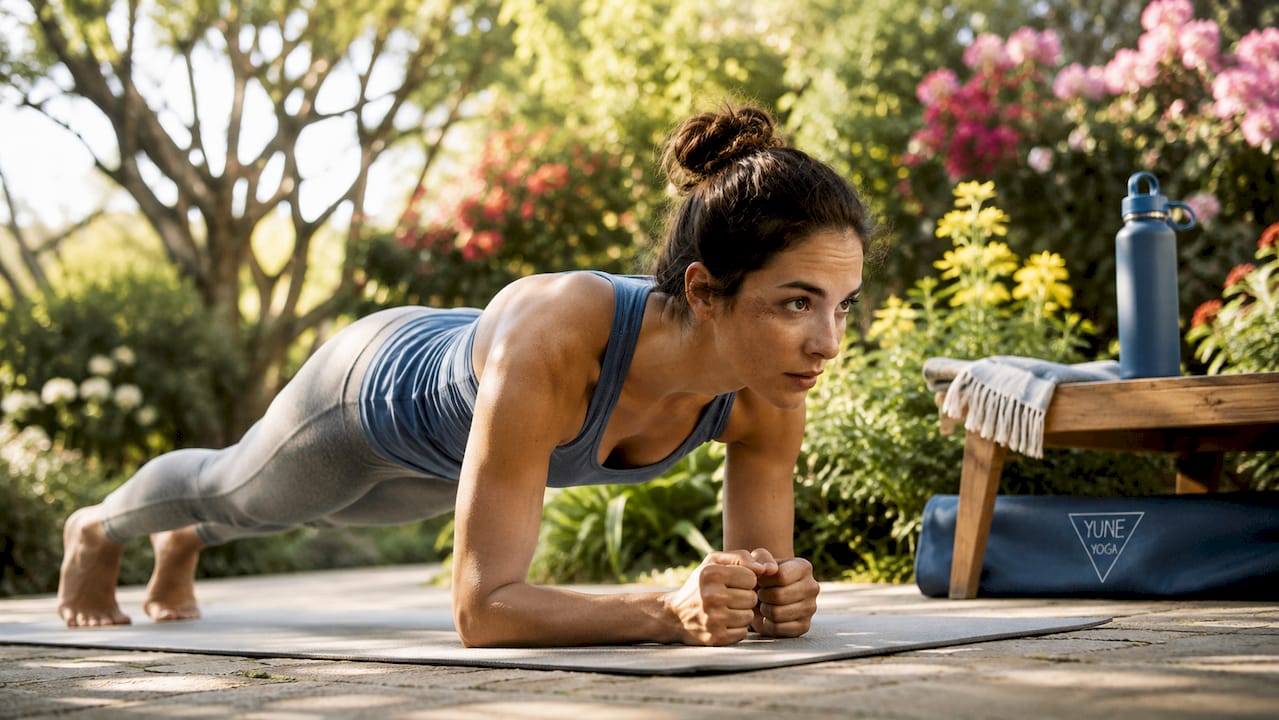
- Plank hold: 3 sets of 30–45 seconds. Maintain a straight line from head to heel. Progress by lifting one leg or adding shoulder taps.
- Tricep dips: Use the edge of your mat as a reference point, hands planted behind you on the floor. 3 sets of 12 reps.
- Glute bridges: 3 sets of 15 reps. Drive through your heels and squeeze at the top for a full second.
- Bird-dog: 3 sets of 10 reps per side. Extend opposite arm and leg simultaneously while keeping your lower back flat.
Cardio moves adapted to mat space
- Mountain climbers: 3 sets of 30 seconds. Drive your knees toward your chest in a running motion from a push-up position.
- Burpees: 3 sets of 10 reps. Step or jump your feet back, perform a push-up, then jump to standing.
- High knees: 3 sets of 30 seconds. Run in place, lifting your knees to hip height with each step.
Core and stability work
The hollow body hold is one of the most underrated core exercises on a mat. Lie on your back, press your lower back into the mat, and raise your legs and shoulders off the floor simultaneously. Hold for 20–30 seconds. This single movement activates your entire anterior core chain, including the rectus abdominis and hip flexors, better than most crunch variations.
For non-slip yoga mat surfaces, stability exercises like the bird-dog and single-leg glute bridge become significantly safer. Your planted hand or foot stays anchored, so you can focus on form instead of balance recovery.
Pro Tip: Pair each strength set with a 30-second mobility drill on the same body part. Doing a hip flexor stretch after glute bridges keeps your hips from tightening up mid-session.
How to design a yoga mat fitness routine
Building a weekly plan requires balancing intensity with recovery. A three-day-per-week structure works well for most people starting mat-based training. Two days focus on strength circuits, and one day targets mobility and active recovery.
| Goal | Session length | Structure | Weekly frequency |
|---|---|---|---|
| Strength and toning | 30–40 minutes | 3 sets, 10–15 reps, 60-second rest | 3 days |
| Fat loss and cardio | 20–30 minutes | HIIT circuits, 30 seconds on, 15 seconds off | 3–4 days |
| Flexibility and mobility | 20–30 minutes | 30–45 second holds, slow flow | 2–3 days |
| Endurance building | 40–45 minutes | High-rep sets, 30-second rest | 2–3 days |
Progression is what separates a plateau from real gains. Increase 2–3 reps per set each week, shorten rest periods by 5–10 seconds, or add a 3–4 second eccentric phase to each rep. These small adjustments keep your muscles adapting without requiring new equipment.
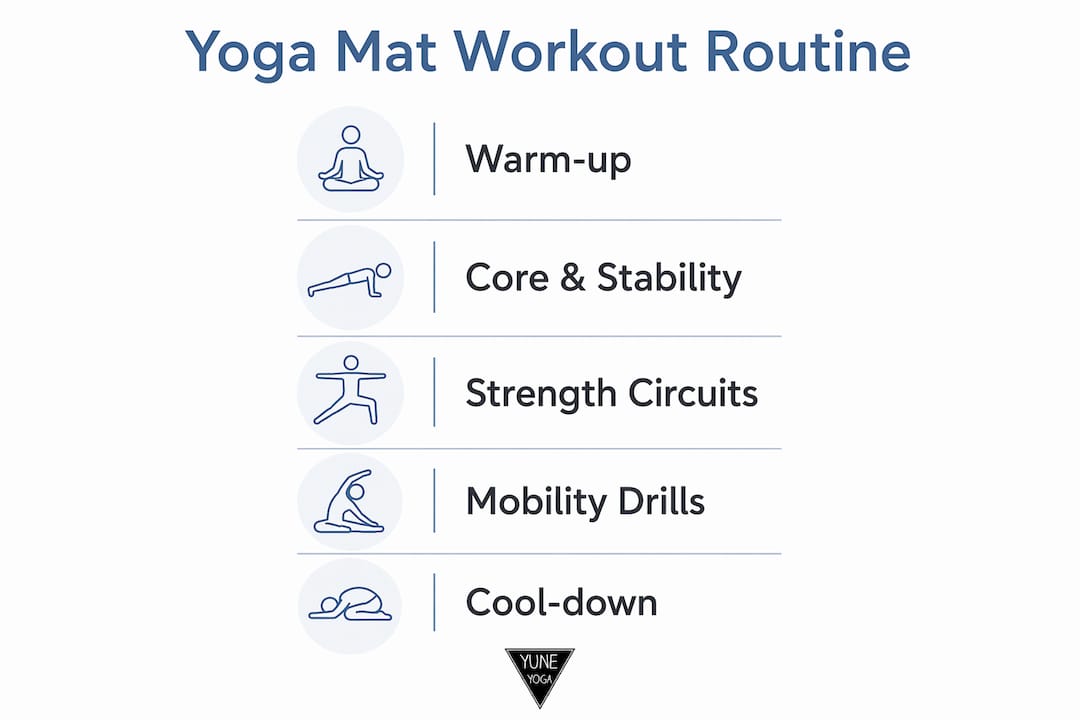
Warm-up and cool-down phases are not optional. Five minutes of dynamic movement before your session, such as leg swings, arm circles, and cat-cow stretches, prepares your joints and raises your core temperature. Five minutes of static stretching after your session lowers your heart rate and reduces next-day soreness.
Pro Tip: Write your weekly plan on Sunday night. People who schedule workouts in advance complete them at a significantly higher rate than those who decide day-of.
Common challenges and injury prevention for mat workouts
The biggest risk in mat-based training is not the exercises. It is the mat itself. Thin mats create slipping hazards during high-intensity movements, and tripping on a curled mat edge mid-burpee can cause real ankle or wrist injuries. Investing in a mat with a reinforced, non-slip surface is the single most effective injury prevention step you can take.
Dedicated fitness or hybrid mats prevent injury by offering stability and non-slip surfaces that standard thin yoga mats cannot match during dynamic gym movements. The primary reason to choose a fitness mat over a traditional yoga mat is safety, not comfort.
Other injury prevention practices to build into your routine:
- Listen to sharp pain: Muscle burn is normal. Sharp, localized pain in a joint is not. Stop immediately if you feel it.
- Check your surface: Use your mat on a hard, flat floor when possible. Carpet adds instability and can mask poor form.
- Prioritize sleep: 7–9 hours of nightly sleep supports muscle repair and hormonal balance. Skipping sleep slows recovery and increases injury risk.
- Wear appropriate footwear: Bare feet work well for yoga-style movements. For plyometric work, lightweight training shoes add ankle support.
- Use a wide mat: A wider mat surface gives you more room to move laterally without stepping off the edge mid-exercise.
Rolling out your mat also does something subtle but powerful. The mat signals your brain that it is time to work. That mental cue reduces the friction between deciding to exercise and actually starting. Consistency in mat workouts depends on that habit loop as much as it depends on physical recovery.
Key Takeaways
A yoga mat supports effective gym-style training when you match mat thickness and grip to your workout intensity, follow a structured weekly plan, and prioritize recovery.
| Point | Details |
|---|---|
| Mat thickness matters | Use 6–12mm hybrid mats for high-intensity work; 3–5mm mats slip and compress too easily. |
| Structure your sessions | Follow 3 sets of 10–15 reps or 30–45 second holds across 15–45 minute sessions. |
| Progress weekly | Add 2–3 reps, shorten rest by 5–10 seconds, or slow your eccentric phase each week. |
| Warm up and cool down | Five minutes of dynamic movement before and static stretching after each session cuts injury risk. |
| Sleep drives recovery | Seven to nine hours of sleep nightly repairs muscle and sustains workout intensity over time. |
What I have learned from years of mat-based training
The most common mistake I see is treating the yoga mat as a passive surface. People grab whatever mat is nearby, toss it on the floor, and wonder why their wrists ache after push-ups or their mat bunches during mountain climbers. The mat is active equipment. It either supports your workout or it fights it.
My honest observation after years of mat-based training is this: the people who progress fastest are not the ones doing the most exotic exercises. They are the ones who show up consistently, use a mat that actually grips the floor, and add one small progression each week. That is it. No fancy equipment, no complicated programming.
For anyone starting out, I recommend picking three exercises from the strength list and three from the cardio list, then doing them three times a week for four weeks before adding anything new. That simplicity builds the habit. Once the habit is solid, the progression takes care of itself. A quality mat from Yuneyoga makes that habit easier to maintain because you are not fighting your equipment every session.
— Nicholas
Yuneyoga mats built for real gym workouts
Yuneyoga designs mats that handle the full range of floor-based training, from slow mobility flows to high-rep bodyweight circuits.

Every mat in the Yuneyoga collection prioritizes grip, cushioning, and durability for daily use. Natural rubber and eco-friendly materials keep your practice safe and sustainable. Whether you are doing your first plank or your hundredth burpee, the right mat makes every rep more stable and every session more effective. Browse the full Yuneyoga mat collection to find the thickness, grip, and size that fits your training goals. Your mat is the foundation of every workout. Make it a good one.
FAQ
Can you use a regular yoga mat for gym workouts?
You can use a standard yoga mat for low-intensity floor exercises, but thinner 3–5mm mats slip and compress during high-intensity movements. A hybrid or fitness mat in the 6–12mm range is safer for vigorous gym-style training.
What thickness yoga mat is best for floor workouts?
A 6–12mm mat provides the best balance of joint cushioning and stability for most gym workouts on a mat. Thinner mats work for yoga-only practice but lack the support needed for planks, burpees, and plyometric moves.
How long should a yoga mat workout session be?
Effective mat sessions run 15–45 minutes depending on your goal. Strength circuits typically take 30–40 minutes, while HIIT cardio sessions can deliver results in 20–30 minutes.
How do I stop my yoga mat from slipping during workouts?
Choose a mat with a textured or open-cell rubber surface, and place it on a hard, flat floor rather than carpet. Grippy mat surfaces maintain traction even when your hands are sweaty during intense sessions.
How often should I do yoga mat gym workouts?
Three to four sessions per week is the standard recommendation for most fitness goals. Alternate between strength-focused days and mobility or active recovery days to give your muscles time to repair between sessions.


