

How to Choose and Use a Folding Yoga Mat for Travel and Everyday Practice
Key Takeaways
A folding yoga mat can make it easier to keep a practice going on trips or in a small home. The best choice depends on how you like to move, where you’ll use it, and how much comfort you want to carry.
- Fold lines make a mat compact to pack, but they affect how it opens and lies flat.
- Compare thickness, grip, weight, and folded size against your usual practice.
- Check that the surface suits the floor and the poses you plan to do.
- Keep the mat clean and completely dry before folding it away.
- Try the folded size and cushioning at home before relying on it for travel.
What makes a folding yoga mat different
A folding yoga mat is designed to pack into a smaller shape than a mat that stays rolled. That can be useful when luggage space is limited or there’s little room to store gear at home. The trade-off is that fold lines, thickness, and surface feel can shape the setup as much as the mat’s overall dimensions.
How fold lines affect packing and setup
Fold lines give the mat a predictable way to collapse, so you can tuck it into a bag or suitcase without carrying a long roll. Once opened, the creases may still be visible, and some mats need a moment to settle on the floor. Check how the mat’s folds run and whether they land under your hands or feet during your usual poses. A few minutes of setup at home can tell you more than a product photo will.
Folding mats versus rolled travel mats
A folding mat packs in panels, while a rolled travel mat keeps a curved shape and may need more room from end to end. Neither format is automatically better: the choice depends on your bag, storage spot, and how quickly you want to set up. Foldable models span different sizes and materials, so a travel yoga mat guide can be one starting point for comparing what matters on the move. For some travelers, the flatter package is worth the creases; others prefer a roll that opens in one continuous sheet.
Common materials and construction styles
Folding mats may use different surface textures, base materials, and thicknesses, so the word “folding” alone does not tell you how one will feel underfoot. Look for the material description and care advice before deciding. For example, the Apollo foldable suede yoga mat is described as lightweight, with a 2 mm profile, sweat-activated grip, and a PVC-free natural rubber base. Those details are specific to that mat, not a promise about every folding design.
How to choose the right mat
Start with the way you actually practice, rather than choosing by portability alone. A very thin mat can be easier to carry, but it may feel different on a hard floor than a thicker one. Think about the surface you’ll use, the space you have in your bag, and the poses you return to most often.
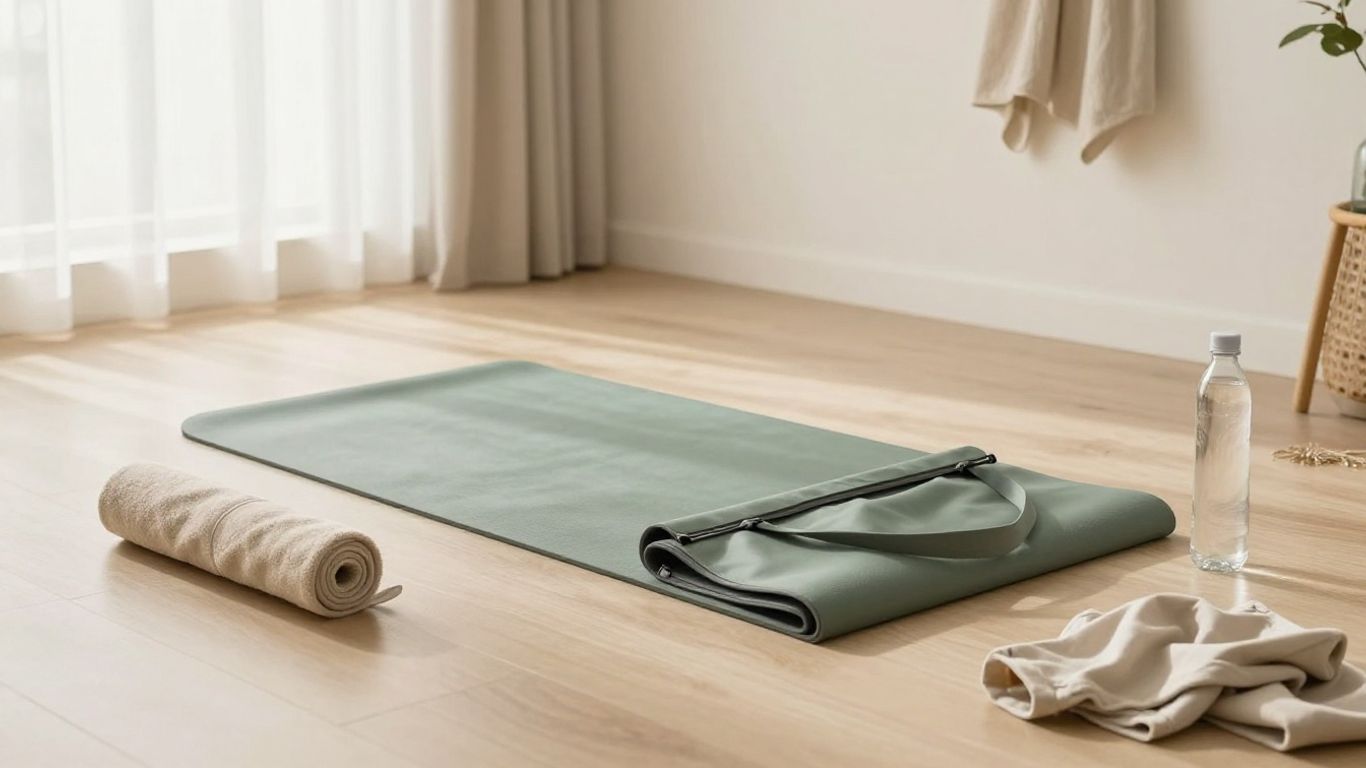
Match thickness to comfort and portability
Thickness is a personal balance between how much padding you want and how compactly the mat can travel. Compare the product’s thickness with the type of floor where you practice most, and, when possible, test a similar surface before buying. A thin mat may appeal when every inch in a bag counts, while a thicker design may take up more room when folded. This mat-size guide can also help you think through length, width, and cushioning together.
| What to compare | Why it matters | A useful check |
|---|---|---|
| Thickness | Changes how close you feel to the floor | Consider your usual floor surface |
| Surface texture | Affects how the mat feels under hands and feet | Check product details and reviews |
| Open dimensions | Determine how much room you have to move | Compare with your usual practice area |
| Folded dimensions | Affect how it fits in a bag or cupboard | Measure your available storage space |
The numbers are only part of the decision; comfort is easier to judge in a real practice than from specifications alone. If you can, try the mat on the kind of floor you use most and notice whether its size and feel suit your movement.
Check grip for your practice and floor type
Grip depends on both the mat’s surface and the floor beneath it, so consider where you plan to practice rather than relying on a general label. A mat used in a warm room or on a smooth floor may feel different from one used for a gentle session on carpet. The Calacatta Foldable Travel Yoga Mat is described as having a non-slip surface and PVC-free materials, with a lightweight 2 mm design that folds compactly. For any mat, check reviews for comments about the conditions that resemble your own.
Consider size, weight, and folded dimensions
A mat can be lightweight yet still awkward for a particular bag, so check the folded measurements as well as the open size and listed weight. Decide whether you want the mat to fit in a carry-on, a day bag, or a small storage drawer, then compare those limits with the product details. Look at the mat-size information alongside its packed shape, especially if you’re tall or like room to step wide. The most portable option on paper is not necessarily the one you’ll enjoy using most.
Look for durability at the creases
Repeated folding puts attention on the crease areas, so look for clear product information about construction and care. Reviews can help you see whether owners mention changes at the folds after regular use, though one person’s experience is not a guarantee. Notice whether the mat is designed to fold along set lines and whether its instructions explain how to pack it. A little care at the creases can help you avoid forcing the mat into a shape it was not made to take.
How to use a folding yoga mat
A folding mat is straightforward to use, but a careful setup can make the practice feel less fussy. Give it a clean, even place to open, and take a moment to check the surface before you begin. If it feels unfamiliar at first, try a short session at home before taking it on the road.
Unfold it on a clean, level surface
Brush away grit or small debris before laying the mat down, especially outdoors or in a hotel room. Open it along its intended creases and smooth the panels with your hands; don’t tug hard at a stubborn fold. Check that the mat lies securely on the floor before stepping onto it. If it shifts or bunches, reposition it or choose a more even spot.
Position the folds to support your poses
The direction of the folds can affect where your hands and feet land, so orient the mat before starting rather than adjusting it mid-pose. Try a few familiar movements and notice whether a crease sits beneath a point where you want a smooth, steady surface. Some practices move around the mat more than others, so a quick check of its usable area can help you plan. Adjust the mat’s direction if that gives you a more comfortable space.
Add a towel or pad for extra cushioning
If the mat feels thin on a hard floor, a towel or a small pad can add a layer where you want it. Keep any extra layer flat, and check that it does not slide as you move. An absorbent towel may also be useful if you expect a sweaty session, though the best choice depends on the surface and your own preference. Start with one layer and see how it feels before adding more.
Adapt your practice to a smaller surface
A compact mat can ask you to be a little more deliberate about where you place your feet and hands. Try a few poses first and choose movements that fit comfortably within the mat’s open dimensions. A simple sequence can help you learn the usable space without continually shifting your setup. If you’re following along with a video, leave enough room around the mat to move safely.
A quick trial at home can reveal whether the mat’s size works for the practice you have in mind. Once you know its edges and fold positions, adapting your routine tends to feel more natural.
Where a folding yoga mat works best
The main appeal of a folding mat is that it can travel easily between places. It may suit a suitcase, an office drawer, or a small corner at home, depending on its folded size. Before setting off, think through where you’ll use it and what else you need to carry.
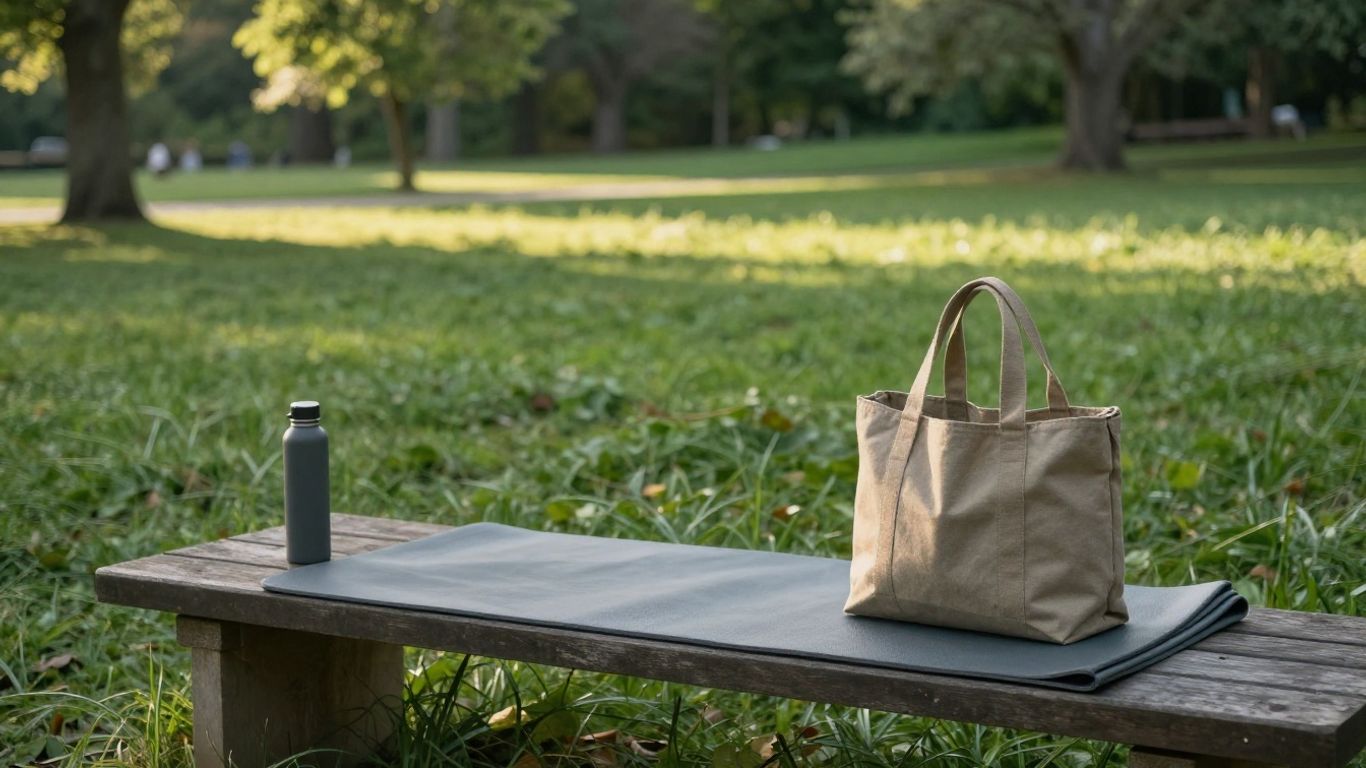
Packing it for flights and road trips
Check the folded measurements against your luggage before you leave, and decide whether the mat needs its own sleeve or space inside another bag. It can help to set aside a small packing area for the mat and other practice essentials rather than squeezing everything in at the last minute. For family travel, even small packing choices add up; planning space for healthy toddler snacks is another example of making room for what the trip requires. If you personalize a tote for your gear, this iron-on transfer guide covers a separate way to customize fabric items.
A short packing sequence keeps the routine simple:
- Fold the mat along its designed creases.
- Place it where the folds will not be crushed by heavy items.
- Keep a towel or other practice accessory easy to reach.
- Check the bag’s weight and space before leaving.
These small checks can prevent a mat from being difficult to find or awkward to carry once you arrive. On a road trip, you can also keep it somewhere accessible for a break rather than buried beneath luggage.
Practicing outdoors or at the office
Parks, beaches, and office spaces can all offer a change of setting, but each comes with different surfaces and conditions. Choose a spot that is level, reasonably clean, and large enough for the movements you plan to do. Wipe away sand or dust before folding the mat, and let it air out if it becomes damp. If you’re visiting a studio during a trip, checking studio hours before you go can spare an unnecessary detour.
Using it over a studio or hotel mat
A thin travel mat can sometimes serve as a personal layer over a shared studio or hotel mat, but check the dimensions and surface first. The layers should lie flat and feel stable before you begin moving. The Iceland Foldable Travel Yoga Mat is described as an ultra-lightweight 2 mm mat with reliable non-slip grip, PVC-free materials, and plastic-free packaging. If you use any mat over another surface, take a moment to check that the combination does not slide.
Storing it in a small home
A folding mat can be easier to tuck away when floor space or closet room is limited. Choose a dry spot where it can stay folded without being pinned under heavy objects, and keep it accessible enough that setting up does not become a chore. A shelf, drawer, or dedicated corner may work, depending on the mat’s folded dimensions. The aim is simple: make it convenient to put away and just as convenient to take out again.
How to clean and care for your mat
Care instructions vary with the mat’s materials and construction, so follow the product guidance rather than assuming every surface can be cleaned the same way. Regular gentle cleaning can remove dust and sweat before they build up. A fully dry mat is easier to store without trapping moisture between its folds.
Follow the material-specific cleaning instructions
Check the care label or manufacturer’s instructions before using a cleaner, since some materials may call for a particular method. Start with a soft cloth and the recommended approach; avoid harsh scrubbing unless the instructions say it is suitable. If you also wash practice towels, comparing laundry care options can help you think about time and fabric handling for those separate items. Keep the mat’s own cleaning directions as the guide for the mat itself.
Dry it fully before folding
After cleaning, leave the mat open until all of its surfaces are dry, including the areas around the creases. Folding it while damp can trap moisture inside the panels. Give it extra time if the room is humid or the mat has been wiped thoroughly. A little patience before packing is easier than dealing with a musty smell later.
Fold along the intended creases
Use the mat’s existing fold pattern rather than making new creases or twisting the panels to fit a bag. If a fold catches, open the mat and reposition it instead of pulling sharply. This keeps packing predictable and reduces unnecessary strain at the fold lines. Once folded, check that the edges line up before putting it away.
Prevent odors and wear during storage
Store the mat only when it is clean and dry, and avoid leaving it in a hot car or direct sun unless its care instructions allow that. Keep it away from sharp objects that might scratch or puncture the surface. If you practice outdoors, a quick wipe before folding can prevent dirt from transferring into the storage area. These small habits help keep the mat ready for its next session.
What to check before buying
Before choosing a mat, look beyond its folded shape and compare the details that affect day-to-day use. Product descriptions can help you narrow options, while care instructions and owner reviews add context. Think about what you need most, then decide which trade-offs you can live with.
Review return policies and warranty coverage
Read the return policy and warranty terms before ordering, including any time limits, condition requirements, or exclusions. If you are uncertain about size or feel, a clear return process matters. Keep the order details and product information in case you need to refer back to them. This is a practical step, not a substitute for checking the mat’s specifications.
Compare care requirements and included accessories
See whether the mat has specific cleaning instructions and whether any accessories are included or sold separately. A carrying sleeve or towel may affect what else you need to pack, but do not assume one comes with the mat unless the listing says so. When comparing product details, careful online research can help you check sources and distinguish current information from older descriptions. Make a note of anything you would need to buy separately.
Read reviews for grip and crease durability
Look for reviews that describe conditions similar to yours, such as the type of floor, style of practice, and frequency of use. Repeated comments about surface grip or folds may help you identify questions to ask, while isolated opinions should be taken in context. Notice whether reviewers describe how long they have used the mat and how they care for it. Reviews are useful clues, not guarantees of the same experience.
Weigh portability against comfort for your routine
The right choice is the one that fits the way you practice often enough to be useful. A mat that packs neatly may be appealing, but if its dimensions or feel do not suit your sessions, portability alone will not make it a good match. Compare open and folded measurements, thickness, surface, and weight together. If you can, try a similar design before deciding, then choose the balance that feels realistic for your routine.
Conclusion
A folding yoga mat can make it easier to bring a practice into travel plans, small rooms, and everyday routines. Compare its folded size with the comfort and grip you want, learn how its creases behave, and follow the care guidance for its materials. A mat that suits both your practice and your packing habits is the one most likely to get used.
Frequently Asked Questions
Are folding yoga mats good for travel?
They can be a convenient choice when luggage space is limited, since they pack into panels rather than a long roll. Check the folded dimensions and weight against your bag before buying.
Are folding yoga mats comfortable?
Comfort varies by thickness, material, floor, and personal preference. Consider where you practice most and whether you want extra padding beneath your hands or knees.
Do fold lines affect yoga poses?
They can, depending on where the creases sit and how the mat lies when opened. Try the mat with familiar poses and adjust its direction if a fold falls in an awkward spot.
Can I use a folding mat on carpet?
Many mats can be placed on carpet, but the feel and stability depend on the mat and the carpet’s surface. Test the setup with gentle movements before beginning a full practice.
How should I clean a folding yoga mat?
Follow the care instructions for its specific material. Use the recommended cleaning method, then let the mat dry fully before folding it away.
How do I stop a folding yoga mat from smelling?
Clean it as directed, allow it to dry completely, and store it in a cool, dry place. Folding it while damp can trap moisture between its panels.
Do folding yoga mats fit in carry-on luggage?
Some may fit, but sizes and airline luggage limits vary. Compare the mat’s folded measurements with the dimensions of your bag before your trip.


