Article: Hot Yoga Hygiene: Mat, Towel and Clothes Care
Hot Yoga Hygiene: Mat, Towel and Clothes Care
Good hot yoga hygiene comes down to four habits. Put a towel between your skin and the mat. Shower soon after class. Wash your towel and clothes after every session. Never leave damp gear balled up in a bag. Wipe your own mat with mild soap and water when it needs it, and treat any shared mat as something to cover with a towel. Everything below explains how to do each of these, and where people usually go wrong.
TL;DR
- Wash your yoga towel and sweaty clothes after every hot class. Health guidance for athletic laundry calls for hot water, at least 25 minutes and regular detergent, with stretchy fabrics treated more gently.
- Clean a personal mat with a rag, warm water and a few drops of dish soap, then air dry it. Skip bleach, alcohol and disinfectant wipes.
- Shower soon after class and never share towels or personal hygiene items.
- Hang gear to dry as soon as you get home. Warm, damp, bunched fabric is where odor and bacteria build up.
- Sweating is not detoxing. Your liver and kidneys do that work, so drink water and rehydrate.
Table of Contents
- Why hot yoga makes hygiene a bigger deal
- Before class: set up so less ends up on the mat
- After class: the first 30 minutes matter most
- How to clean a hot yoga mat
- Washing towels and yoga clothes
- Shared studio mats and equipment
- A simple routine you can keep
- Does sweating detox your body?
- Our view on hot yoga gear
- Gear that fits the routine
- FAQ
- Sources
Why hot yoga makes hygiene a bigger deal
A heated room, bare skin and a lot of sweat all meet on one rectangle of foam or rubber. Sweat itself is not dirty. Cleveland Clinic describes it as about 99% water, mainly a cooling mechanism. The trouble starts afterward. Sweat, skin cells and body oils soak into the mat, towel and clothes, and warm, damp fabric is a good place for bacteria to multiply.
For most people the result is smell, slippery grip and a mat that breaks down faster. For anyone who is prone to skin infections, or who practices on shared mats, there is a health side too. The CDC’s guidance for athletes says to shower right after exercise and avoid sharing items like towels. It also says to watch for signs of skin infection and get care early.
A yoga routine only works if you can repeat it three or four times a week. So keep it small and put it in a fixed order: before class, in class, right after class and at laundry time.

Before class: set up so less ends up on the mat
Most of the cleaning work is easier if you prevent part of the mess.
- Arrive clean. Skip heavy lotions, oils and sunscreen right before class. They transfer to the mat and make it slippery.
- Use a towel layer. Public health guidance on shared surfaces advises a clean towel as a barrier between bare skin and shared equipment. The same logic helps on your own mat: sweat lands on the towel, and the towel goes in the wash.
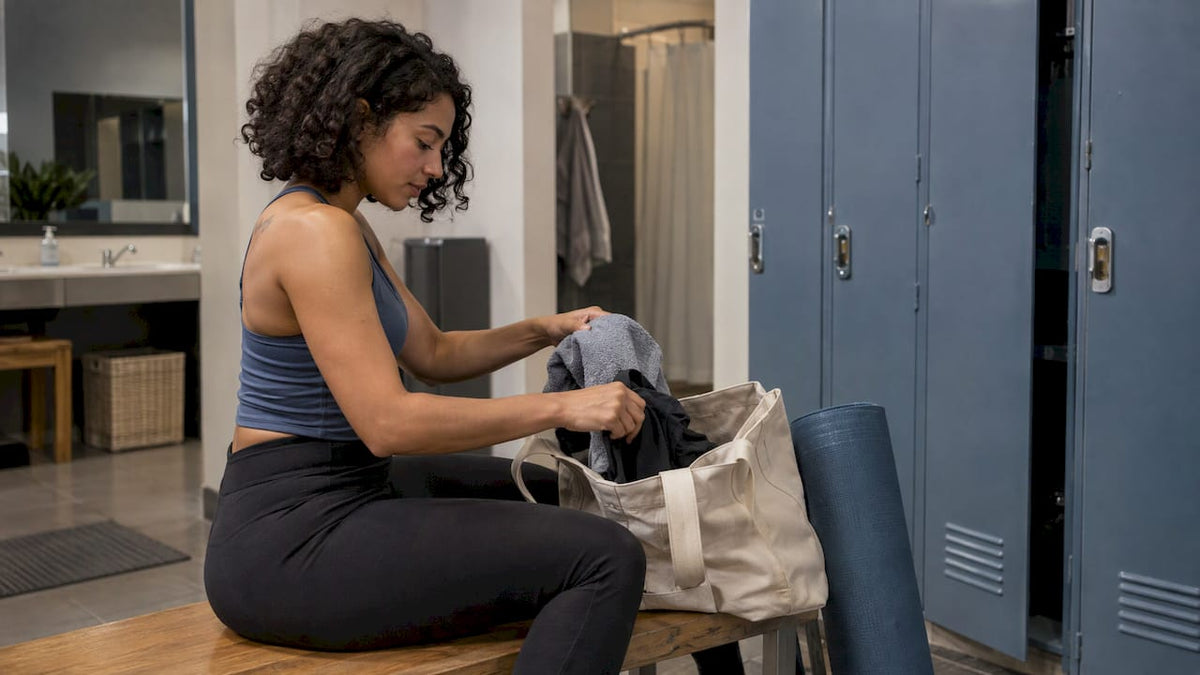
- Pack a wash-ready bag. Bring a separate bag, or a reusable one, for wet clothes and towel, so damp gear never touches your clean spare clothes.
- Cover any cuts. Keep scrapes and open skin covered with a clean bandage during class.
A dedicated yoga towel is built for this job. Our Hermes yoga towel and Yoga Towel SE34 are both made for exactly this barrier role, and owning two means one is always clean when the other is in the wash.
After class: the first 30 minutes matter most
Shower and keep personal items personal
Both the North Carolina Division of Public Health and the CDC tell people who play sports or exercise in close contact to shower as soon as possible. They also say not to share towels, bar soap, razors or other personal items. Wash your hands after using shared equipment as well.
If you have a history of skin infections such as fungus or warts, Dr. Abigail Waldman of Brigham and Women’s Hospital says, as quoted by Wirecutter, to be meticulous about cleaning your mat after every use. That way you avoid reinfecting yourself. If you notice a rash, a persistent itchy patch, or a sore that is red, swollen or not healing, see your doctor or a dermatologist rather than treating it yourself.
Do you need to wash your hair?
If your hair is soaked with sweat, a rinse or wash at your next shower is reasonable, especially if it sits against your neck and back in bed or a car seat. There is no fixed rule. Shampoo as often as your scalp tells you to, and rinse sweat out when you can.
Get the gear out of the bag
This is the habit with the biggest payoff. Public advice on gym laundry, such as this guide for clothes after high-intensity workouts, says that if you can’t wash gear right away you should hang it to air out instead of stuffing it in a gym bag. The reasoning is simple: warm, damp, bunched fabric in an enclosed space is where bacteria and odor thrive.
A practical routine:
- Take the towel, clothes and any strap out of your bag as soon as you are home.
- Hang the towel and clothes over a rack, shower rod or door.
- Unroll your mat and stand it or lay it flat to dry, out of direct sun.
- Put clothes and towel in the wash the same day, or at least before the next class.
How to clean a hot yoga mat
The simple method for a personal mat
For a mat that only you use, the plain method wins. Cleveland Clinic’s guidance is to use a rag and a few drops of dish soap in warm water. Wipe the mat, rinse the rag and wipe again to remove suds, then let the mat air dry.
Step by step:
- Mix. Put a few drops of mild dish soap in a bowl of warm water.
- Wipe. Use a soft rag or cloth, working from one end of the mat to the other. Do both sides.
- Rinse. Wipe again with a cloth dampened with plain water so no soap film is left. Leftover soap is slippery.
- Dry. Hang the mat or lay it flat somewhere airy until it is fully dry before you roll it. A rolled-up damp mat is the same problem as a balled-up damp towel.
We have walked through the full process, including a deeper clean, in our guides to deep cleaning your yoga mat and natural rubber mat care. If you prefer to mix your own spray, see our homemade mat cleaner recipes.
How often to clean it
Cleveland Clinic suggests cleaning a personal mat when it is visibly dirty. In hot yoga, mats get visibly dirty and start to smell sooner, so a light wipe after each class is a sensible habit, with a more thorough clean each week or two depending on how much you practice. Erica Hartmann, a Northwestern University professor quoted by Wirecutter, stresses routine maintenance rather than occasional deep cleaning alone. Small, frequent wipes beat one big scrub a month.
What to avoid
Harsh products are tempting, but they are not needed on your own mat. Wirecutter notes that bleach, alcohol and disinfectant wipes are generally not recommended for personal mats because they can degrade materials over time. Also avoid soaking the mat or putting it in a dryer.
Mat type changes how much water to use. Closed-cell surfaces tolerate a damp wipe easily. Natural rubber and other open-textured surfaces are best cleaned with a lightly damp cloth and not saturated, then left to dry fully. Check the care notes for the exact mat you own.
Washing towels and yoga clothes
Towels
A hot yoga towel takes most of the sweat, so it is the item to wash most often: after every class. Health guidance for athletic settings says towels, uniforms and other laundry should be washed in hot water for at least 25 minutes with ordinary detergent and dried on the hottest setting the fabric tolerates. Check the care label first, since some fabrics cannot take that heat.

If the towel smells even after washing, it usually means it sat damp too long before it was washed, or detergent built up. Wash it sooner next time, use less detergent, and do not add fabric softener.
Tight-fitting workout clothes
Spandex and elastane need a gentler routine than towels. The Spruce advises washing tight-fitting workout clothing after every use in cold or cool water with mild detergent, avoiding chlorine bleach and fabric softener. It also recommends air drying away from sunlight or direct heat, or the lowest dryer setting if you must machine dry.
Dermatologist Dr. Olamiju tells SELF that the dermatologist’s answer is to wash after every workout. People can use their discretion based on sweat and comfort, and clothes should be fully dry and hung in a ventilated place before rewearing. After a hot class, which leaves clothes soaked through, wash them.
Tips that help:
- Turn clothes inside out so the side that touched skin gets the most agitation.
- Use a mesh wash bag to protect stretchy fabrics.
- Skip fabric softener. It is not ideal for athletic wear and can trap odors.
- Rinse out soaked clothes in cold water if you cannot wash them the same day, then hang them.
Straps, mat bags and the rest
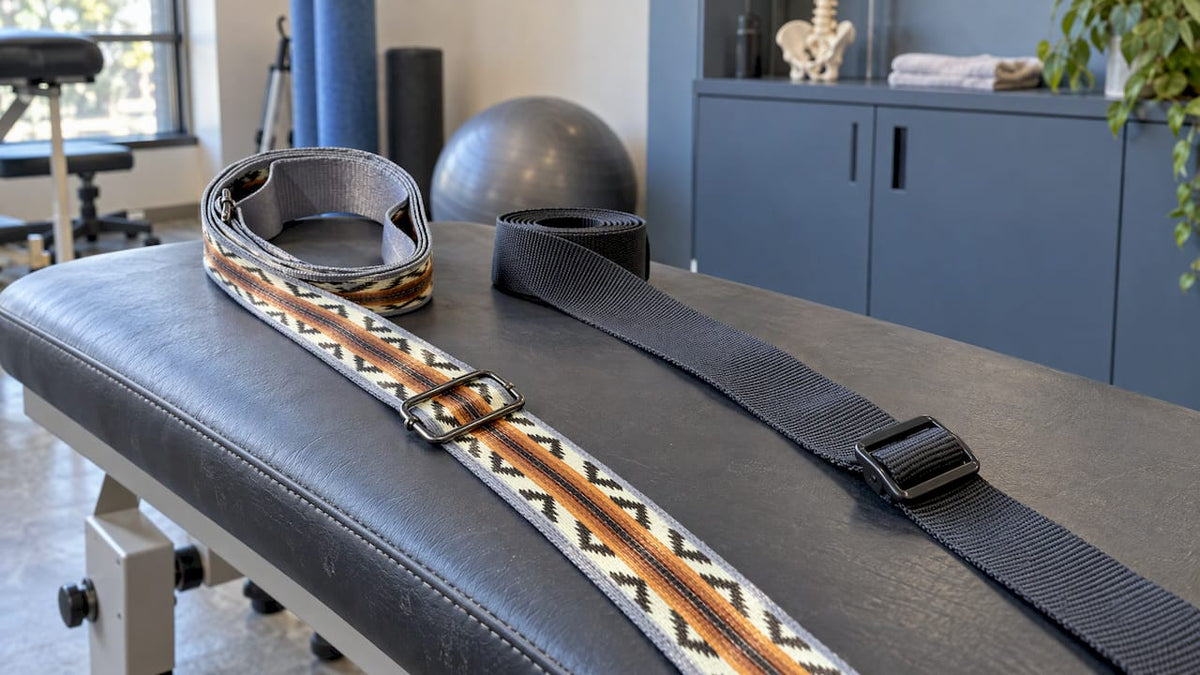
Yoga straps touch your hands and feet, so they pick up sweat too. Hang them to dry after class and wash them with your towels as the care label allows. Wipe the inside of your mat bag from time to time and let it air out open. A bag that is always zipped shut holds moisture. Our clothing and accessories collection has practical pieces for building a routine around clean, dry gear.
Shared studio mats and equipment
A studio mat or a loaner is a different case from your own. Dr. Goldfarb of Cleveland Clinic explains, in the same Cleveland Clinic article, that soap and water are enough for a personal mat. Shared equipment needs chemical disinfection because you cannot know what the previous user left behind.
What the public health guidance says:
- Shared surfaces that touch bare skin, such as mats, should be cleaned after each person with a cleaning or disinfecting spray.
- Skin-contact points on weight equipment should be cleaned at least once a day with an EPA-approved disinfectant effective against Staphylococcus aureus, per the same North Carolina guidance.
- New Jersey’s health department says shared equipment should be cleaned after each use and allowed to dry before reuse.
In practice, that means wiping down any shared mat or prop before you use it and again when you finish, and letting it dry. Put your own towel over it so your skin never touches the surface directly. Wash your hands afterward. Read more on keeping both shared and personal mats clean in our studio mat hygiene guide.
The simplest way to sidestep the question is to bring your own mat. A personal mat is yours alone and cleaned the way you choose. If you travel and take classes in different places, a foldable mat fits in a suitcase, so you are not relying on whatever is on the studio shelf.
A simple routine you can keep
| When | What to do | Why |
|---|---|---|
| Before class | Put a towel over the mat, cover any cuts, skip heavy lotion | Less sweat and oil reaches the mat |
| After class | Shower soon, wash hands, do not share towels or toiletries | Cuts the chance of passing skin infections |
| Same evening | Hang towel, clothes and strap; air the mat | Stops damp fabric from sitting and smelling |
| Every wash day | Towel in hot water; stretchy clothes cold, no softener | Matches the care each fabric tolerates |
| Weekly or when visibly dirty | Soap-and-water wipe of the mat, rinse, air dry | Keeps grip and the mat’s materials in good shape |
| Shared mat | Disinfect before and after, towel on top | You cannot know its history |
Does sweating detox your body?
No. UAMS Health calls the idea that hot yoga can sweat toxins out of the body a myth: sweat is about 99% water, and substances like alcohol and most drugs are cleared by the liver, intestines or kidneys. Cleveland Clinic adds that heavy sweating can raise the risk of dehydration and electrolyte imbalance.
That is a hygiene point as much as a health one. A soaked towel does not mean a cleaner body, only a dirtier towel. Drink water before and after class, and if you feel dizzy, faint or nauseated, step out of the room and rest.
Our view on hot yoga gear
We think hot yoga hygiene should not feel like a second workout. Most of it is habit: a towel on the mat, a shower, and hanging your gear up instead of leaving it in the bag.
That is also why we make mats, towels and straps from durable, sustainable materials and design them for both home and travel. Gear you can rely on is gear you will keep using, and gear that is easy to look after gets looked after.
Our advice is to own your equipment. A mat and towel of your own mean you decide how they are cleaned and dried, and you can bring them anywhere. Own two towels so one is always ready, and keep the mat clean with gentle, regular care.
Nicholas
Gear that fits the routine
If you are building a hot yoga kit, start with a towel for the barrier layer and a mat you can take with you. Yune Yoga offers yoga towels, natural rubber mats, eco mats and foldable yoga mats, along with straps and bundles, all designed for home or travel practice. Browse the full range on our shop.

FAQ
How often should I wash my hot yoga towel?
After every class. A hot yoga towel absorbs a lot of sweat, and public health guidance for athletic laundry calls for hot water, at least 25 minutes and regular detergent. Check the care label first, and hang the towel to dry as soon as you are home if you cannot wash it right away.
Do you need to wash your hair after hot yoga?
There is no strict rule, but sweat-soaked hair is worth rinsing or washing at your next shower. Shower soon after class in any case, since that is the habit health agencies recommend after exercise. If your scalp feels itchy or irritated, wash more often and see a dermatologist if it persists.
Can I use disinfectant wipes on my own yoga mat?
For your own mat, mild dish soap and warm water are enough, as Cleveland Clinic explains. Wirecutter notes that harsh cleaners and wipes can degrade mat materials over time. Disinfectants belong on shared studio mats, where you do not know who used them before.
Do you sweat out toxins in hot yoga?
No. Sweat is about 99% water and exists mainly to cool you down, while the liver and kidneys remove most toxins, according to Cleveland Clinic. Heavy sweating can lead to dehydration, so rehydrate after class.
How should I store my gear between classes?
Hang it up to dry rather than leaving it in a closed bag. Wet clothes and towels should be washed the same day, and a mat should be fully dry before you roll it. Damp, bunched fabric in an enclosed space invites bacteria and odor.
Sources
- Cleveland Clinic: How (and Why) You Should Clean Your Yoga Mat
- Wirecutter: How to Clean a Yoga Mat
- NC DPH: Control of Community-Associated MRSA on Athletic Teams
- CDC: Athletes, MRSA Prevention and Control
- New Jersey Department of Health: Guidelines for Skin Infections in Contact Sports
- The Spruce: How to Wash and Care for Elastane Clothing
- SELF: How Frequently Should You Wash Your Workout Wear?
- Guide to washing gym clothes by activity level
- Cleveland Clinic: What Is Sweat and Why Do We Sweat?
- UAMS Health: Can You Sweat Toxins out of Your Body?