

Exercise in yoga: A beginner’s guide to poses, benefits, and safe practice
Key Takeaways
Exercise in yoga can build strength, mobility, balance, and body awareness without requiring a large amount of equipment. Begin gently, pay attention to alignment and breathing, and let consistency matter more than depth or speed.
- Start with simple poses and controlled transitions.
- Warm up before deeper stretches or weight-bearing work.
- Use blocks, straps, or a folded towel to make poses more accessible.
- Modify anything that causes sharp pain, numbness, or strain.
- Build a routine that leaves room for recovery and gradual progress.
Understanding exercise in yoga
Exercise in yoga usually combines postures, transitions, breathing, and a period of rest. Some sessions feel calm and measured, while others move quickly enough to raise your heart rate. The physical practice can stand alone, or it can complement walking, running, cycling, or resistance training. For a little historical context, this overview of yoga as exercise traces how posture-based practice developed into the form many people know today.
How yoga combines movement, strength, and flexibility
A yoga session may ask you to hold a position, move between poses, or stabilize your body while reaching through your limbs. Downward-facing dog, plank, chair pose, and warrior poses all challenge the body in different ways. Strength comes from supporting your own weight, while controlled range of motion gradually develops flexibility. The result is less about chasing an extreme shape and more about learning to move with control.
The difference between yoga exercise and meditation
Meditation generally emphasizes stillness, attention, and observing the mind. Yoga exercise is more physically active, although breathing and concentration can remain part of the experience. A short relaxation at the end of practice may help you settle, but you do not need to meditate to receive value from a movement-focused session. Treat these as related practices with different primary aims.
How yoga compares with traditional workouts
Traditional workouts often organize training around a measurable target, such as distance, repetitions, load, or pace. Yoga tends to combine several qualities in one session: strength, mobility, balance, coordination, and body awareness. It may not replace every form of cardiovascular or resistance exercise, but it can fill useful gaps in a broader routine. The best comparison is practical: choose the activity that supports the quality of movement and fitness you want to develop.
Choosing a yoga style for your fitness goals
A slower class can be a sensible starting point if you are learning basic alignment or returning after time away. Faster flowing classes may suit someone who enjoys continuous movement, while gentle or restorative sessions can support mobility and recovery. The Nutrition Source offers a useful guide to yoga styles when you want to compare broad approaches. Start with a pace that lets you breathe steadily and understand the instructions.
Preparing for a safe yoga session
A safe session begins before the first pose. Choose a clear surface, wear clothing that allows movement, and leave enough time that you do not feel rushed. A few simple adjustments can make practice more comfortable at home, outdoors, or in a hotel room. Keep the goal modest at first: finish feeling better informed about your body, not exhausted by it.
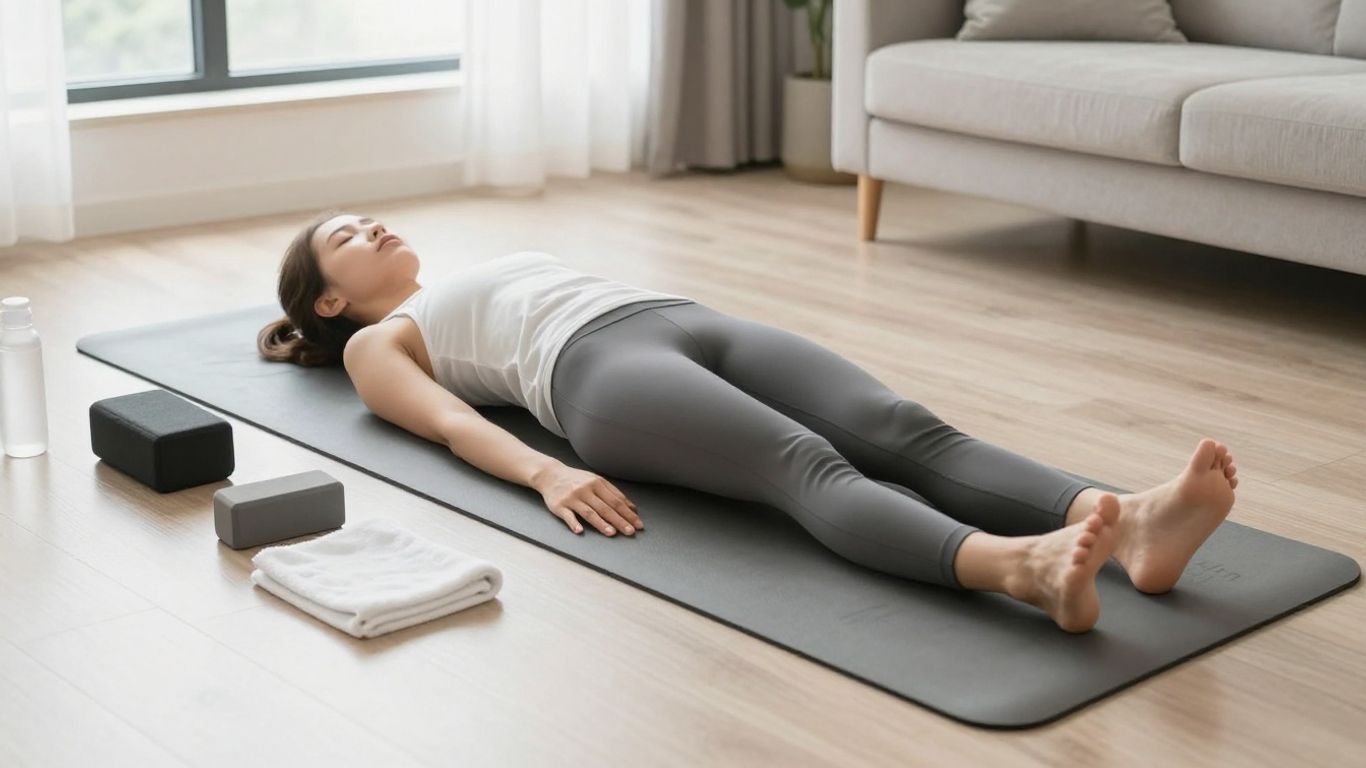
Setting up your space and choosing basic equipment
Use a nonslip surface with enough room to extend your arms and legs without hitting furniture. A mat is useful, but a towel or folded blanket can help with comfort when a full setup is not available. Yune Yoga offers foldable travel mats designed for convenience and portability, which can suit people who practice in parks, beaches, or hotel rooms. Keep blocks, a strap, and water nearby if they make the session easier.
Warming up your joints and muscles
Begin with several minutes of easy movement rather than dropping straight into a deep stretch. Shoulder rolls, ankle circles, cat-cow, gentle marching, and a few slow sun-salutation movements can gradually prepare the body. Warm muscles usually move more comfortably, but a warm-up should not feel like a second workout. Keep the range small and increase it only when the motion feels smooth.
Understanding breathing and body alignment
Let your breath remain steady enough that you can speak a short sentence if needed. As you move, keep track of the points that support you: feet pressing into the floor, hands spreading across the mat, and the spine lengthening without force. Steady breathing supports control when a pose becomes demanding. If your breathing turns choppy, reduce the range or come out of the pose.
When to modify or skip a pose
Modify a pose when your balance is uncertain, your joints feel compressed, or you cannot maintain the intended shape without strain. Skip it if you feel sharp pain, numbness, dizziness, or sudden instability. People with an injury, pregnancy, or a medical condition should ask an appropriate health professional how to adapt exercise. A safe practice is not a test of endurance.
Foundational yoga poses for beginners
Beginners do not need a long list of complicated positions. A small group of familiar poses can teach the basics of standing, bracing, folding, sitting, and moving through the spine. Practice each one slowly enough to notice where your weight goes. WebMD's beginner pose guide can provide additional visual instruction, but an instructor is useful when alignment remains unclear.
Standing poses for balance and leg strength
Mountain pose teaches a simple standing foundation: feet grounded, knees relaxed, and the crown of the head reaching upward. From there, chair pose and warrior II add more work for the legs while asking you to keep the torso organized. Tree pose introduces balance; keep one hand near a wall at first. Short holds with calm breathing are more useful than forcing a long, shaky hold.
Core-focused poses for stability
Plank, tabletop variations, bridge, and a gentle boat pose can train the trunk to resist unwanted movement. Keep the ribs from flaring and avoid letting the lower back take over. You can lower the knees in plank or keep the feet on the floor in boat pose. The aim is steady support, not a dramatic shape.
Seated poses for mobility and posture
Easy seat, staff pose, and a comfortable seated twist offer opportunities to practice an upright posture without balancing demands. Sit on a folded blanket if the pelvis tips backward or the knees feel strained. In a twist, lengthen first and rotate only as far as the breath stays easy. Move out slowly rather than releasing all at once.
Gentle stretches for flexibility and recovery
Child's pose, supine knee-to-chest, and a gentle reclined hamstring stretch can fit at the end of a session. Keep stretches mild enough that you can relax your jaw and breathe normally. Flexibility changes gradually, so a comfortable repeatable sensation is preferable to a deep pull. If you are managing back discomfort, this back-friendly yoga resource offers another place to review gentle movement ideas.
Building strength with yoga
Yoga can challenge muscles through leverage, holds, and repeated transitions. The load is usually your body weight, so the difficulty changes when you alter the angle, duration, or amount of support. Strength work should still be balanced with rest and good technique. A short, consistent practice often teaches more than an occasional session pushed to fatigue.
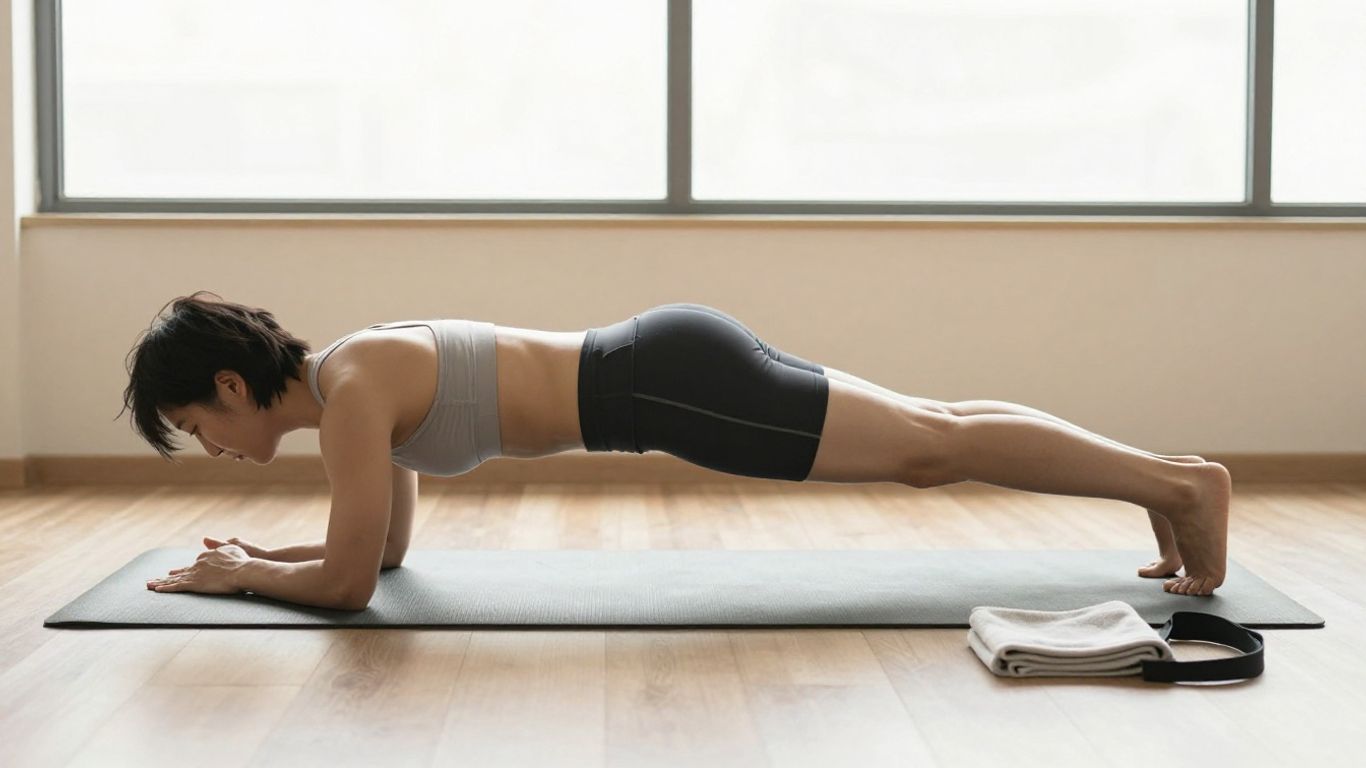
Using body weight to train major muscle groups
Chair and warrior poses involve the legs, while plank and side plank ask the shoulders and trunk to stabilize. Bridge works the back of the hips, and downward-facing dog combines shoulder support with a long posterior-chain stretch. Move between these positions deliberately instead of rushing to make the sequence feel harder. If the wrists become uncomfortable, lower the knees or use a raised surface only if it remains stable.
Progressing from modified to advanced poses
Progress can mean holding a basic pose for a few more breaths, improving control, or needing less support. It does not have to mean attempting the most advanced variation. Raise the hands on blocks for plank, keep the back knee down in a lunge, or practice balance beside a wall. The Vinyasa fundamentals guide can help beginners understand how breath and movement connect without treating speed as the goal.
Creating a short full-body yoga routine
A practical strength sequence might include a warm-up, two standing poses, plank or tabletop work, bridge, and a quiet cooldown. Complete one or two rounds with rest between demanding positions. Keep transitions simple enough that you can remember them without looking down constantly. A routine that fits into an ordinary day is easier to repeat.
Combining yoga with cardio and resistance training
Yoga can pair well with other forms of exercise when each session has a clear purpose. Place a more active yoga practice away from a hard leg-training day if your muscles need recovery, and use gentler mobility work after prolonged sitting or easy cardio. Track how your body responds rather than assuming more sessions are always better. The aim is a balanced week, not a crowded schedule.
Improving flexibility, balance, and mobility
Flexibility is only one part of moving well. Mobility also depends on strength, joint control, coordination, and the ability to use a range of motion comfortably. Balance improves when the eyes, feet, trunk, and breath work together. Progress tends to be gradual, especially when practice is consistent but not aggressive.
Stretching tight hips and hamstrings safely
For hamstrings, try a standing or seated fold with the knees slightly bent instead of forcing straight legs. In a low lunge, place the hands on blocks and keep the front knee tracking toward the toes. Hips often feel more open when the surrounding muscles are warm, so include these stretches after several minutes of movement. Back off if the sensation becomes sharp or concentrated behind the knee.
Increasing shoulder and upper-back mobility
Cat-cow, thread-the-needle, cactus-arm movements, and gentle wall slides can explore the shoulders and upper back. Keep the neck relaxed and avoid pushing the arms into a range that causes pinching. Think of creating space across the collarbones rather than pulling the shoulders down forcefully. Small, repeated movements are usually easier to control than one intense stretch.
Practicing balance without losing stability
Stand near a wall or sturdy chair when practicing tree pose, warrior III, or heel-to-toe walking. Fixing the eyes on one unmoving point can reduce unnecessary wobbling. It is perfectly reasonable to touch the support, reset the feet, and try again. Balance practice is about responding to movement, not proving that you can remain perfectly still.
Using props to support gradual progress
Blocks shorten the distance to the floor, blankets add comfort, and straps can provide reach without rounding the spine. Yune Yoga makes durable yoga straps that can help support a gradual approach to poses requiring more reach. A prop should make alignment clearer, not pull you deeper than your body can control. The site's guide to yoga strap uses offers practical examples of how a strap can assist flexibility and stability.
Designing an exercise-in-yoga routine
A useful routine reflects your available time, current ability, and reason for practicing. Someone seeking mobility may choose a slower sequence, while someone building strength may use longer holds and repeated transitions. There is no need to copy a lengthy class when ten focused minutes are realistic. Plan for the week you actually have, not an ideal schedule that quickly becomes stressful.
Choosing session length and weekly frequency
Start with 10 to 20 minutes two or three times a week, then adjust based on energy and recovery. Add time only when the practice feels manageable and your technique remains steady. On busy days, a short sequence of breathing, mobility, and one or two standing poses can still maintain the habit. Yune Yoga's absorbent yoga towels are practical for sessions where sweat or changing locations makes a clean, comfortable surface useful.
Structuring warm-up, active poses, and cooldown
Give the body a gradual entry, a focused middle, and a slower finish. A simple structure might look like this:
| Practice phase | Typical focus | Example duration |
|---|---|---|
| Warm-up | Spine, joints, easy breathing | 3–5 minutes |
| Active work | Standing, core, or flowing poses | 8–15 minutes |
| Mobility | Comfortable stretches | 3–8 minutes |
| Cooldown | Rest and relaxed breathing | 2–5 minutes |
This framework is flexible rather than prescriptive. On a recovery day, make the active section shorter and give more time to gentle mobility; on a stronger day, add a second controlled round.
Adjusting practice for different fitness levels
A beginner may use a wall, blocks, or bent knees throughout the session. Someone with more experience can increase hold time, add a controlled transition, or explore a more demanding variation while preserving alignment. If you are returning after illness or inactivity, begin below your previous level. For ideas about accessible video practice, these free yoga exercise videos provide another general starting point.
Tracking progress without overtraining
Record simple observations: how often you practiced, which poses felt stable, and whether you recovered comfortably by the next day. Do not use flexibility alone as the score. Better breathing, smoother transitions, improved balance, and greater confidence are meaningful progress too. A routine should leave enough energy for ordinary life.
Avoiding common yoga exercise mistakes
Most early mistakes come from trying to force a result before learning the movement. A pose can look simple while still demanding careful coordination. Slow down, use support, and treat discomfort as information rather than a challenge to defeat. These habits make exercise in yoga more sustainable and more enjoyable.
Pushing into pain instead of healthy discomfort
A mild stretch or muscular effort can be expected, but sharp, burning, electrical, or joint-focused pain is a reason to stop. Come out of the pose, rest, and consider a smaller range or different variation. Pain that persists deserves professional attention rather than repeated testing. You never need to earn a pose by overriding a warning signal.
Holding your breath during challenging poses
People often stop breathing when concentrating on balance or strength. Instead, shorten the hold, soften the effort, and return to an even rhythm. Breathing out during a transition can help reduce unnecessary bracing. If you cannot breathe comfortably, the variation is currently too demanding.
Relying on flexibility rather than proper alignment
A flexible person can still collapse into a pose, while a less flexible person can practice it with excellent control. Keep the joints organized, distribute weight through the hands or feet, and maintain a spine position that feels supported. A strap or block can prevent you from reaching past your available range. Form is a moving target, so reassess it as fatigue builds.
Knowing when to seek guidance from a qualified instructor
Personal instruction can be valuable when you are managing an injury, learning weight-bearing poses, or repeatedly feeling pain. Choose someone who explains modifications clearly and welcomes questions. You can also bring specific concerns to a qualified medical professional before starting or changing an exercise program. Good guidance should make practice feel more informed, not more intimidating.
Conclusion
A beginner-friendly yoga practice can be simple, portable, and adaptable. Start with steady breathing, clear alignment, and a few foundational poses, then build strength and mobility at a pace your body can repeat. With patience and sensible support, yoga can become a practical part of a balanced movement routine.
Frequently Asked Questions
Is yoga enough exercise for a beginner?
Yoga can develop strength, mobility, balance, and coordination, especially when sessions include active poses and controlled transitions. Many people also pair it with walking, cardio, or resistance training for a broader routine.
How often should a beginner practice yoga?
Two or three comfortable sessions per week are a reasonable starting point. Shorter practices are fine, and you can increase frequency when your body recovers well and your technique remains controlled.
Should yoga feel painful?
Yoga may involve gentle stretching or muscular effort, but sharp, burning, electrical, or joint pain is not a goal. Stop, modify the position, and seek professional advice if discomfort continues.
What equipment do I need for yoga?
A stable nonslip surface and comfortable clothing are enough to begin. Blocks, blankets, straps, and towels can make practice more comfortable and help you adjust poses.
Can yoga improve flexibility?
Regular, gradual practice can help you become more comfortable moving through available ranges. Strength and control matter as much as passive flexibility, so avoid forcing deeper positions.
Is yoga good for balance?
Standing poses and slow transitions can develop balance by challenging the feet, legs, trunk, and visual focus. Practice near a wall or chair until you feel secure.
What should I do if I have an injury?
Ask a qualified healthcare professional how exercise should be adapted for your condition. A knowledgeable yoga instructor may then help you choose appropriate modifications, but pain should not be ignored.

