Fit a Dorm Room Yoga Mat in 2 by 6 Feet of Space and Keep It Clean
For most dorm rooms, a 4 to 6 mm rollable mat gives you the best mix of joint cushion, grip, and easy storage. If floor space is tight or you’re moving between rooms and home, a foldable travel mat solves the storage problem without much comfort trade-off. Either way, look for something you can roll or fold into a corner, under the bed, or behind a door in seconds. Some yoga product lines cover that ground.
TL;DR:
- A 4 to 6mm thick yoga mat offers the best balance of cushioning and stability for dorm floors and daily use.
- Textured surfaces made of natural rubber or PU provide better grip on slick dorm flooring, especially during sweaty sessions.
- Foldable mats are ideal for small spaces, fitting into drawers or hanging over doors, while rollable mats are better for cushioning but harder to store.
- Cleaning should be done after each session with a mild solution and disinfected roughly every 10 uses to prevent bacterial buildup.
- A standard practice space requires about 2 by 6 feet of clear floor, with overhead clearance tested for lofted beds, and consistent spot setup enhances routine.
Table of Contents
- What Features Actually Matter for a Dorm Room Yoga Mat
- How Do You Fit a Yoga Mat in a Dorm Room?
- How Often Should You Clean a Dorm Yoga Mat?
- Where Should You Store a Yoga Mat in a Small Room?
- Which Mat Fits Your Practice Style?
- Why Yuneyoga’s Mats Work for Dorm Constraints
- Buying Checklist: What to Look For Before You Buy
- What Do Dorm Students Actually Say About Their Mats?
- Should You Buy a Yoga Mat Online or in Store?
- How Much Floor Space Does a Dorm Yoga Mat Actually Need?
- A Quick Habit Worth Building This Week
- Shop Dorm-Friendly Mats Built to Move With You
- Sources
- FAQ
What Features Actually Matter for a Dorm Room Yoga Mat
Not every mat feature matters equally once you’re working with 150 square feet and a roommate. Thickness, grip, material, size, and weight decide whether a mat gets used daily or shoved in a closet by week three.
Thickness is the first trade-off. A 3mm mat packs flat and travels well, but it does little for your knees on a dorm floor that’s usually laminate, tile, or thin carpet over concrete. A 4 to 6mm mat is the sweet spot for most students: enough cushion for kneeling poses without turning balance work into a wobble-fest. Mats above 8mm feel plush but can actually work against you in standing poses, since a soft, deep surface makes it harder to feel the floor under your feet. Practitioners doing daily flow tend to prefer a firmer 4 to 5mm mat and add a folded towel under the knees only when a pose calls for it, rather than buying a bulkier mat that’s harder to store.
Grip depends more on surface than price tag. Dorm hardwood and linoleum can get slick, especially once you’re a few minutes into a sweaty flow. A mat with a textured PU top or a natural rubber base holds up far better here than a smooth PVC surface, which tends to get slippery exactly when you need traction most.
Material is where the real differences show up:
- Natural rubber — grippiest option wet or dry, and it tends to outlast TPE or PVC mats when cared for properly. Heavier and pricier, but it earns that weight back in durability.
- TPE (thermoplastic elastomer) — light, latex-free, and easy on a tight budget, though grip fades faster under heavy sweat.
- Cork — naturally antimicrobial surface, which cuts down on odor buildup in a shared room, but it’s a stiffer feel underfoot.
- PVC — the cheapest option and often the least eco-friendly, with grip that degrades over time.
Size and weight round out the decision. Standard mats run about 68 inches long, which fits most people, but taller students should look for a 72-inch or longer version. For weight, anything under 3 pounds is easy to carry between dorm and gym; anything heavier starts to feel like a chore on a daily basis.
On budget: expect $20 to $40 for a solid beginner mat at 5 to 6mm thickness. Spend more, usually $60 and up, when you want natural rubber for its grip and lifespan, or when you know you’ll be using the mat daily for years, not just a semester.
How Do You Fit a Yoga Mat in a Dorm Room?
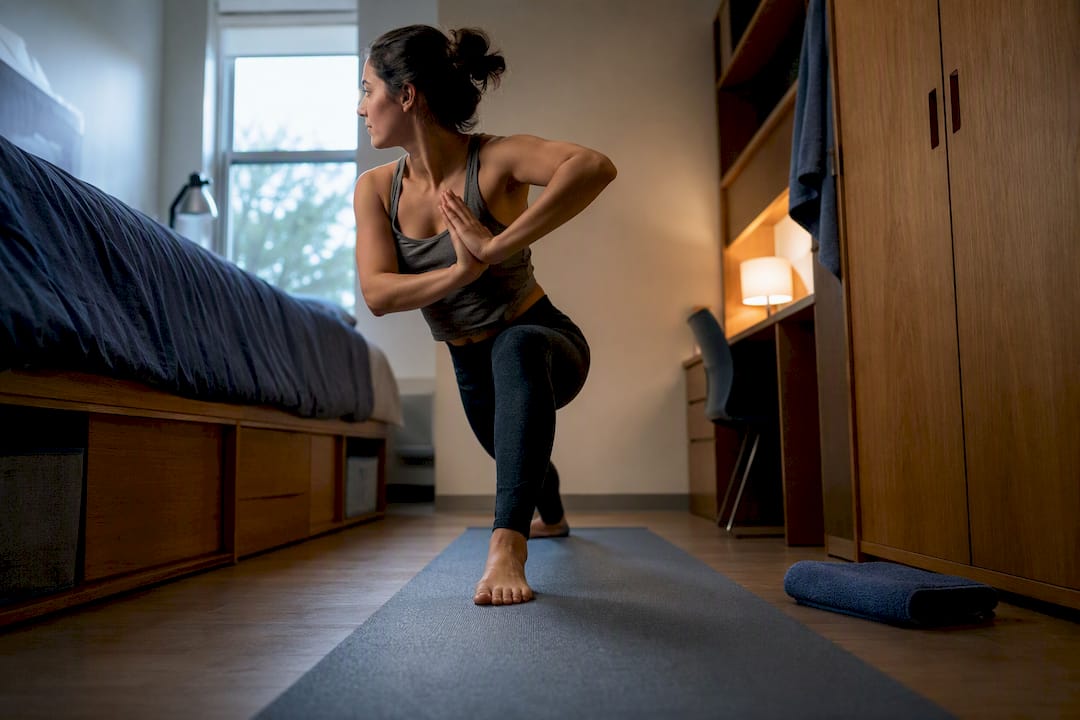
Most standard mats measure roughly 24 by 68 inches, which unrolls into a footprint close to 2 by 6 feet. That’s smaller than it sounds. Typical residence hall furniture dimensions show why: a twin bed, desk, and dresser eat most of a room’s square footage, but a 2 by 6 foot practice zone still fits in the strip beside the bed, in front of a closet or wardrobe, or under a window where there’s usually a gap of clear floor.
Here’s how to find and clear that space the first time you set up:
- Measure the gap. Walk the open floor between furniture pieces; anything close to 2 by 6 feet works.
- Clear three quick zones. Shift a storage cube against the wall, slide loose shoes under the bed, and tuck a desk chair fully under the desk. That alone usually frees 2 to 5 square feet.
- Pick a consistent spot. Using the same corner every time cuts setup time to seconds and builds a habit faster than practicing in a random spot each day.
- Check your ceiling clearance. Bunk beds and lofted setups can make standing stretches or sun salutations cramped; test overhead reach before you commit to a spot.
- Set roommate expectations early. Early morning or late evening flows are common; a quick heads-up (and headphones for any audio) avoids friction.
Keep noise and light in mind, too. A quiet flow at 7 a.m. is a different ask than one at midnight, and a mat that’s already out and visible is a small nudge that keeps you actually using it instead of putting it off.
How Often Should You Clean a Dorm Yoga Mat?
Wipe your mat down after every single use, and give it a deeper disinfecting clean roughly every 10 uses. That guidance comes from health researchers cited by KTVZ’s coverage on exercise mat hygiene, and it matters more in a dorm than at home. You’re sharing a bathroom, a floor, and often airflow with dozens of other people, so bacteria and sweat residue build up faster than they would in a private space.
The routine itself is simple:
- After every session: Spot clean with a mix of mild detergent and water, using a microfiber cloth, then let the mat air dry flat or hung over a chair.
- Roughly every 10 uses: Do a fuller wipe down with a commercial mat disinfectant or a stronger cleaning solution, covering both sides.
- Weekly, if you’re practicing daily: Give the mat a proper deep clean rather than just a quick wipe, especially around the areas your hands and feet touch most.
Material matters here too. Closed-cell surfaces or mats with antimicrobial treatments need less frequent disinfecting because sweat and bacteria don’t soak into the material the way they do with open-cell foam. That’s one more reason natural rubber and cork mats tend to hold up better in shared living spaces than budget open-cell PVC.
If you want exact recipes rather than general guidance, Yuneyoga’s blog has a homemade yoga mat cleaner guide and a step-by-step cleaning walkthrough that cover different surface types in more detail than fits here.
Where Should You Store a Yoga Mat in a Small Room?
The best storage method depends on whether you have a rollable or foldable mat, and dorm rooms usually favor whichever one disappears fastest when you’re not using it.
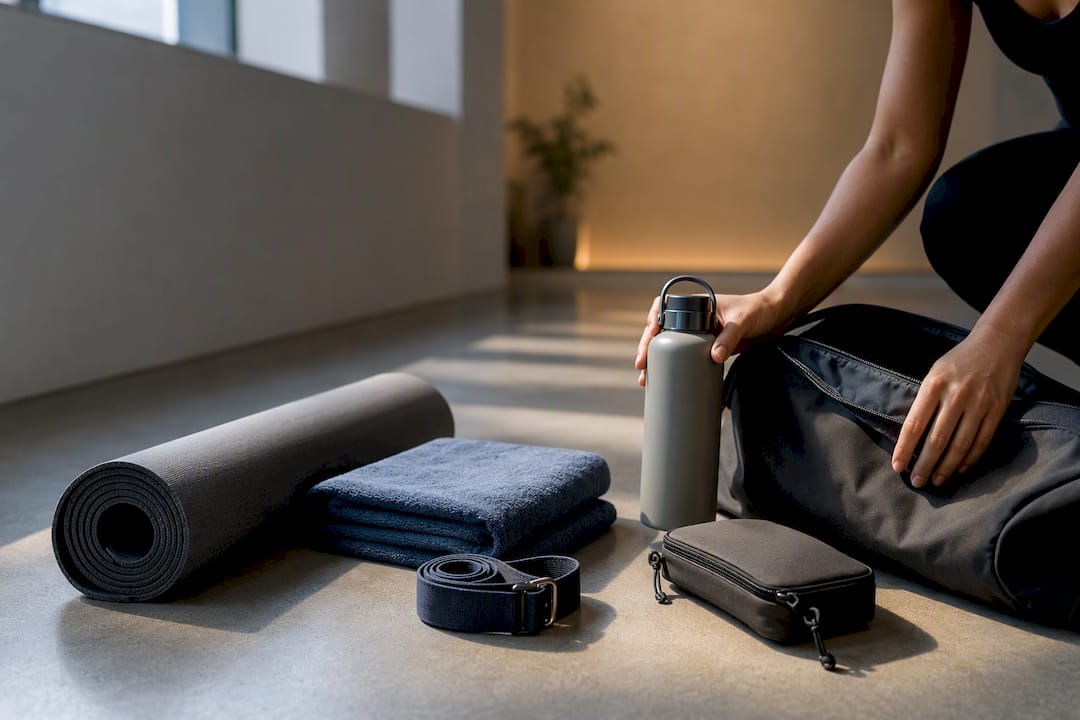
Rollable mats work well under the bed, especially in a lifted frame with storage bins, or standing upright in a corner tube or narrow gap between furniture. Foldable travel mats have the edge in tight quarters: because they fold down to roughly the size of a folded towel, they slide into a drawer, hang over a door hook, or tuck behind a wardrobe without needing dedicated floor space at all. Travel mats built for portability are generally very lightweight, which makes the trade of slightly less cushioning worth it if storage is your biggest constraint.
A few quick options worth trying:
- Vertical tube or basket in a closet corner for rolled mats.
- Over-the-door hook for foldable mats or a mat carried in a slim strap.
- Under-bed bin shared with other gear, if your bed frame allows the clearance.
On accessories, a slim carrying strap beats a padded bag for most dorm users. A strap adds almost no bulk and takes seconds to loop, while a full bag is one more thing competing for closet space.
Pro Tip: Never store a damp mat rolled up tight. Trapped moisture causes odor and can warp the edges over time, so let it fully air dry flat before rolling it away.

For more layout ideas, Yuneyoga’s guide on yoga mat storage for small spaces and its follow-up on clutter-free storage solutions both dig deeper into door-mounted and vertical options.
Which Mat Fits Your Practice Style?
Different routines call for different mats, and matching the two up front saves you from buying twice.
Restorative or meditation-focused practice doesn’t need much cushion. A lighter, thinner mat, or even a standard mat with a folded blanket on top for seated poses, covers most of what you need without adding bulk to your storage setup.
Daily vinyasa or flow practice benefits from a 4 to 5mm mat with solid grip in both dry and wet conditions, since you’re moving through transitions where a slip actually interrupts the flow.
Hot or sweaty practice calls for a closed-cell surface or a PU-topped mat. These wipe down fast and keep their traction even when you’re dripping, where an open-cell foam mat gets slick and takes longer to dry between sessions.
Commuting students who carry a mat to class or a gym across campus should prioritize weight and foldability above almost everything else. Anything under 3 pounds that folds small enough for a backpack beats a heavier, more cushioned mat that never leaves your room because it’s a hassle to carry.
If your routine mixes a couple of these, for example daily flow most days with the occasional hot class, a mid-weight rubber mat in the 4 to 5mm range covers both reasonably well without needing two separate mats.
Why Yuneyoga’s Mats Work for Dorm Constraints
Some yoga product lineups are designed around common dorm practice constraints such as limited storage, frequent moving, and a need for materials that hold up to regular cleaning. Natural rubber mats offer grip and longevity that budget PVC options often can’t match, while foldable travel mats address storage by packing small enough for a drawer or backpack pocket. Eco-focused options appeal to sustainability-minded users looking for longer lasting mats.
A few resources worth bookmarking before you buy:
- Storage ideas for small spaces, for layout tactics beyond what fits in this article.
- How to clean and maintain your mat properly, for longer-term care beyond the weekly wipe down.
Buying Checklist: What to Look For Before You Buy
Run through this list before adding anything to your cart:
- Thickness in the 4 to 6mm range unless you specifically need ultraportable and are willing to trade cushion for it.
- A grippy top surface (PU coating or textured rubber), not a smooth PVC finish that turns slick when damp.
- Weight under 3 pounds if you plan to carry the mat between your room and a gym or studio regularly.
- A material that matches your climate needs, natural rubber or a closed-cell surface for sweaty practice, TPE for a lighter budget option.
- A rollable or foldable design that fits your actual storage spot, checked against your room’s under-bed clearance or closet depth before you order.
- A clear return policy, since mat feel is personal and what looks right online doesn’t always feel right on your floor.
Red flags to skip: mats with no stated thickness, unusually low prices with no material listed, and reviews that consistently mention a chemical smell that doesn’t fade after airing out.
Three quick picks by use case:
What Do Dorm Students Actually Say About Their Mats?
The pattern that shows up again and again in student feedback is simple: portability wins over almost everything else once the semester starts. A mat that felt fine in a store often gets abandoned in a closet if it’s too bulky to roll out quickly between classes, roommates, and a shared bathroom schedule.
Students who stick with a mat long term consistently mention two things: a spot they can set up in under 30 seconds, and a surface that doesn’t feel slippery once they’ve broken a sweat. Grip complaints are the most common regret among students who bought the cheapest PVC option available, especially once they moved past beginner poses into anything requiring sustained balance.
Storage satisfaction tracks closely with mat type. Rollable mat owners in smaller rooms report more frustration with finding a permanent spot, while owners of foldable travel mats mention fitting the mat into a drawer or bag without a second thought. That difference alone explains why so many dorm-specific buying guides lean toward foldable designs even when a rollable mat offers slightly better cushioning.
The honest takeaway from student experience is that the “best” mat is less about brand and more about whether it matches your actual room and routine. A mat that looks perfect on a product page but doesn’t fit your storage reality will end up unused by midterms.
Should You Buy a Yoga Mat Online or in Store?
Buying online gives you access to a far wider range of thickness, material, and size options than most college bookstores or local sporting goods stores carry, plus the ability to compare specs side by side before committing. Local stores have one real advantage: you can test the grip and cushion with your hands before paying, which matters if you’ve never handled a rubber mat versus a foam one.
Return policies are the detail students skip and later regret. Before buying anywhere, check three things: whether the mat can be returned once it’s been unrolled and used briefly (many retailers require this for hygiene reasons), the return window in days, and whether return shipping is covered or comes out of your pocket. A mat that feels great in a showroom can still feel wrong on your actual dorm floor once you’ve done a full session on it, so a flexible return window matters more here than with most gear purchases.
For most students, ordering online makes more sense simply because dorm rooms rarely sit near a specialty yoga retailer, and shipping a rolled mat is straightforward. Keep the packaging until you’ve tested the mat for a week or two, just in case a return becomes necessary.
How Much Floor Space Does a Dorm Yoga Mat Actually Need?
A standard mat needs roughly 2 by 6 feet of clear floor, which is smaller than most students assume before they measure it out. That footprint is usually enough even in a small dorm room, as long as you account for arm reach during standing poses, which can add another foot or two of clearance on either side.

The realistic spots in most dorm layouts are the strip beside the bed, the floor in front of a closet or wardrobe, or the gap near a window where furniture rarely gets pushed all the way to the wall. None of these need to be permanently cleared. The point of a rollable or foldable mat is that the space only needs to exist for the length of your practice, not all day.
One detail worth double checking before buying a longer mat: bunk beds and lofted frames can cut ceiling clearance enough to make standing stretches cramped, even when floor space is fine. Test your reach in the spot you’re planning to use before ordering, especially if you’re taller than average or your room has a lower ceiling than a typical dorm.
A Quick Habit Worth Building This Week
Roll your mat out before bed and leave it visible until morning. That one small change removes the biggest barrier to consistency, which isn’t motivation, it’s the ten seconds of friction between deciding to practice and actually starting.
On spending: buy the mat that fits your actual routine, not the thickest or fanciest one on the page. A $30 mat used daily beats a $100 mat that sits folded in a drawer, and a natural rubber mat is worth the extra cost only if you know you’ll keep using it well past this semester.
— Nicholas
Shop Dorm-Friendly Mats Built to Move With You
Yuneyoga’s approach to dorm practice comes down to one thing: mats that hold up to daily rolling, folding, and moving without losing grip or shape. The foldable yoga mats pack down small enough for a closet shelf or backpack, while the natural rubber and eco mats give you the traction and lifespan that cheaper PVC options can’t match after a semester of daily use.
Before you buy, check the product page for three things: listed thickness (4 to 6mm is the dorm sweet spot), the base material, and the return window in case the feel isn’t right once you’ve tried it on your floor. If you need a strap or carry accessory to go with your mat, the yoga clothes and accessories collection covers that without adding bulk to your storage. Current stock and exact return terms are listed on each product page, so confirm those details before checkout.
Sources
- Exercising: How often do you need to clean your yoga mat? - KTVZ
- How to create a calm yoga space in even the smallest dorm - The Yoga Collective
FAQ
What Thickness Is Best for a Dorm Room Yoga Mat?
A 4 to 6mm mat works best for most dorm floors, balancing joint cushion with enough stability for standing poses. Thinner 3mm mats pack smaller but offer less protection on hard laminate or tile flooring common in dorms.
How Often Should I Clean My Dorm Yoga Mat?
Wipe it down with mild detergent and water after every use, and do a deeper disinfecting clean roughly every 10 uses. Shared dorm floors and bathrooms make this frequency more important than it would be in a private home.
Is a Foldable or Rollable Mat Better for a Dorm?
Foldable mats win on storage since they tuck into a drawer or backpack, while rollable mats generally offer more cushion for daily practice. If storage space is your biggest constraint, a foldable yoga mat is the more practical pick.
How Much Does a Good Dorm Yoga Mat Cost?
Solid beginner mats typically run $20 to $40 at 5 to 6mm thickness. Natural rubber options cost more upfront but tend to outlast cheaper materials, making them worth it for daily, long-term use. Current pricing for specific Yuneyoga product lines is listed on the site.
Can I Practice Yoga Quietly Without Disturbing My Roommate?
Yes. Choose slower flows or restorative sequences during shared hours, use headphones for any audio, and keep your practice zone consistent so setup and takedown stay quick and quiet.