

Dimensions of yoga mat: how to choose the right size and thickness
Key Takeaways
Choosing a mat is easier when you compare its measurements with your body, practice, and available space rather than relying on a label alone.
- Standard mats commonly suit everyday practice, but taller or broader practitioners may prefer extra length or width.
- Thickness affects both cushioning and how steadily you feel connected to the floor.
- Dynamic, restorative, hot, and travel practices call for different combinations of size and portability.
- Measure your practice area and storage space before buying a larger mat.
- Check length, width, thickness, weight, grip, and material together before making a decision.
Understand standard yoga mat dimensions
The dimensions of a yoga mat usually come down to three measurements: length, width, and thickness. Length determines whether your head and feet stay supported during floor poses, while width affects how freely you can move side to side. Thickness changes the feel of every pose, from standing balance to kneeling transitions, so it deserves just as much attention as the other measurements.
Typical length and width measurements
A common adult yoga mat is about 68 inches long and 24 inches wide, although many everyday options extend to 72 inches and 26 inches wide. These measurements work well for many people and are easy to carry into a studio. Still, “standard” is only a starting point; your height, shoulder span, and preferred movement range may call for something different.
When comparing the dimensions of yoga mat options, lay the tape measure flat rather than estimating from a product photo. A few additional inches can make a noticeable difference when you stretch out, turn sideways, or move through wide-legged poses. A useful yoga mat dimensions guide can help you compare those basic measurements before you shop.
Common thickness options
Thin mats are often around 1/16 inch thick, standard mats around 1/8 inch, and cushioned mats may reach 1/4 inch. Those figures are useful reference points, but the material and construction also influence how soft or firm a mat feels. Two mats with the same stated thickness can provide different levels of support under your hands and knees.
Thickness is a balance rather than a simple ranking. A very thin surface can feel stable and pack easily, while a thicker one may feel more comfortable during seated or kneeling work. For a closer comparison of cushioning and stability, see this yoga mat thickness guide as you narrow the range.
How dimensions vary by mat type
Travel mats tend to be thin and light, and some fold instead of rolling. Extra-long and extra-wide mats provide more room but usually take up more space in a closet, car, or studio rack. Specialized mats may also vary in texture and construction, so dimensions should be read alongside grip, weight, and care requirements.
A mat’s category can suggest its intended use, but it cannot make the decision for you. A frequent traveler may value a compact folded mat more than generous surface area, while a home practitioner may welcome extra room. The best choice is the one that supports the way you actually practice.
Choose the right mat length for your height
Length becomes most noticeable when you lie down or extend fully through a pose. If your feet or head regularly reach beyond the mat, the surface can feel cramped and your clothing may brush the floor. Start with your height, then add room for the way you move rather than choosing solely from a familiar standard size.
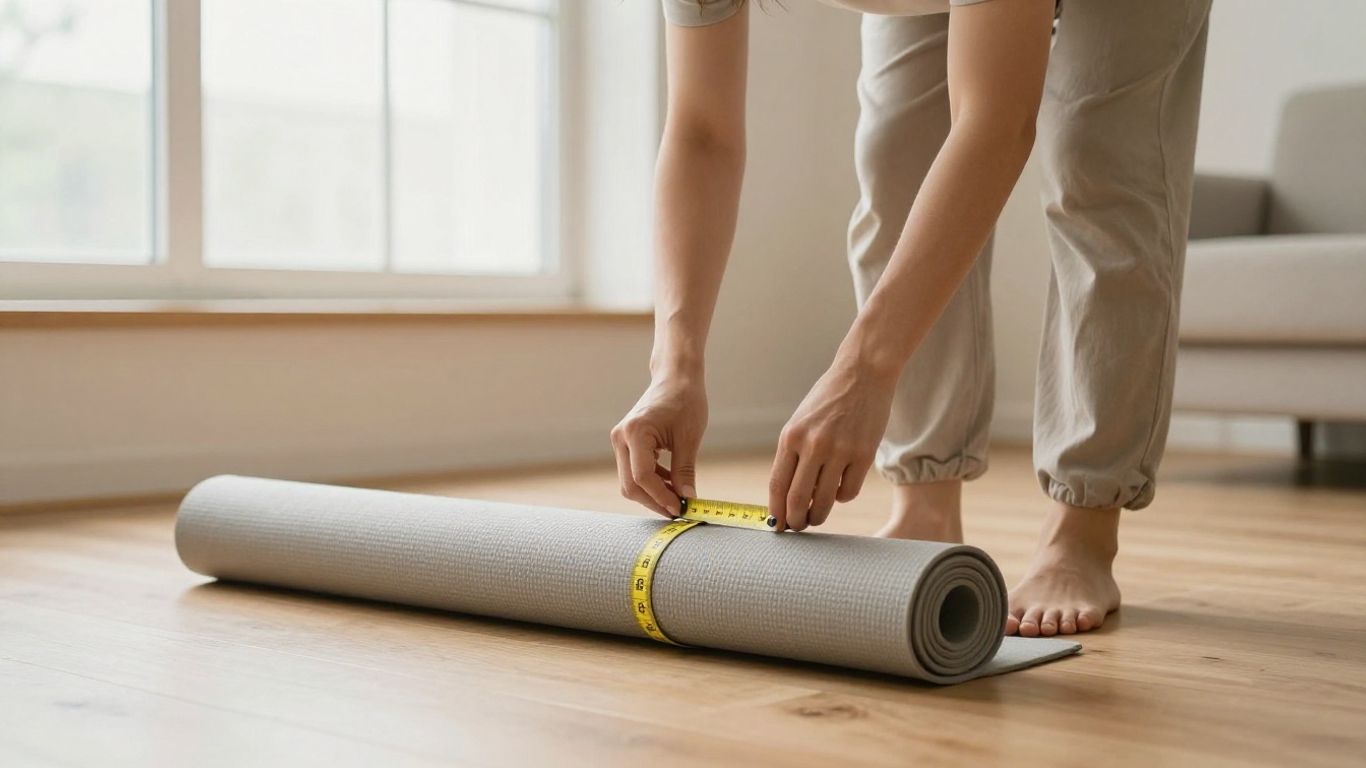
Matching mat length to your body
For a quick check, lie down on the floor with your arms and legs extended as you would in a comfortable resting pose. Measure the distance from the top of your head to the ends of your feet, then allow several extra inches for movement. Taller practitioners, or anyone who enjoys long stretches, may feel more at ease on a mat longer than 72 inches.
Your normal practice matters too. Someone who stays mostly upright may not need much additional length, while a session with frequent floor poses can expose the limits of a short mat quickly. If you are between sizes, consider whether having spare surface under your hands and feet would make setup feel less restrictive.
When an extra-long mat is worth it
An extra-long mat is useful when your height, stride, or practice repeatedly carries you beyond a standard surface. It can also help if you move through long lunges, extended forward folds, or full-body stretches. The benefit is practical: fewer adjustments and less concern about where your hands or feet land.
There is no need to choose the longest option automatically. Extra length can add weight and make the rolled mat harder to store, especially in a small apartment or shared studio. Compare the extra surface with the carrying and storage trade-off before deciding.
Checking space for full-body poses
Before buying, mark the proposed mat length on your floor with painter’s tape or a towel. Lie inside that outline and try the poses you practice most often. This simple test reveals whether you need more room at one end, both ends, or along the sides.
It also helps to check the floor around the mat. You want enough clearance to step off safely, reach for a block, or reposition without bumping furniture. A mat that fits your body but not the room may create a different kind of inconvenience.
Select a suitable mat width
Width is easy to overlook because many mats cluster around 24 inches. Yet side-to-side movement, shoulder placement, and the size of your stance can make a narrow surface feel limiting. Think about the poses that take up the most lateral space, not just how your body fits while standing still.
Standard-width mats for everyday practice
A standard-width mat is often a sensible choice for studio classes, regular flows, and home sessions with limited floor area. It fits common storage racks and leaves room between neighboring mats. For many practitioners, it offers enough support without adding unnecessary bulk.
The key is to notice whether your hands and feet remain comfortably inside the edges during familiar sequences. If they do, a standard width may be all you need. If you often touch the floor beside the mat or step outside it during transitions, a wider option deserves a closer look.
Benefits of wider yoga mats
A wider mat gives you more room for broad stances, turning movements, and exercises that are not strictly front-to-back. It can feel especially useful when your shoulders or hips extend beyond a standard surface. Extra width may also reduce the need to reposition during floor-based routines.
Measure your shoulder span and compare it with the usable mat surface, remembering that generous width is most useful when your room can accommodate it. A wide yoga mat guide offers another way to think through surface area, material, and everyday care.
Space and portability trade-offs
The extra room of a wide mat comes with practical costs. It may be heavier, occupy more space when rolled, and leave less clearance in a crowded class. If you carry your mat on public transport or store it in a narrow cupboard, those details can matter more than a few extra inches.
For people who alternate between home and travel, it can make sense to keep one roomy mat for regular sessions and a compact option for trips. That approach avoids forcing one mat to serve two very different jobs.
Compare thickness for comfort and stability
Thickness changes how close you feel to the floor and how much padding sits between your joints and the surface. More cushioning can make kneeling and seated poses feel friendlier, but too much softness may reduce steadiness in balance work. Your flooring, practice style, and personal comfort should guide the choice together.
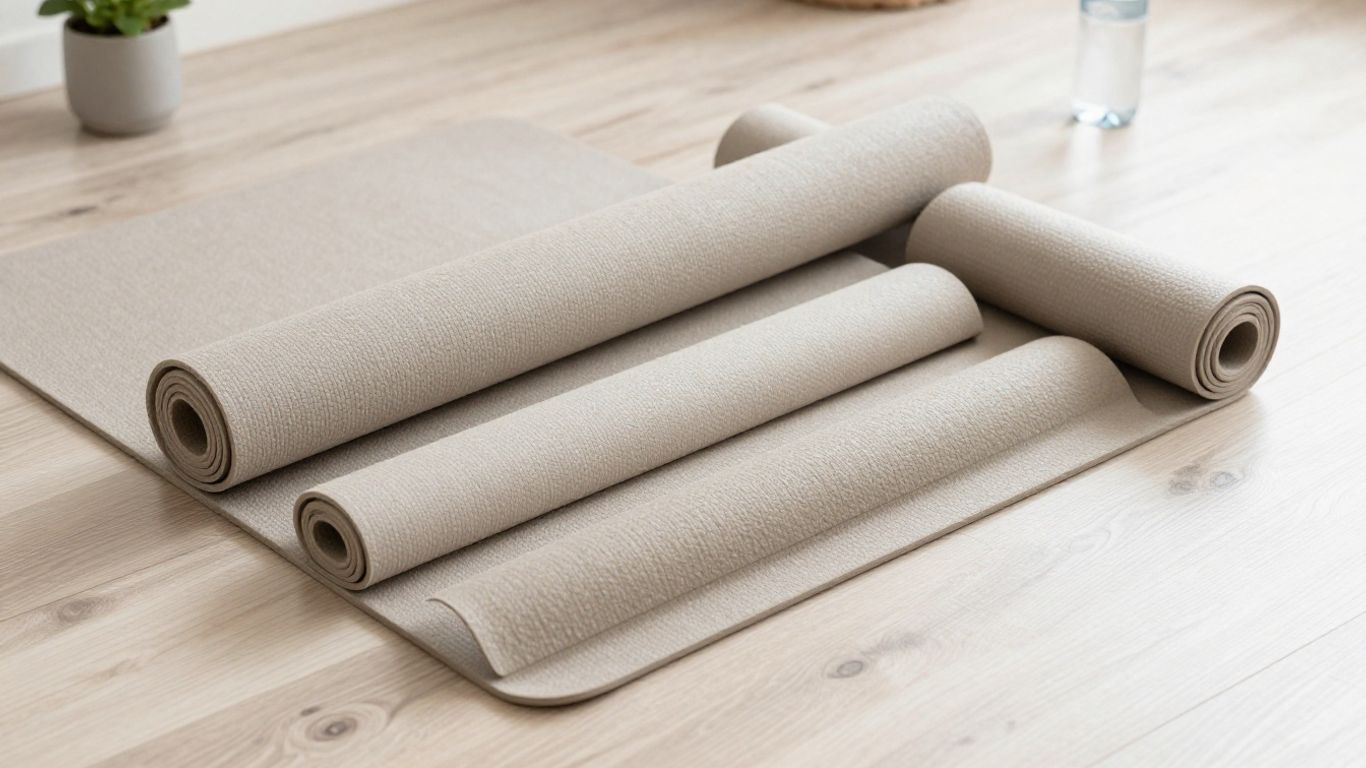
Thin mats for balance and portability
A thin mat offers a firm, grounded feel and is usually easier to fold, carry, or pack. It can suit standing sequences where clear contact with the floor matters. The trade-off is that hard flooring may feel unforgiving during kneeling, lying, or repeated transitions.
Travel-oriented mats often use this slimmer profile. Yune Yoga offers foldable travel mats designed to be thin, light, and easy to pack, which fits a practice that moves between hotel rooms, parks, and other temporary spaces. That portability can be more valuable than extra cushioning when your main concern is getting a mat through a suitcase or day bag.
Medium-thickness mats for general practice
A medium or standard-thickness mat is a versatile middle ground. It provides some padding for floor poses without creating as much distance from the ground as a plush mat. For a mixed routine that includes standing work, gentle mobility, and seated stretches, this is often a comfortable place to begin.
Pay attention to how the mat compresses under your weight. A label tells you the nominal thickness, but the surface can feel firmer or softer depending on its material and density. If possible, try kneeling and balancing on the actual model before committing.
Thick mats for joint cushioning
Thicker mats can make extended floor sessions more comfortable, particularly when your routine includes kneeling, reclining, or slow restorative shapes. They can also be useful when the practice area has a hard floor. The added padding, however, may make quick transitions and balance poses feel less precise.
A thick mat is not automatically the most supportive choice. If your feet sink or the surface shifts, you may find yourself working harder to stabilize. A thick yoga mat guide can help you compare cushioning with weight, grip, and size rather than treating thickness as the only deciding factor.
How flooring affects thickness needs
Wood, tile, concrete, carpet, and a padded studio floor all change the experience of the same mat. Hard surfaces generally make cushioning more noticeable, while carpet may already provide some softness but can reduce a mat’s firmness. Test your likely setup if you can, especially if you practice in more than one location.
You can also use a thinner mat over a clean, supportive surface or layer a travel mat on top of another mat when appropriate. The aim is a stable base with enough comfort for the poses you actually hold, not a universal thickness rule.
Match dimensions to your yoga practice
The right dimensions depend on what you do on the mat. A compact surface may be perfectly adequate for a short standing sequence but frustrating for Pilates, long stretches, or broad mobility drills. Consider the entire session, including warm-up and cool-down, before settling on a size.
Mat sizes for yoga, Pilates, and stretching
Yoga often moves between upright and floor-based positions, so a standard or slightly longer mat can provide useful flexibility. Pilates and stretching may involve more time lying down or moving laterally, making extra length or width more appealing. The best comparison is with your routine, not the name printed on the product page.
If your practice combines several activities, choose dimensions that accommodate the largest movement pattern. A little spare space can be convenient, provided the mat still fits your room and carrying habits.
Choosing dimensions for restorative poses
Restorative practice typically involves longer holds and more time in seated, reclined, or supported positions. Comfort and dependable surface coverage may matter more than shaving weight from the mat. A thicker surface can be pleasant, but it should remain stable when you shift slowly or use props.
Consider where blankets, bolsters, and blocks will sit. A mat that barely fits your body may leave no useful room for accessories, while an oversized one can take over a small room. Measure the full arrangement, not just the mat itself.
Size considerations for hot yoga
Heat and moisture change the practical requirements of a mat. A surface that becomes slippery can make extra width or length less useful, so grip and absorbency deserve attention alongside dimensions. A towel can also change the feel of the setup without requiring a larger base.
Yune Yoga offers absorbent yoga towels and durable yoga straps, accessories that can support a more convenient practice setup when you need to manage moisture or carry simple props. They do not replace checking the mat’s size, but they can affect how much equipment you need around it.
When a travel mat is the better option
A travel mat makes sense when the main challenge is transport rather than maximum floor coverage. Foldability can be especially useful for air travel, hotel rooms, office breaks, or outdoor sessions. You may accept less cushioning in exchange for a mat that is actually easy to bring along.
Before choosing one, check whether it will be placed on a clean floor, a carpet, or another mat. A thin travel surface may work well as a portable top layer, while a regular home mat can remain available for longer sessions. For additional travel-size comparisons, this portable yoga mat guide is a useful reference.
The most practical travel setup is the one you will use consistently. If a mat folds into your luggage and stays accessible, it is more likely to support a routine than a larger mat left at home.
Account for your practice space and storage
A mat can fit your body perfectly and still be wrong for the room. Doorways, furniture, shared floors, and storage shelves all place limits on what is convenient. Treat the mat as part of a complete setup rather than an isolated rectangle.
Measuring your home practice area
Clear the area where you normally practice and measure its usable length and width. Include the space needed to walk around the mat and to reach water, props, or a towel. Painter’s tape can outline a possible mat before you spend money on a larger size.
Try a few representative movements inside that outline. If your hands, feet, or elbows regularly land outside it, decide whether the issue is the mat size or the room arrangement. Sometimes moving a small table creates more usable space than buying a much larger mat.
Allowing room for movement and accessories
Your body is not the only thing that needs space. Blocks, straps, bolsters, towels, and a water bottle can quickly crowd a small practice area. Leave enough room to place accessories within reach without creating obstacles around your feet.
A simple setup usually needs space for:
- Stepping onto and off the mat without catching an edge.
- Extending arms and legs beyond a neutral standing position.
- Placing one or two commonly used props within reach.
- Moving around the mat to change orientation safely.
After marking these zones, reassess the size you had in mind. The goal is an open, usable practice area, not merely a mat that technically fits on the floor.
Carrying and storing larger mats
Length, width, and thickness all affect the rolled-up package. A long, thick mat can be awkward on stairs or public transport, while a wide mat may not fit neatly in a standard cupboard. Check the product’s rolled dimensions and weight before assuming it will be easy to carry.
At home, store the mat somewhere dry where its edges will not be crushed. If you use a foldable travel mat, keep it in a place that makes spontaneous practice easy rather than burying it behind heavier equipment.
Balancing mat size with studio space
Studios may have marked places or limited gaps between practitioners. An oversized mat can overlap neighboring areas, even if it feels comfortable at home. Ask about studio policies or measure the typical space if you regularly attend classes.
Portability matters here as well. Yune Yoga’s focus on foldable travel mats suits people who move between locations and prefer a setup that is easy to transport. For broader purchasing considerations involving thickness, material, and portability, you can also review this yoga mat buying guide.
Use a yoga mat size checklist before buying
A final check prevents the common mistake of choosing a mat from one measurement alone. Write down the size you need, the surface you practice on, and the places where you will carry and store it. Then compare those notes with the product specifications, including details that are easy to miss in a quick online browse.
Confirming length, width, and thickness
Read all three measurements in the same unit and compare them with your own tape measure. Confirm whether the listed length describes the full mat and whether the thickness is consistent across the surface. Product descriptions sometimes place dimensions in different parts of a page, so pause long enough to verify them.
A small table can make the trade-offs easier to see when you are comparing several options:
| Mat profile | Typical use | Main advantage | Main trade-off |
|---|---|---|---|
| Thin | Travel and balance work | Light and close to the floor | Less padding on hard surfaces |
| Medium | Mixed everyday practice | Balanced comfort and stability | Moderate rolled size |
| Thick | Restorative and floor-based work | More cushioning | Can feel less steady and heavier |
| Wide or long | Larger bodies and broad movement | More usable surface | Requires more storage and floor space |
Use the table as a starting filter, then test the measurements against your actual routine. A medium mat may be the best all-rounder, but a thin foldable model can be the smarter choice for frequent travel.
Considering body size and mobility needs
Height is only one factor. Shoulder width, reach, stride, and the amount of room you need to turn can all influence the best surface. If getting up and down is difficult, extra padding or a little more room may make setup feel more manageable, though stability should remain part of the decision.
Think about the movements you repeat most. Someone who practices narrow standing sequences may prioritize firmness, while someone who spends a long time on the floor may prefer more cushioning. There is no universal size that serves every body and every routine equally well.
Checking weight and rolled-up dimensions
A mat that is ideal on the floor may be inconvenient between locations. Check its weight, rolled diameter, folded dimensions if applicable, and whether your existing strap or bag can accommodate it. These details matter for commuters, travelers, and anyone who carries equipment up several flights of stairs.
For people who value simple transport, a foldable design can remove some of the friction associated with a larger rolled mat. Keep the storage method in mind too: a folded mat may fit a shelf or suitcase where a thick roll will not.
Evaluating size alongside material and grip
Material affects traction, durability, cleaning, and the way thickness feels under pressure. A larger surface is not much help if it shifts or becomes uncomfortable to use. Look for specifications that explain grip and care, then consider how those qualities match sweat, flooring, and outdoor use.
Yune Yoga also offers durable yoga straps, which can be useful when a portable practice includes simple support equipment. Choose accessories only after confirming the mat itself meets your needs for coverage, grip, and carrying convenience.
Conclusion
The right yoga mat size is a practical fit between your body, your movements, your floor, and your lifestyle. Compare length and width with a tape measure, choose thickness according to comfort and stability, and check how the mat travels and stores when rolled or folded. Once those details line up, your practice space can feel simpler and more comfortable without buying more mat than you can use.
Frequently Asked Questions
What are the standard dimensions of a yoga mat?
A common adult mat is about 68 inches long and 24 inches wide, though many options are longer or wider. Always check the exact product measurements because “standard” varies between manufacturers.
How long should a yoga mat be for my height?
Choose a mat that extends beyond your head and feet when you lie down fully. Add extra room if you practice long stretches, wide movements, or frequent floor poses.
Is a wider yoga mat better?
A wider mat can provide more room for broad stances and side-to-side movement. It may be less convenient in a crowded studio and can take up more storage space.
What thickness is best for everyday yoga?
A medium or standard thickness is a practical starting point for mixed practice because it balances cushioning with floor connection. Your flooring and personal comfort may justify choosing thinner or thicker.
Are thick yoga mats stable?
They can be stable, but very soft surfaces may make balance poses feel less secure. Look at firmness and material as well as the stated thickness.
Are travel yoga mats comfortable enough?
Travel mats prioritize light weight and packability, so they may provide less cushioning than a full-size home mat. They work well when convenience and portability are more important than maximum padding.
How should I measure space for a yoga mat?
Measure the clear floor area, then add room for stepping on and off, extending your limbs, and placing basic accessories. Tape the outline on the floor to test the setup before buying.

