
Chair yoga for beginners: Benefits, poses, and a safe at-home routine
Key Takeaways
Chair yoga offers a gentle way to move, stretch, and practice balance without getting down on the floor. A few thoughtful adjustments can make an at-home session comfortable and safe.
- Chair yoga can be practiced seated or with a chair for support.
- A stable, non-rolling chair is more important than special equipment.
- Gentle breathing and small movements are useful starting points.
- Pain, dizziness, or unusual shortness of breath are reasons to stop.
- A consistent 10-minute routine can be easier to maintain than a long workout.
What chair yoga is and who it is for
Chair yoga adapts familiar yoga movements so they can be performed from a seated position or with a chair nearby for support. It can suit beginners, people with limited mobility, and anyone who wants a calmer alternative to floor-based exercise. The practice is less about reaching a perfect shape and more about moving with attention and control.
How chair yoga differs from traditional yoga
Traditional yoga often includes kneeling, lying down, standing transitions, and weight-bearing poses. Chair yoga reduces or removes many of those transitions, which can make practice feel more approachable when getting up and down is uncomfortable. You can still work through the spine, shoulders, hips, legs, and breath, but the chair changes the amount of support available.
The smaller range is not a failure or a shortcut. It is a practical way to explore movement while keeping your attention on alignment and sensation. For a broader look at adapting yoga to a home setting, this home yoga practice guide offers helpful ideas about creating a routine that fits your space and schedule.
Who may benefit from seated yoga
Seated yoga may be useful for older adults, people returning to activity, desk workers with stiff hips and shoulders, and anyone who feels uncertain about floor exercises. It can also be a convenient choice during travel or on days when energy is low. A chair offers a familiar point of contact, which may help you feel more secure while learning new movements.
The goal is not to push through discomfort. Start with movements that feel manageable, and let your breathing stay easy. A gentle chair yoga guide can provide another general reference for seated poses and beginner modifications.
When chair yoga may be a better option than floor exercises
Chair yoga may be preferable when kneeling or lying down aggravates your joints, when floor transfers are difficult, or when you want a short movement break during the day. It is also useful in a small room because it needs very little open floor space. Comfortable consistency matters more than choosing the most demanding version of a pose.
A chair-supported practice can be especially practical after long periods of sitting. You can move your arms, gently mobilize your spine, and wake up your legs without changing into workout clothes or setting up a full mat area.
Conditions and mobility needs to consider before starting
Speak with a qualified health professional before beginning if you have a recent injury, significant osteoporosis, uncontrolled blood pressure, balance concerns, or a medical condition that affects movement. People with joint replacements, severe pain, or neurological conditions may need individualized instructions. Stop if a movement causes sharp pain, numbness, dizziness, or breathlessness.
Keep stretches mild at first, particularly with forward bends and spinal rotation. Move slowly enough to notice how your body responds, and use a smaller range whenever a joint feels restricted. The practice should leave you feeling steadier, not strained.
How to choose and set up your chair
Your chair is the main piece of equipment, so take a few minutes to test it before practicing. It should feel stable when you sit, shift your weight, and place your hands on the seat. A simple setup is often better than a crowded one, especially when you are still learning how much space each movement requires.
Features of a safe chair for yoga
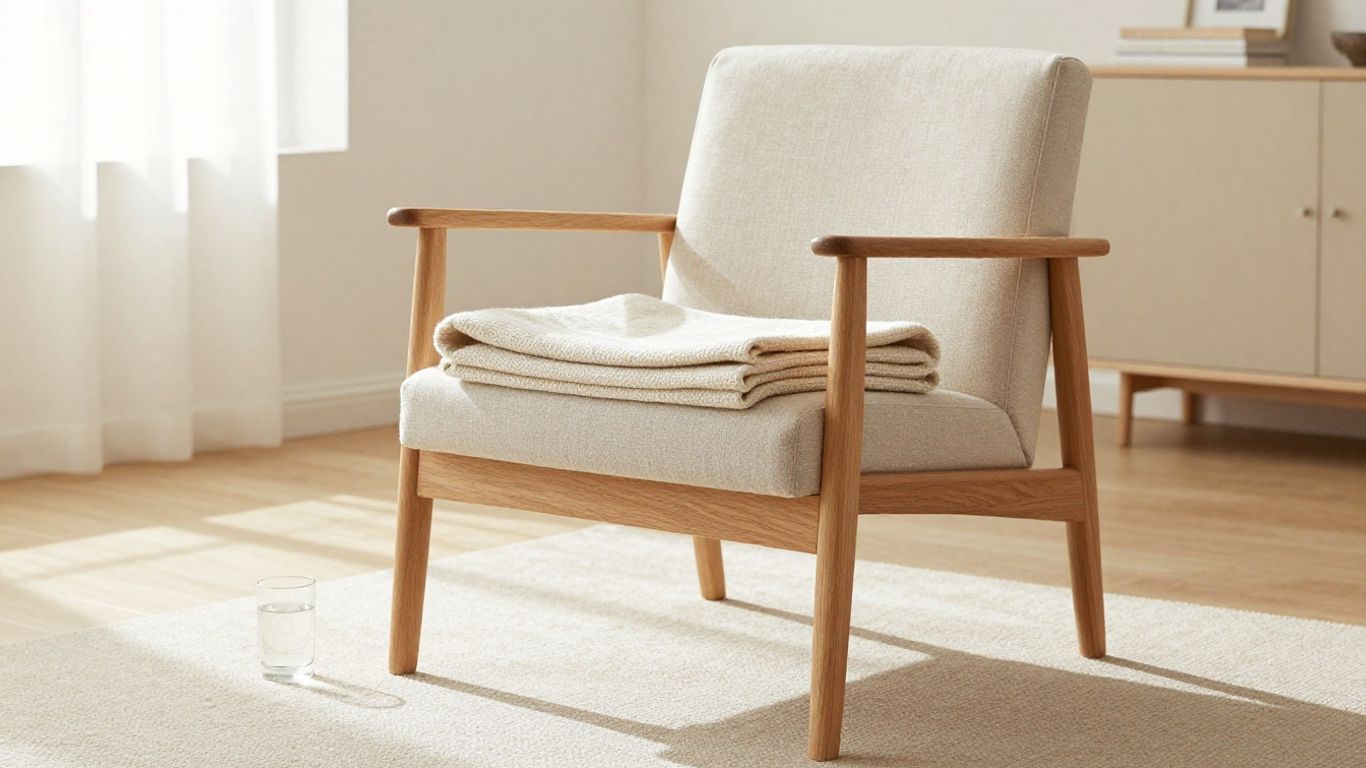
Choose a chair with a firm seat, a supportive back, and legs that stay planted on the floor. Avoid swivel chairs, folding chairs that wobble, and seats that are so soft you sink deeply into them. Armrests are optional, but an open-sided chair can make arm movements and seated twists easier.
Check that your feet can rest flat on the floor, with your knees roughly level with or slightly below your hips. If the chair is too high, a firm platform beneath the feet may help, provided it does not slide.
Where to position your chair at home
Place the chair on a level, uncluttered surface with enough room to extend your arms and legs. Keep the back of the chair near a wall when possible, but do not wedge it somewhere that prevents you from stepping around it. Good lighting makes it easier to notice alignment and obstacles.
If you practice near a window, make sure glare does not affect your balance. A small, quiet corner can work well, and a home studio does not need to be elaborate. The ideas in this guide to creating a yoga space can be scaled down to fit a chair and a few feet of open floor.
Clothing, footwear, and optional props
Wear clothing that lets your knees, hips, and shoulders move without pulling. Bare feet can help you feel the floor, but supportive shoes may be more comfortable if you are unsteady. A folded blanket can add warmth or slight cushioning, while a strap can make it easier to reach the foot without rounding the spine.
For people who practice in different places, a Yune Yoga foldable travel mat can provide a portable surface beneath the chair. Keep any mat fully flat and make sure its edges do not create a tripping hazard.
How to create a stable and distraction-free practice space
Before you begin, move bags, cords, and low objects out of your path. Silence notifications if possible, and keep water nearby rather than leaving the chair repeatedly. These small preparations reduce interruptions and let you pay attention to breathing and balance.
Use only props you can reach without leaning suddenly. If you need to turn your head to check something, pause the movement first. A calm space supports safer decisions throughout the session.
The benefits of chair yoga
Chair yoga is a practical form of movement, not a promise of a particular medical result. With regular practice, gentle mobility work may help you feel less stiff and more aware of how you sit, stand, and breathe. Benefits tend to come from repeating manageable movements rather than forcing a deep stretch.
Improving flexibility and joint mobility
Slow movements through a comfortable range can help you explore mobility in the ankles, knees, hips, shoulders, and spine. Seated practice lets you concentrate on one area at a time without needing to manage a difficult transition. Over time, you may notice that ordinary movements feel less restricted.
Keep the motion smooth and avoid bouncing. Flexibility work should feel like mild tension, not a sharp pull or pressure inside a joint.
Building balance and functional strength
Standing from a chair, lifting a knee, or holding the torso upright asks the body to coordinate strength and balance. Chair-supported versions let you practice these skills with a reliable object nearby. They can be especially useful when confidence is still developing.
The following simple training ideas can help organize a beginner session:
- Press both feet into the floor before moving the arms.
- Lift one knee only as high as you can control.
- Use the chair lightly rather than pulling on it.
- Pause between sides to reset your posture.
These actions are modest, but they teach control. As they become familiar, you can increase repetitions gradually instead of rushing into more challenging poses.
Supporting posture and reducing everyday stiffness
Seated mountain pose and gentle chest-opening movements can draw attention to slumped shoulders and a collapsed mid-back. That awareness may carry into time spent at a desk, at the kitchen table, or behind the wheel. The aim is not to hold a rigid pose all day; it is to find a supported, responsive posture.
Change positions regularly, even if each change is small. A brief shoulder roll or ankle movement can be a useful reset between longer periods of sitting.
Using breathing and movement to manage stress
Longer, comfortable exhales can encourage a slower pace and give the mind something simple to follow. Pairing breath with movement may make the session feel less hurried, especially when you begin with several quiet breaths. Never force a large inhale or hold your breath to complete a pose.
An absorbent yoga towel from Yune Yoga can be useful when practicing in a warm room or while traveling, particularly when you want a small, easy-to-pack accessory. The towel is an optional convenience; the breathing pattern matters more than the equipment.
Beginner chair yoga poses
Start every pose with both feet grounded and your sitting bones supported. Move only as far as you can maintain a relaxed face and steady breathing. The poses below can be practiced separately or combined into a short sequence.
Seated mountain pose for posture and alignment
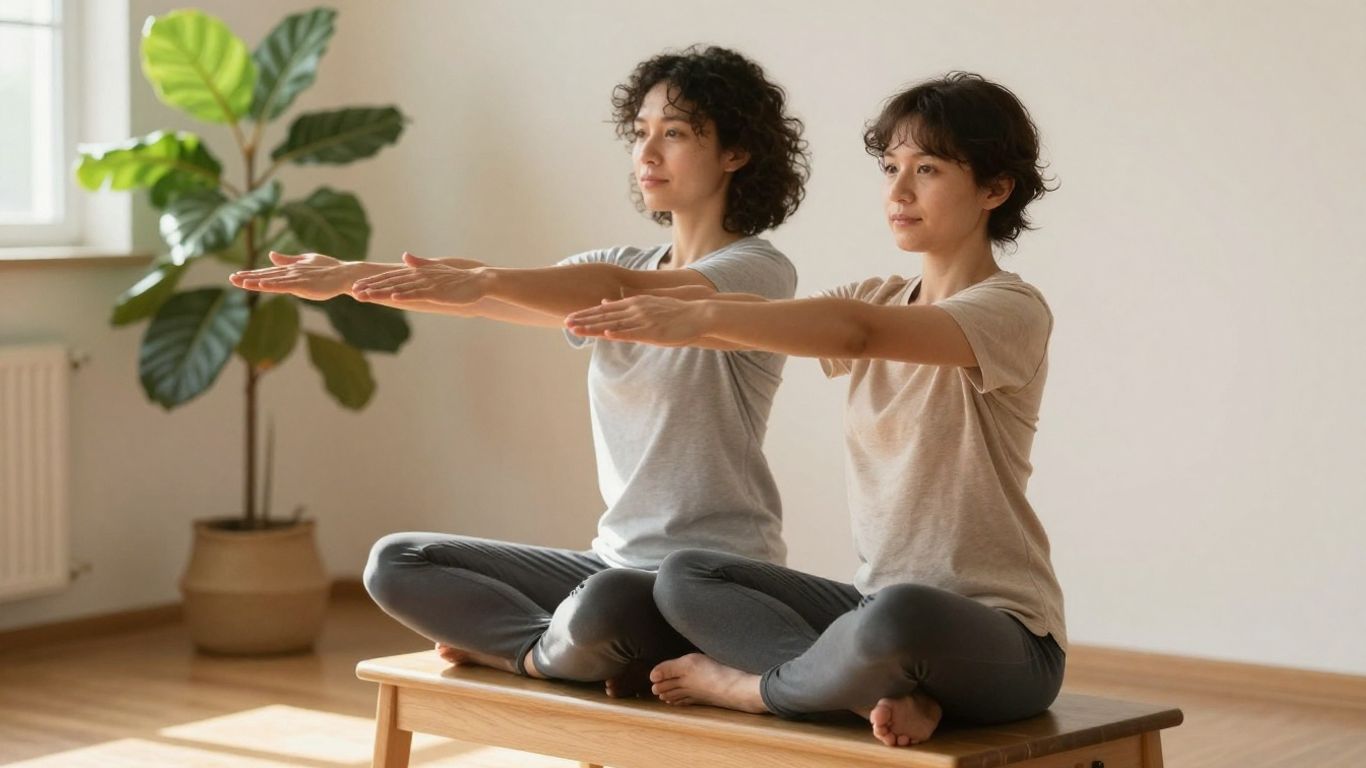
Sit near the front half of the chair without sliding toward the edge. Place your feet hip-distance apart, rest your hands on your thighs, and lengthen through the crown of your head. Let the shoulders soften while the chin stays level.
Take three to five easy breaths. Notice whether your weight is even across both feet and both sides of the pelvis. This is a useful starting position before any larger movement.
Seated cat-cow for spinal mobility
Place your hands on your thighs and sit tall. On an inhale, gently draw the chest forward and broaden the collarbones; on an exhale, round the upper back slightly and let the head follow without dropping heavily. Keep the movement small and comfortable.
Repeat slowly for five rounds. The motion should travel through the spine rather than come only from the neck. If rounding feels uncomfortable, stay upright and simply move the shoulders and pelvis a little.
Chair-supported side bends and twists
For a side bend, keep one hand on the chair and reach the other arm upward, then lean gently to the opposite side. Return through center before changing sides. For a twist, place one hand on the outer thigh and the other on the chair, turning from the upper back while keeping both feet planted.
Do not pull yourself deeper with the arms. If you have osteoporosis or a condition that makes spinal flexion or rotation unsafe, ask a clinician which version is appropriate before practicing.
Seated leg extensions and ankle movements
Sit tall and extend one leg until the knee is straight or comfortably close to straight. Flex and point the ankle a few times, then lower the foot with control and switch sides. Keep the movement smaller if the knee feels strained.
You can also circle the ankles slowly in both directions. These simple actions bring attention to the lower legs and may help you prepare for standing work.
Supported standing poses for balance practice
Stand behind the chair with both hands resting lightly on its back. Step one foot back, keep the toes pointing forward, and bend the front knee only a little. Return to center, then repeat on the other side.
You can also practice a supported heel lift, rising and lowering slowly while holding the chair. Keep your weight centered and stop before fatigue affects your control. A durable yoga strap can be an optional accessory for other gentle practices, but it should never be used to yank a joint into position.
How to build a safe chair yoga routine
A good routine has a gradual beginning, a manageable middle, and a quiet finish. You do not need to perform every pose in one session. Choose movements that match your energy that day, and leave enough time to notice how you feel afterward.
How to warm up before stretching
Begin with several breaths and small movements rather than immediately reaching for a deep stretch. Roll the shoulders, open and close the hands, tap the feet, and turn the head gently from side to side. This gives you a chance to identify areas that feel particularly stiff.
Warm-ups should feel easy enough that your breathing remains even. Once the body feels more responsive, add larger arm movements or seated leg extensions.
Choosing repetitions, hold times, and intensity
For a first session, try five slow repetitions of a movement or hold a comfortable position for three breaths. Increase only one variable at a time: perhaps an extra repetition, a slightly longer hold, or another round. Keep the effort at a level where you could still speak in a normal voice.
| Practice element | Beginner starting point | What to watch for |
|---|---|---|
| Breathing | 3–5 relaxed breaths | No breath holding |
| Mobility movements | 5 slow repetitions | Smooth, pain-free motion |
| Supported strength | 3–5 repetitions | Stable feet and control |
| Balance practice | 10–20 seconds | Light chair contact |
Use these numbers as a starting framework, not a test. If your form changes or your breathing becomes strained, rest and reduce the intensity.
Combining mobility, strength, and relaxation
A balanced session might begin with shoulder and ankle movements, continue with seated cat-cow and leg extensions, then include a few supported standing exercises. Finish with quiet breathing so your body has time to settle. Alternating types of movement keeps the routine from becoming a series of stretches with no functional practice.
A durable yoga strap from Yune Yoga may be useful for gentle reaching exercises when you need a little extra length, while the chair remains your primary support. Use accessories only when they make a movement clearer or more comfortable.
Modifying movements for pain or limited range of motion
Reduce the range, slow down, or change the position as soon as a movement feels wrong. You might keep both feet on the floor instead of lifting one, turn less during a twist, or practice an arm movement without adding a side bend. Modifications are part of the practice, not evidence that you are doing it incorrectly.
If symptoms persist outside the session or become more intense, stop and seek appropriate medical advice. Gentle exercise should complement professional care, not replace it.
A simple 10-minute chair yoga flow
This sequence is designed as an easy starting point rather than a fixed prescription. Set a timer if that helps, but do not let the timer decide how far you move. You can shorten any interval, skip a pose, or remain seated for the entire flow.
Centering with seated breathing
Spend the first two minutes in seated mountain pose. Let your hands rest on your thighs, soften your jaw, and notice the natural rhythm of your breath. Gradually allow the exhale to become a little longer without forcing it.
If your attention wanders, return to the feeling of your feet on the floor. That simple anchor can make the rest of the routine feel more organized.
Moving through the upper body and spine
For the next three minutes, complete seated cat-cow, shoulder rolls, and gentle arm reaches. Add a small side bend on each side if it feels comfortable. Move with the breath, but keep the breath natural rather than trying to match an exact count.
You can place a towel behind the lower back if that helps you sit comfortably, but avoid propping yourself so far forward that your feet lose contact with the floor. The movement should remain easy to control.
A guided beginner chair yoga video can be useful when you want company, but choose an instructor who offers clear modifications and reminders to stop when something hurts. For a short routine with a similar time frame, this 10-minute chair yoga flow may offer additional inspiration.
Activating the legs and hips
Use the next three minutes for alternating leg extensions, ankle circles, seated knee lifts, and one or two supported heel lifts. Rest between sides as needed. Keep your torso tall without bracing hard through the stomach.
If standing is not appropriate for you, replace the heel lifts with another round of seated leg movements. The most useful version is the one you can repeat with steady breathing and good control.
Finishing with relaxation and mindful breathing
Use the final two minutes to settle back into the chair. Let your hands rest comfortably, release any effort from the shoulders, and take several unhurried breaths. Notice whether your feet, hips, and spine feel different from when you began.
End slowly rather than jumping up immediately. If you need to stand, place both feet firmly on the floor, pause, and rise with support.
Conclusion
Chair yoga can be a practical, welcoming way to add movement to your day. With a stable chair, a clear space, and a willingness to work gently, beginners can build mobility, balance, and calm at their own pace. Start with a few minutes, pay attention to your body, and let consistency grow naturally.
Frequently Asked Questions
Is chair yoga suitable for complete beginners?
Yes. Chair yoga is often approachable because it reduces floor transitions and allows many movements to be practiced with support. Begin with simple seated movements and keep the range comfortable.
Do I need a yoga mat for chair yoga?
No. A mat is optional, especially if you remain seated. If you practice standing poses, a non-slip surface may help, but the chair and floor should remain stable.
How often should I practice chair yoga?
You can begin with short sessions several times a week and adjust according to your energy and comfort. Regular, manageable practice is usually more sustainable than occasional intense sessions.
Can chair yoga help with stiffness?
Gentle movement can help you explore stiff areas and interrupt long periods of sitting. It should not be used to diagnose or treat a medical condition, and painful movements should be avoided.
Can I do chair yoga if my balance is limited?
Possibly, but choose seated movements first and keep a stable support nearby. If you are at risk of falling, ask a health professional how to practice safely.
What should I do if a pose hurts?
Stop the movement and return to a neutral, supported position. If pain continues, returns repeatedly, or is accompanied by other symptoms, seek advice from a qualified clinician.
How long does a chair yoga session need to be?
Even five to ten minutes can provide a useful movement break. You can extend the session gradually once the routine feels familiar and remains comfortable.

