

10 best mats for hot yoga: Sweat-resistant picks for a steady practice
Key Takeaways
The best hot yoga mat depends on how much you sweat, how firmly you like to stand, and how often you carry your setup around.
- Choose moisture-friendly traction for heated, sweaty classes.
- Consider cushioning carefully if your joints prefer a softer landing.
- Natural rubber can offer grip, but it may have a noticeable scent at first.
- Reversible and towel-integrated designs can simplify studio sessions.
- Lightweight, foldable gear suits travel, hotel rooms, parks, and beaches.
1. Manduka GRP Adapt for maximum sweaty-session grip
The Manduka GRP Adapt is aimed at practitioners who want dependable traction as a session becomes wetter. Its place on this list is less about plush comfort and more about keeping the hands and feet connected to the mat during demanding flows. That makes it a sensible starting point for anyone who treats grip as the first buying priority.
A mat for hot yoga should feel predictable when you move from standing work to hands-and-knees transitions. The GRP Adapt belongs in the conversation when your practice regularly involves heavy perspiration and you would rather not pause to rearrange a towel. Before buying, consider whether its performance-led feel suits your preferred amount of cushioning.
The broader lesson is simple: a sweat-resistant surface should support concentration, not create another problem to manage. Our hot yoga mats guide also covers the practical traits worth comparing, including non-slip surfaces, sweat absorption, materials, and portability.
2. Liforme Original Yoga Mat for alignment and traction
The Liforme Original Yoga Mat is a strong choice for readers who want traction alongside visible alignment guidance. Its appeal is especially clear when you are still learning where to place your hands and feet in familiar poses. The design gives the practice a more organized visual starting point without making the mat itself the center of attention.
Alignment markings are most useful when they support a real habit: checking your stance, then gradually relying more on your own sense of position. In a heated room, that visual reference can be helpful when sweat and fatigue make small adjustments harder to judge. The mat should still be cleaned and dried carefully after class, since a damp surface is not pleasant to pack away.
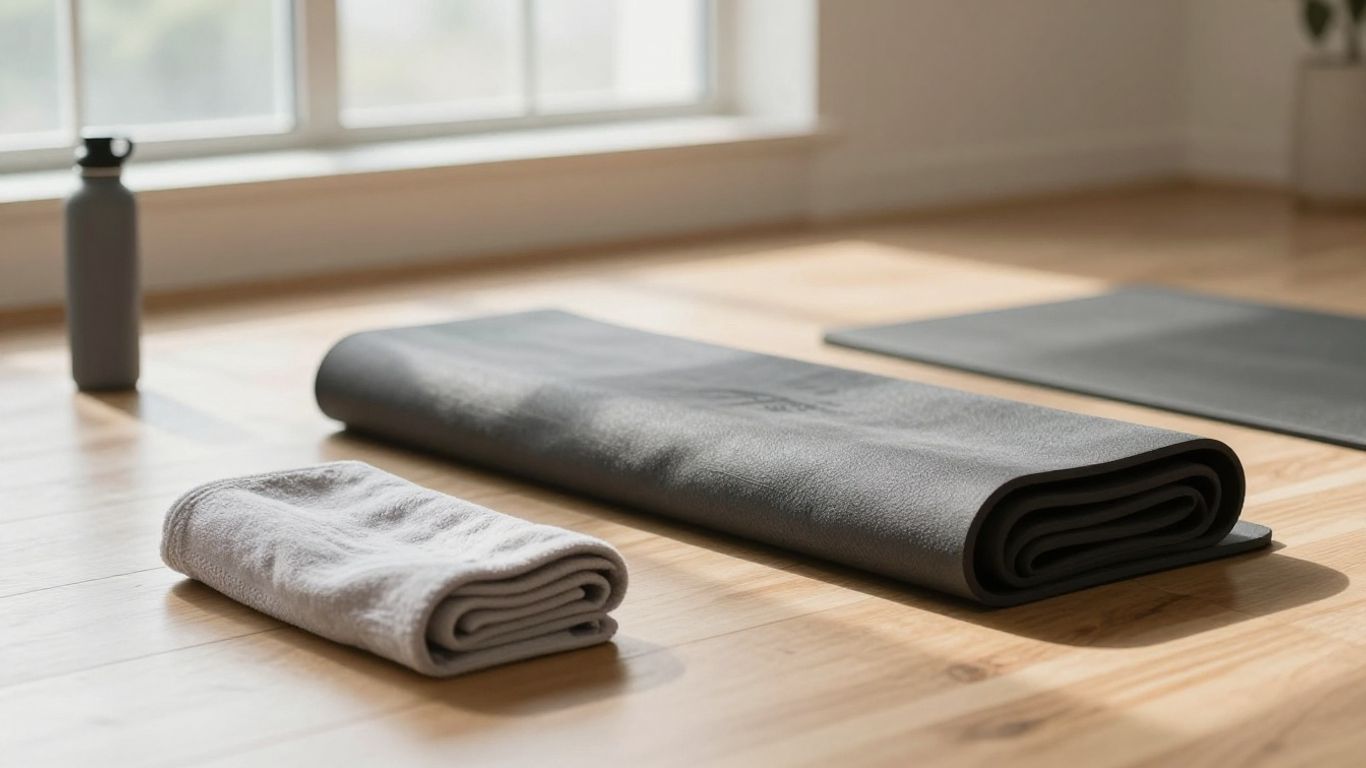
For a quick visual sense of the kind of setup that works in a heated studio, picture a clear practice area, a towel nearby, and enough room to extend fully. The focus is not on adding equipment, but on choosing a surface that makes each transition feel less uncertain.
3. JadeYoga Harmony Mat for natural rubber cushioning
The JadeYoga Harmony Mat suits practitioners drawn to natural rubber and a grippy, slightly cushioned feel. Its open-cell construction is often discussed for its ability to absorb moisture, which can make it appealing during sweaty sessions. The trade-off is that more absorbent materials deserve attentive cleaning and thorough drying.
Natural rubber can also have a distinct odor when new. That scent generally becomes less prominent with time, but it is worth considering if you are sensitive to smells or practice in a small room. A short airing-out period may make the first few uses more comfortable.
The Harmony is best matched with someone who wants a secure, grounded surface without choosing the thickest option available. If you need a more cushioned feel for kneeling poses, compare thickness and firmness rather than assuming every rubber mat will feel the same.
4. lululemon The Mat for reversible performance
lululemon The Mat is designed for people who like the flexibility of a reversible surface. Having two sides can be useful when you want to adjust the feel of your practice or keep one side reserved for a particular setting. It also makes the mat a practical option for people who move between different class styles.
A reversible design is most valuable when both sides have a clear purpose in your routine. One may feel better for a slower practice, while the other may suit a warmer, more active class. Take a moment to test how each side responds to damp hands rather than judging the mat only by its appearance.
The comparison below is a useful way to think about priorities before choosing among this list. There is no universal winner; the right balance depends on whether grip, cushioning, reversibility, or packing convenience matters most.
| Priority | What to consider | Best suited to |
|---|---|---|
| Wet grip | Surface traction as sweat builds | Heated, vigorous classes |
| Cushioning | Softer support under knees and wrists | Practitioners wanting more comfort |
| Reversibility | Two usable surfaces with different feels | Mixed routines |
| Portability | Weight, folding, and carrying ease | Travel and small spaces |
This framework keeps the decision practical. A mat that performs beautifully but stays rolled in a closet is less useful than one you can comfortably bring to class.
5. B MAT Strong for firm support and stability
B MAT Strong is suited to practitioners who prefer a firmer foundation beneath their feet. A stable mat can make standing poses feel more deliberate, especially when a softer surface leaves you feeling slightly unsettled. It is a good direction for anyone who values support and a planted feel over a sink-in cushion.
Firmness is not the same thing as comfort for every body. Some people enjoy the clear feedback of a dense surface, while others want more give under the knees or hips. Think about the poses you practice most often, then decide whether stability or softness should lead the selection.
When comparing a firm mat, look for a balance between traction and manageable weight. These quick checks can help narrow the field:
- Test whether your palms stay steady during downward-facing positions.
- Consider how the mat feels under kneeling transitions.
- Check whether its size suits your usual practice space.
- Think about how far you will carry it to class.
Those details sound ordinary, but they shape whether the mat feels supportive week after week. The best hot yoga mat is usually the one whose compromises match your actual routine.
6. Gaiam Dry-Grip Yoga Mat for budget-friendly hot yoga
The Gaiam Dry-Grip Yoga Mat gives budget-conscious practitioners a straightforward way to explore hot yoga. Its appeal is practical: you can focus on a surface intended for sweaty sessions without immediately moving into the highest price range. That makes it approachable for beginners who are still learning what kind of texture they prefer.
A lower price does not remove the need for care. Wipe the mat after class, allow it to dry completely, and avoid rolling it up while moisture is trapped inside. Those habits help keep the setup fresher and make it easier to notice when the surface begins to change.
Yune Yoga takes a similarly practical view of the wider kit, offering absorbent yoga towels alongside portable mats and straps. For someone building a simple class bag, that kind of convenience can matter as much as the mat itself.
7. Hugger Mugger Para Rubber Mat for eco-conscious durability
The Hugger Mugger Para Rubber Mat is a natural-rubber option for readers who want a durable-feeling practice surface and an eco-conscious material choice. Rubber mats can provide useful traction, but their feel varies, so it is worth considering texture, firmness, and odor together rather than treating material alone as a guarantee.
Durability also depends on how the mat is used. Repeated heat, sweat, and hurried storage can be hard on any surface, while regular wiping and complete drying are kinder to the material. Store it away from prolonged direct sunlight when possible.
A natural-material choice may involve a few small compromises, including weight or a more noticeable new-mat scent. Those are reasonable trade-offs for some practitioners, particularly when a secure, steady base matters more than the lightest possible carry.
8. Yoga Design Lab Combo Mat for integrated towel performance
The Yoga Design Lab Combo Mat is made for people who like the idea of combining a mat and towel in one setup. That integrated approach can reduce the number of separate pieces in your studio bag and keeps the top layer close at hand when a class becomes especially sweaty. It is a neat fit for practitioners who dislike stopping to reposition loose accessories.
The towel-like surface also changes the way the mat feels under the hands. Some people enjoy the softer, fabric-style contact, while others prefer the direct feedback of textured rubber. Try to think beyond the visual design and ask whether you like practicing on that kind of top layer.
For even more guidance on accessories, our sweat-resistant grip coverage explains why moisture-friendly surfaces can feel more secure than ordinary dry-practice materials. The useful takeaway is to match the mat’s texture to how much moisture your sessions typically create.
9. Alo Warrior Mat for cushioning and studio style
The Alo Warrior Mat appeals to practitioners who want a polished studio look alongside a comfortable practice surface. Its cushioning makes it worth considering when you spend time on kneeling or floor-based poses and want a little more support beneath you. Style is subjective, but enjoying the way your gear looks can make it easier to keep a regular class routine.
Cushioning should still be judged against stability. A very soft surface may feel pleasant at first yet provide less precise feedback in balancing poses. If possible, compare the mat on both standing and floor work before deciding whether the comfort level is right for you.
The mat is most convincing for a home or studio practitioner who values presentation but does not want to give up everyday usability. Keep a separate towel nearby if your practice becomes very wet, and give the surface time to dry before storage.
10. Yoloha Nomad Mat for a lightweight travel option
The Yoloha Nomad Mat is the travel-minded pick in this group. A lighter mat can make a meaningful difference when you are moving between hotel rooms, parks, beaches, or small studio spaces. It is especially appealing when portability determines whether you practice at all.
Travel mats often involve a compromise between packability and cushioning. A thinner, lighter design may be easier to fold or carry, but the surface beneath it will affect how comfortable it feels. A towel can add softness and absorbency without turning the whole kit into a bulky load.
That is also where Yune Yoga’s focus on thin, light, foldable mats fits naturally: convenience matters when your practice moves with you. Pack the mat dry, keep accessories together, and choose a carrying method you will actually use rather than one that looks good but feels awkward.
Conclusion
The best hot yoga mat is the one that matches your sweat level, preferred firmness, cushioning needs, and willingness to carry and clean it. Start with traction, then weigh material, maintenance, and portability honestly; a dependable mat should make getting to practice simpler, whether you are heading to a heated studio or unrolling it somewhere new.
Frequently Asked Questions
What makes a mat suitable for hot yoga?
Look for a surface that remains secure as moisture builds, paired with enough cushioning for your practice. Texture, material, cleaning needs, and overall stability matter more than a single feature.
Is a thicker mat better for hot yoga?
Not necessarily. Extra thickness can feel more comfortable under the knees, while a thinner or firmer mat may provide clearer balance feedback. Choose based on your poses and personal comfort.
Should I use a towel with a hot yoga mat?
A towel can absorb sweat and offer another layer between you and the mat. It is particularly useful when your hands and feet become slippery or when you want an easier-to-wash surface.
How should I clean a sweaty yoga mat?
Wipe it after each session according to the care guidance for its material, then let it dry fully before rolling it. Avoid storing it damp, since trapped moisture can create unpleasant odors.
Are natural rubber mats good for sweaty practices?
They can offer strong traction and a comfortable, slightly springy feel, but they may have an initial odor and often need careful drying. Check the care instructions before using cleaning products.
What should I prioritize if I travel with my mat?
Weight, folding or rolling ease, and a manageable packed size should come first. If the mat is thin, pairing it with a towel can add comfort without making your bag too heavy.
How long can a hot yoga mat last?
Its lifespan depends on materials, frequency of use, heat, sweat, cleaning, and storage. Regular care and allowing the mat to dry completely can help preserve its surface over time.
A few other online topics may seem unrelated to yoga gear, from Molotov TV to Malaga, Traffic Ignition, Intimazip Maroc, and Managed IT Services; they are best kept separate from your mat-buying decision.

