

Your Ultimate Guide: How to Begin Doing Yoga at Home for Beginners
Thinking about starting yoga at home but not sure where to begin? It's totally normal to feel a bit lost when you're new to something. There's so much info out there, and sometimes it just makes you more confused. This guide is here to break it all down for you, step-by-step. We'll cover the basics, what you actually need, and how to make it a regular thing without any fuss. So, let's get you set up to start your yoga journey right in your own space.
Key Takeaways
- Start with a few simple poses like Cat-Cow, Child's Pose, and Downward-Facing Dog to build a basic routine.
- Pay close attention to how your body feels during each pose; this is your best guide for making adjustments.
- Online classes and videos are great resources for beginners, allowing you to learn at your own pace and rewind when needed.
- A yoga mat is helpful for grip, but you don't need fancy props to start; simple household items can work as substitutes.
- Begin with short practice sessions and gradually increase the duration and complexity of poses to build consistency.
Getting Started With Your Home Yoga Practice
Understanding the Essence of Yoga
So, you're thinking about rolling out a mat in your living room and giving yoga a whirl? That's awesome. But before you jump into poses, it's good to know what yoga is really about. It's not just about stretching or getting flexible, though those are nice perks. At its heart, yoga is a way to connect your mind, body, and maybe even your spirit. It's an ancient practice that's been around for ages, and while many people in the West focus on the physical postures (called asanas), there's a lot more to it. Think of it as a tool to help you feel more centered and present in your day-to-day life. It's about finding a bit of calm in the chaos, and that's something pretty much everyone can benefit from.
Is Yoga Suitable for Everyone?
This is a big one, and the answer is a resounding yes, with a tiny asterisk. Yoga isn't some exclusive club for super-bendy people. It doesn't matter how old you are, what you weigh, or if you can touch your toes right now. The beauty of yoga is that it can be adapted. If you have an old injury or a health condition, it's always a smart move to chat with your doctor first. They can give you the green light or suggest things to watch out for. But generally speaking, there are modifications and different styles of yoga that can work for almost anyone. The goal is to find what feels good and safe for your body.
Setting Up Your Practice Space
Okay, let's talk about where you're going to do this yoga thing. You don't need a fancy studio. Your bedroom corner, a spot in the living room, or even a quiet space on the patio will do. The main thing is to make it a place where you feel comfortable and can focus without too many distractions. Try to clear away clutter – a tidy space can lead to a tidier mind. You'll want enough room to move your arms and legs around without bumping into furniture. Think about the lighting too; maybe some soft natural light or a calming lamp. It doesn't have to be perfect, but creating a little sanctuary for yourself can make a big difference in how you approach your practice.
Essential Yoga Poses for Beginners
Mastering Foundational Postures
When you're just starting out with yoga at home, it's smart to get familiar with a few basic poses. You don't need to be able to do a handstand on day one! The goal is to build a foundation, not to impress anyone. Think of these as your yoga alphabet. Learning these will let you start putting together simple sequences.
Here are a few poses to get you started:
- Mountain Pose (Tadasana): This looks simple, but it's all about grounding yourself. Stand tall with your feet close together, feel your feet on the floor, and let your arms hang by your sides. It's a great way to check in with your posture and feel your body's alignment.
- Cat-Cow Pose (Marjaryasana-Bitilasana): This is a gentle flow done on your hands and knees. On an inhale, you arch your back and lift your chest (Cow). On an exhale, you round your spine and tuck your chin (Cat). It's fantastic for warming up your spine and releasing tension.
- Child's Pose (Balasana): This is your resting pose. Kneel on the floor, bring your big toes to touch, and widen your knees. Then, fold your torso forward, resting your forehead on the mat and your arms alongside your body or stretched out in front. It's a safe space to breathe and reset.
- Downward-Facing Dog (Adho Mukha Svanasana): Often seen as a "resting" pose in more advanced flows, it's a bit more challenging for beginners. Start on your hands and knees, then lift your hips up and back, forming an inverted V shape. It stretches your hamstrings and shoulders. Don't worry if your heels don't touch the floor or your knees are bent – that's totally fine!
Understanding Pose Alignment
Getting the alignment right in yoga isn't about looking perfect; it's about keeping your body safe and getting the most benefit from the pose. Without a teacher right there, you have to become your own guide. Pay attention to how the pose feels in your body. If something feels sharp or painful, especially in your joints, that's a sign to back off.
Here's a general idea for alignment in many poses:
- Stacking Joints: Try to line up your joints. For example, in poses on your hands and knees, your wrists should be under your shoulders, and your knees under your hips.
- Engaging Muscles: Even in resting poses, you can gently engage your muscles. This helps support your joints and makes the pose more stable.
- Spinal Length: Think about lengthening your spine, not just crunching down. Imagine growing taller from your tailbone to the crown of your head.
When you're practicing at home, the most important alignment cue is to listen to your body. If a pose causes pain, it's not the right variation for you at this moment. Back off, rest, or try a modification.
Modifying Poses for Your Body
Yoga is for every body, and that means poses need to adapt to you, not the other way around. Flexibility and strength come with practice, but you don't need to be super flexible to start. Modifications are your best friend.
Here are some common ways to modify poses:
- Bent Knees: In poses like Downward-Facing Dog or Forward Folds, bending your knees is perfectly okay. It helps release tension in your hamstrings and lower back.
- Using Props: Don't shy away from props! Yoga blocks can bring the floor closer to you, making poses more accessible. A folded blanket under your knees can add cushioning, and a strap can help you reach further in stretches.
- Reducing Range of Motion: If a pose feels too intense, simply don't go as deep. For example, in a lunge, you might not bring your back knee all the way to the floor, or you might not fold as far forward.
Remember, the goal is to find a variation of the pose that feels good and allows you to breathe comfortably. It's about progress, not perfection.
Leveraging Online Resources
So, you've decided to give yoga a whirl from the comfort of your own home. That's awesome! The internet is practically overflowing with ways to help you get started, and honestly, it can feel a little overwhelming at first. But don't worry, we'll break it down.
Finding Beginner-Friendly Online Classes
When you're just starting out, looking for classes specifically labeled "beginner" or "introductory" is your best bet. These classes usually move at a slower pace and focus on the basics. Many instructors will offer modifications for poses, which is super helpful when you're figuring out what works for your body. The beauty of online classes is that you can pause, rewind, or rewatch sections whenever you need to. It's like having a personal instructor available 24/7. You can find these on various platforms, from dedicated yoga websites to general video-sharing sites. Some instructors even offer structured programs or challenges designed for newcomers.
Utilizing Free Yoga Videos
This is where the internet really shines for home yoga practitioners. There are countless free yoga videos available. You can find everything from short, 10-minute routines to longer, hour-long sessions. When searching, look for instructors who explain things clearly and demonstrate poses well. It's helpful to find a few instructors whose style you connect with. You might want to try out different styles of yoga too, like Hatha or Vinyasa, to see what feels best for you. Remember, the goal isn't to look perfect, but to feel good in your body. You can explore videos that focus on specific areas, like hip openers or back stretches, once you're a bit more comfortable.
The Benefits of Audio Yoga Classes
Sometimes, you might not want to be glued to a screen. That's where audio yoga classes come in handy. These are great for when you want to focus more on the feeling and less on visual cues. You can listen to an instructor's voice guide you through the practice. This can be particularly useful for developing your body awareness and listening to your own internal signals. Many apps and services offer audio classes in various lengths and styles. It's a fantastic way to practice when you're traveling or if you simply prefer to close your eyes and connect with your breath and body.
The internet offers a vast library of yoga resources. Don't feel pressured to find the
Gathering Your Yoga Equipment
You don't need a whole lot to get started with yoga at home, but a few things can make your practice way more comfortable and, well, doable. Think of it as setting yourself up for success.
The Importance of a Yoga Mat
Okay, so technically, you can do yoga on carpet or a rug. But honestly, a yoga mat is a game-changer. It gives you that bit of grip so you don't slide around when things get a little sweaty, and it provides a bit of cushioning for your knees and wrists. It also just defines your space, making it feel like a dedicated spot for your practice. A good mat makes a big difference in how stable and comfortable you feel.
Helpful Yoga Props for Beginners
Props aren't just for super-flexible yogis or advanced classes. They're actually really useful when you're starting out. They help you get into poses safely and comfortably, even if you don't have the flexibility yet.
- Blocks: These are like little helpers that bring the floor up to you. If you can't quite reach your toes in a forward fold, placing blocks under your hands makes it possible. They're also great for supporting your hips in seated poses or under your back in certain stretches.
- Straps: Think of a strap as an extension of your arms. If your hamstrings are tight and you can't reach your feet in a seated forward bend, a strap looped around your feet lets you gently pull yourself closer.
- Blankets: A folded blanket can add padding under your knees if they're sensitive, or you can use it to prop up your hips in seated poses for better posture.
Alternatives to Yoga Accessories
Don't have fancy props? No worries! You can totally improvise.
- For Blocks: A stack of sturdy books (like hardcovers) works surprisingly well. Just make sure they're stable.
- For Straps: A belt from a bathrobe, a scarf, or even a long towel can do the trick.
- For Blankets: Any firm blanket or even a thick pillow can provide extra cushioning.
The main idea with props is to make the poses accessible and comfortable for your body right now. Don't feel like you need to buy everything at once. Start with what you have and see what helps you most.
Cultivating a Mindful Practice
Listening to Your Body's Signals
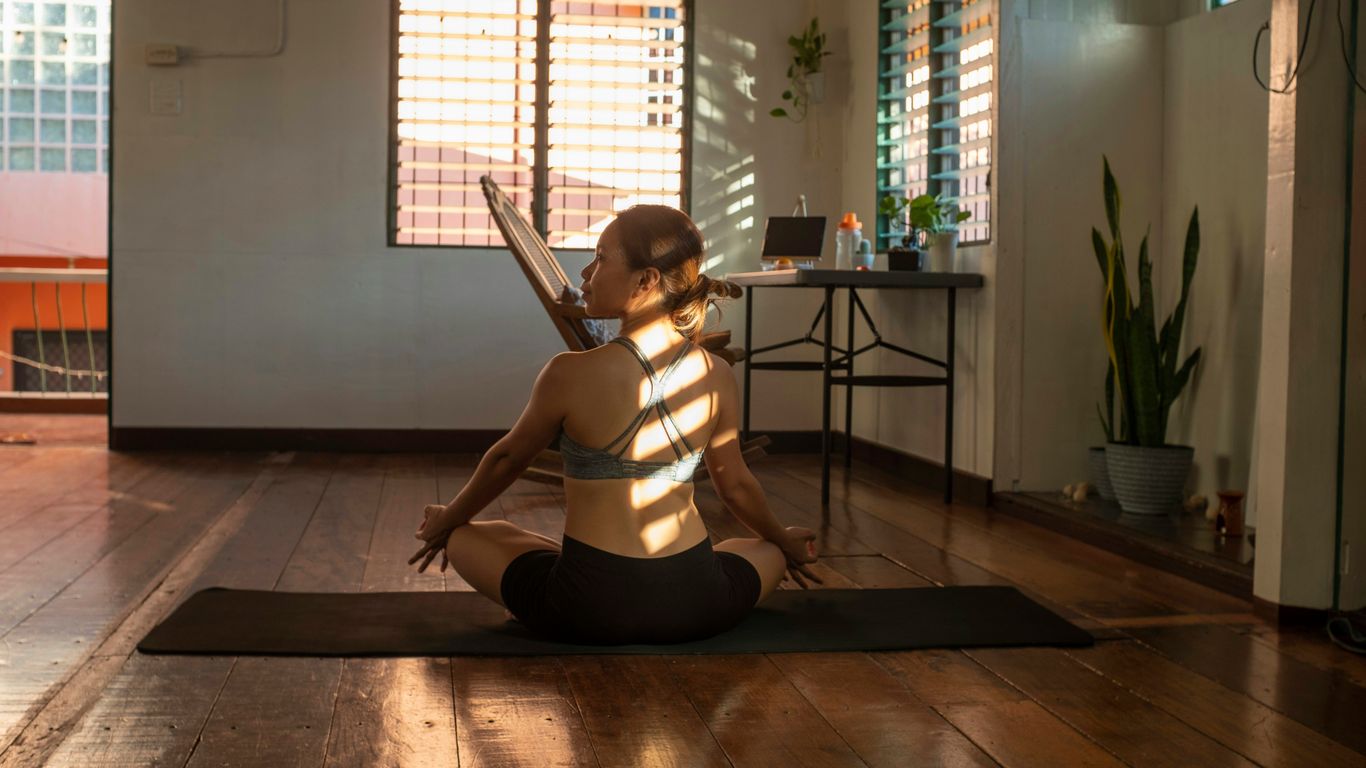
Yoga isn't just about bending and stretching; it's about paying attention. When you're on your mat, really tune into what your body is telling you. Does a pose feel sharp or painful? That's a signal to back off a bit. Maybe you need to adjust your position or use a prop. On the flip side, if a pose feels good and stable, you can explore it a little more. It's a conversation, not a competition. Think of it like this: your body has its own wisdom, and yoga is a way to access it.
The Role of Breath in Yoga
Your breath is like the anchor for your yoga practice. It's what connects your mind and body. When you focus on your breath, you tend to move more smoothly and with more awareness. Try to make your inhales and exhales smooth and steady. You don't have to force it, just let it happen naturally. Some people like to make a soft sound on the exhale, kind of like a gentle ocean wave. This is called Ujjayi breath, and it can be really calming.
Here are a few things to keep in mind about your breath:
- Inhale: Usually used to lengthen the spine or prepare for a movement.
- Exhale: Often used to deepen a stretch or release tension.
- Pausing: It's okay to take an extra breath in a pose if you need it. Don't worry about "flowing" perfectly; focus on breathing.
Incorporating Meditation and Intention
Before you even start your poses, take a moment to set an intention for your practice. What do you want to get out of it today? Maybe it's just to feel a little more relaxed, or perhaps you want to focus on being patient with yourself. Even a minute or two of quiet sitting can make a big difference. After your poses, you might want to spend a few minutes in Savasana (Corpse Pose), just lying down and letting everything go. This is where your body and mind can really absorb the benefits of your practice.
Setting an intention doesn't have to be complicated. It can be as simple as "I intend to be present" or "I intend to be kind to myself today." This small step can guide your entire practice and bring a sense of purpose to your time on the mat.
Building Consistency and Progress
So, you've got your space, you've tried a few poses, and maybe you're even starting to feel a little something. That's awesome! But how do you keep it going? Making yoga a regular thing, especially when you're just starting out at home, can feel like a puzzle. It's not about being perfect or doing an hour-long session every single day. It's about showing up for yourself, even if it's just for a few minutes.
Starting with Short Sessions
Don't feel pressured to block out huge chunks of time. Honestly, even five or ten minutes of mindful movement can make a difference. Think of it like this: a quick stretch in the morning to wake up your body, or a few deep breaths and gentle stretches before bed to wind down. These short bursts add up. You might find that after a week of 10-minute sessions, you feel ready to try 15 or 20 minutes. It's all about building momentum without feeling overwhelmed.
Gradually Increasing Pose Complexity
As you get more comfortable with the basic poses, you'll naturally want to explore a bit more. This doesn't mean jumping into advanced inversions right away. It could be as simple as holding a pose for a few extra breaths, trying a slightly different variation, or stringing together a couple of poses into a mini-flow. For example, if you've been doing Sun Salutation A, you might try adding in a Warrior II pose after the standing sequence. Listen to your body; if a new pose feels too challenging, it's okay to step back to what feels manageable.
Maintaining a Positive Attitude
This is a big one. There will be days when you feel stiff, tired, or just not "in the mood." That's totally normal. Instead of beating yourself up about it, try to approach it with kindness. Maybe today's practice is just about gentle stretching and breathing, and that's perfectly fine. Celebrate the small wins – holding a pose a little longer, noticing better posture, or simply showing up on your mat. Remember why you started and focus on how yoga makes you feel, not just how it looks.
Consistency isn't about perfection; it's about persistence. Showing up, even imperfectly, is the real practice. It's about building a habit that serves you, one breath and one pose at a time. Don't get discouraged by off days; they are part of the journey too.
Here's a simple way to think about structuring your week:
- Monday: 15-minute gentle flow, focusing on breath.
- Tuesday: 10-minute stretching for tight areas (hips, shoulders).
- Wednesday: 20-minute beginner sequence, trying one new pose variation.
- Thursday: 5-minute mindful breathing and relaxation.
- Friday: 15-minute restorative poses, holding each for longer.
- Saturday/Sunday: Rest or a longer practice if you feel inspired.
Keep Going!
So, you've taken the first steps into practicing yoga at home. That's awesome! Remember, it's not about being perfect or doing the most complicated poses right away. It's about showing up for yourself, listening to your body, and just moving. Don't get discouraged if some days feel harder than others, or if you don't feel super flexible overnight. That's totally normal. Keep exploring, keep breathing, and enjoy the journey of discovering what yoga can do for you. You've got this!
Frequently Asked Questions
Do I need to be flexible to start yoga?
Not at all! Yoga is actually a great way to *become* more flexible. You don't need to be able to do fancy poses to begin. The goal is to move your body in a way that feels good and gradually improve over time.
What's the most important thing to remember when doing yoga at home?
The most important thing is to listen to your body. If a pose feels painful or uncomfortable, ease out of it. Yoga isn't about pushing yourself too hard; it's about connecting with your body and doing what feels right for you on any given day.
What basic yoga poses should I learn first?
It's helpful to start with poses like Cat-Cow, Child's Pose, Downward-Facing Dog, Cobra, and Warrior poses. Knowing these simple poses allows you to start building basic yoga flows.
Do I need special equipment to do yoga at home?
You don't need much to start! A yoga mat is really helpful for grip and comfort, but you can practice on a rug or even a towel. Things like blocks or straps can help, but you can often use books or belts as substitutes when you're just beginning.
Are there good free resources for learning yoga online?
Yes, absolutely! There are tons of free yoga classes and videos available online. Many yoga teachers share their classes on platforms like YouTube, offering a wide variety of styles and levels perfect for beginners.
How long should my yoga sessions be when I'm starting out?
It's best to start with short sessions, maybe 10-20 minutes long. As you get more comfortable and build stamina, you can gradually increase the length of your practice.

