

Yoga mat thicknesses explained: How to choose the right mat for your practice
Key Takeaways
The best mat is not automatically the thickest one. Your practice style, joints, floor surface, and willingness to carry the mat all matter.
- Thin mats are light and easy to pack, but offer less cushioning.
- Medium mats usually balance stability, comfort, and everyday versatility.
- Thick mats can feel kinder on sensitive knees, hips, and backs.
- Firmness and density matter as much as the millimeter measurement.
- Test balance and kneeling comfort before settling on a thickness.
What yoga mat thicknesses mean
Yoga mat thickness describes the depth of the material between your body and the floor. It affects how much pressure you feel in kneeling and floor-based poses, but it also changes how firmly your hands and feet connect with the ground. That trade-off is the heart of choosing among yoga mat thicknesses. A useful yoga mat thickness guide can help you compare the basic ranges, but your own practice is the final test.
How thickness affects cushioning and stability
A thin mat usually gives you a closer, firmer connection to the floor. That can make standing balances feel more predictable, especially when the surface beneath the mat is already comfortable. A thicker mat spreads pressure more generously, which may feel better during low lunges or long kneeling holds, though a very soft surface can feel less steady under one foot.
The ideal choice is rarely about maximum padding. It is about finding enough cushioning to stay comfortable without losing the grounded sensation that helps you control transitions and balance.
Common yoga mat thickness measurements
Manufacturers commonly describe mats in millimeters, while some shoppers are more familiar with fractions of an inch. Roughly speaking, 1 to 2 mm mats are travel-oriented, 3 to 4 mm mats sit in the standard everyday range, and 5 to 6 mm mats provide noticeably more cushioning. Mats above 6 mm are often chosen when comfort takes priority over a close floor connection.
Measurements can vary slightly between brands and across the mat itself. Treat the number as a starting point, then consider the material, construction, and firmness.
The difference between thickness, firmness, and density
Thickness tells you how deep the mat is, but it does not tell you exactly how it will feel. Firmness describes how much the material resists pressure, while density relates to how compact and substantial that material feels. A dense 4 mm mat may feel more supportive and stable than a soft 6 mm mat.
This is why two mats with the same measurement can produce very different experiences. If you can shop in person, press your palm into each option and notice whether it springs back quickly or sinks under pressure.
Why material changes the feel of a mat
Rubber, foam, cork, and other materials each respond differently to weight, sweat, and temperature. A textured surface may improve traction, while a smooth surface can feel more fluid during transitions. Material also affects whether the mat feels springy, dense, warm, or firm beneath your hands.
Read the care instructions as well as the thickness label. The mat that feels wonderful on day one should also suit your cleaning routine and the places where you practice.
How to choose a yoga mat thickness
Choosing a mat becomes easier when you start with your most common practice rather than an abstract “best” measurement. Think about whether you spend more time standing, kneeling, lying down, or packing the mat into a bag. Also consider the floor beneath you: carpet and a hard studio floor create different demands. These simple questions narrow the choice quickly.
Best thickness for beginners
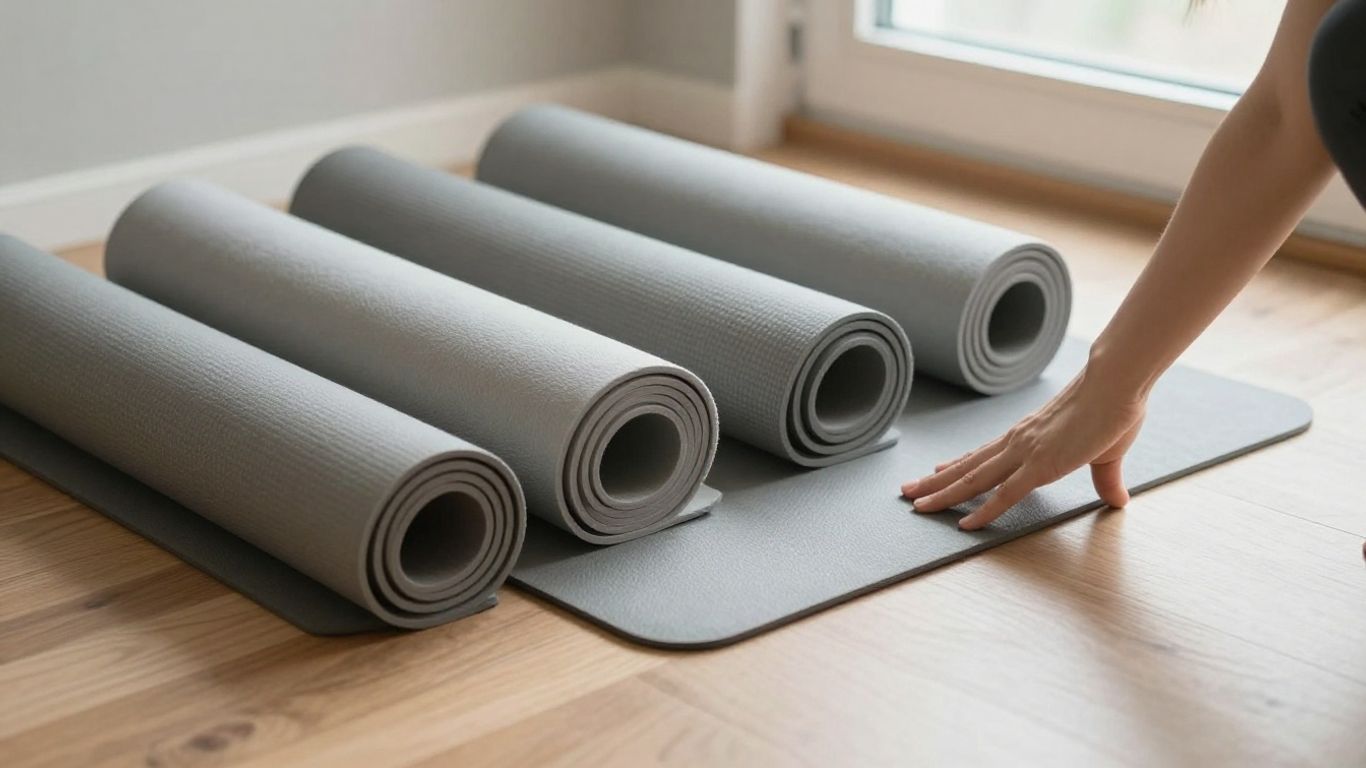
A 3 to 4 mm mat is a practical starting point for many beginners because it offers a middle ground. It provides some protection during kneeling and seated work without feeling excessively soft in standing poses. If your joints are particularly sensitive or your practice space has a hard floor, moving toward 5 or 6 mm may feel more comfortable.
A beginner does not need a complicated setup. A surface that stays in place, feels pleasant under the hands, and is easy to store is more useful than a premium measurement chosen by habit.
Best thickness for balance-focused practices
If standing poses and balance work make up much of your practice, look for a thinner or firmer mat. The closer your feet are to the floor, the easier it may be to sense small shifts in weight. A 2 to 4 mm option can work well, provided it does not leave your knees or wrists uncomfortable during transitions.
Grip matters just as much here. A thin mat that slides across the floor is not more stable in any meaningful sense, so check both the underside and the top surface.
Best thickness for floor-based poses
Long stretches, seated poses, supine work, and kneeling sequences often benefit from more padding. A 5 to 6 mm mat may soften pressure from a hard floor without becoming so deep that movement feels unstable. You can also place a folded towel under a particular knee or hip instead of choosing a much thicker mat for every pose.
The right amount of cushioning should let you stay present in the pose rather than constantly shifting to escape pressure. Comfort should support control, not replace it.
Best thickness for home and travel use
At home, storage space and the floor surface usually guide the decision. For travel, weight and packability become much more important. A very thin foldable mat can be layered over a shared studio mat or used in a hotel room, while a thicker mat is better suited to a permanent corner of the home.
Yune Yoga makes foldable travel mats for people who want a thin, light setup that is easy to pack. That kind of option is especially useful when the mat needs to move between a suitcase, a park, and a small room.
Comparing popular yoga mat thicknesses
The categories below are useful shorthand, not strict rules. A 4 mm mat can feel more cushioned than another 4 mm mat, and a travel mat may be designed to sit on top of another surface. Compare the measurement with firmness, grip, and where you expect to use it. For another perspective, this mat thickness comparison also considers the relationship between cushioning and stability.
1 to 2 mm mats for portability
The main appeal of a 1 to 2 mm mat is convenience. These mats take up little room, weigh less, and can often be folded rather than rolled. They are a sensible choice for frequent travelers or anyone who already has access to a padded surface.
The compromise is limited cushioning. On a bare, hard floor, your knees and hips may notice the difference quickly. Many people use this range as a portable top layer rather than as their only mat at home.
3 to 4 mm mats for stability and versatility
Three to 4 mm is often the adaptable middle range. It can provide enough padding for ordinary floor work while preserving a relatively direct connection during standing poses. This range also tends to suit people who want one mat for home sessions, classes, and occasional travel.
Because the range is broad, pay close attention to the mat’s firmness and grip. Those details can change the experience more than a single millimeter suggests.
5 to 6 mm mats for extra cushioning
A 5 to 6 mm mat gives the floor a softer feel, which can be welcome during kneeling, seated, or restorative practice. It may also be a sensible choice for hard floors or for people who simply prefer more padding. The extra depth adds bulk, however, and some soft mats can feel less reliable during balancing poses.
Here is a quick comparison of the usual trade-offs:
| Thickness | Main advantage | Main compromise | Often suits |
|---|---|---|---|
| 1–2 mm | Packs easily | Minimal cushioning | Travel and layering |
| 3–4 mm | Balanced feel | May not suit very sensitive joints | Everyday practice |
| 5–6 mm | More floor comfort | Heavier and potentially softer | Kneeling and restorative work |
| More than 6 mm | Maximum padding | Less direct stability | Very comfort-focused setups |
Use the table as a filter rather than a verdict. If you love balance work, a firm 5 mm mat may suit you better than a yielding 4 mm mat; if you travel often, the lightest workable choice may win.
Mats thicker than 6 mm for sensitive joints
Extra-thick mats can make a hard floor feel substantially more forgiving. They are often appealing for long floor sessions and for people who feel pressure quickly in the knees, hips, or spine. Yet more material is not automatically better: excessive softness can make transitions awkward and standing poses less secure.
If you choose this range, test it with both floor-based and standing movements. A supportive mat should still let you place your weight with confidence.
Choosing a thickness for joint support
Joint comfort is personal, and a mat cannot solve every source of pain. Still, the right amount of cushioning can make certain contact points feel less harsh, especially on tile, wood, or concrete. Consider the poses that consistently feel uncomfortable rather than choosing based only on a general desire for softness. If discomfort is persistent or sharp, pause practice and seek appropriate professional advice.
When extra cushioning helps the knees
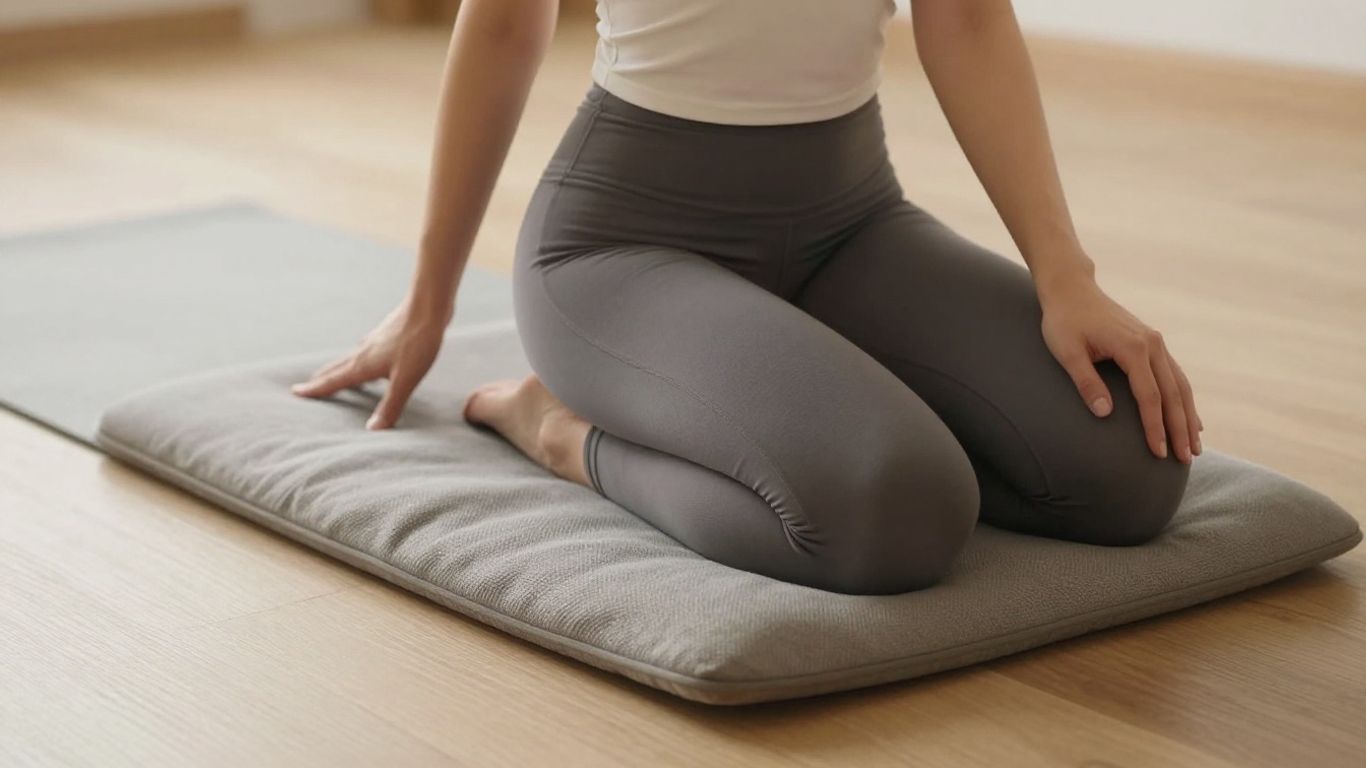
Kneeling poses and low lunges place direct pressure on the front of the knee. A thicker mat may soften that contact, particularly when the floor underneath is hard. You can also add a folded towel beneath one knee, which allows the rest of the mat to remain firm for standing work.
Small adjustments often work better than buying the thickest option available. Notice whether the discomfort comes from the whole floor or one specific pose.
How thickness affects wrists and hands
Wrist comfort depends on more than mat depth. Hand placement, weight distribution, grip, and the angle of the wrist all matter. A slightly cushioned mat may reduce pressure, but a very soft surface can make the hands sink and require extra stabilization.
Try spreading the fingers, pressing through the knuckles, and shifting weight gradually. If discomfort continues, a wedge, folded towel, or modified pose may help more than additional thickness.
Adjusting support for hips, ankles, and the spine
Hips and ankles may appreciate padding during seated or kneeling work, while the spine can feel better on a surface that is supportive rather than squishy. A mat that compresses evenly is usually more comfortable than one that collapses in isolated spots. Your body position and the duration of the hold also influence how much support you need.
Props give you useful flexibility. A blanket under the hips, a cushion beneath the seat, or a rolled towel near the ankles can fine-tune support without changing your everyday mat.
When a thicker mat can reduce stability
A deep, soft mat may allow the feet to wobble during Tree Pose, lunges, or other standing balances. That movement is not always dangerous, but it can make alignment and weight shifts harder to feel. If you regularly practice balance poses, try a firmer surface or reserve the thick mat for floor work.
A good compromise is sometimes a medium mat with a separate, targeted cushion. You get padding where you need it without turning the whole practice surface into a soft platform.
Matching mat thickness to your yoga style
Your yoga style gives you a practical clue about how much ground connection and cushioning to prioritize. Dynamic sessions usually reward a surface that feels firm and dependable, while slower sessions may benefit from more padding. The distinction is not absolute; many people mix styles throughout the week. Choose for the practice you do most often, then adapt with props when needed.
Vinyasa and flow yoga
Flow sequences include repeated transitions between standing, kneeling, and floor positions. A 3 to 5 mm mat often offers a useful balance, especially when it has reliable grip and does not bunch under the feet. Too much softness may make quick changes of direction feel less precise.
If your flow practice includes long kneeling sections, keep a small towel nearby rather than automatically moving to a very thick mat.
Hatha and restorative yoga
Hatha practice can include both standing postures and longer holds, so a medium thickness is often versatile. Restorative sessions, with more time spent seated or reclined, may feel better on 5 to 6 mm or with added blankets and bolsters. The slower pace gives you more time to notice where the floor feels uncomfortable.
The best setup is the one that lets you settle without repeatedly adjusting your knees, hips, or back.
Hot yoga and dynamic practices
Hot and dynamic classes make grip, sweat management, and secure placement especially relevant. Thickness still matters, but a slippery thick mat can be less useful than a thinner mat with a surface that remains dependable. A yoga towel can add a practical layer when sweat becomes the main distraction.
Yune Yoga offers absorbent yoga towels for adding coverage during sweaty sessions. Pairing a towel with a mat that already feels stable can be more effective than choosing thickness alone.
Yin yoga and meditation
Yin and meditation sessions often involve extended floor contact, so cushioning may become the priority. A 5 to 6 mm mat, or a medium mat combined with a cushion and blanket, can make stillness easier on the hips and knees. Portability may matter less if the setup stays in one room.
For people who practice in several locations, mindfulness practice ideas can complement a simple portable routine without requiring a large amount of equipment.
Other factors to consider before buying
Thickness is only one line on the product label. A mat can have the right measurement and still feel wrong if it slides, smells strongly, weighs too much, or is difficult to clean. Consider how the mat will fit into your actual week, including the trip to class and the time after practice. Practical details are often what determine whether you keep using it.
Grip and surface texture
Grip affects confidence in both standing poses and transitions. Look for a surface that feels secure under dry hands and remains manageable when you sweat. Texture can also change how easily the feet pivot, so a very grippy mat may feel different during flowing movements than during static holds.
Do not confuse a rough surface with dependable traction. Try shifting your hands and feet in a controlled way before deciding.
Mat weight and portability
A mat that stays at home can be heavier than one carried to work, class, or a park. Foldable designs are convenient for luggage and small storage spaces, while thicker rolled mats usually need more room. If you often practice away from home, calculate the full setup, including a towel, strap, and carrying bag.
Yune Yoga also makes yoga straps intended for practical support and portability, which can help keep a compact travel kit organized. The goal is a setup you will actually bring with you.
Durability and material quality
Look for even construction, a surface that does not shed, and edges that lie flat. Durability is especially important when the mat is folded, packed, and unfolded repeatedly. A slightly more substantial mat may last longer, but careful storage and cleaning matter too.
For broader shopping decisions, these independent product reviews offer a useful reminder to compare everyday usability rather than relying on one headline feature.
Cleaning and maintenance needs
Sweat, dust, sunscreen, and outdoor surfaces all affect a mat’s condition. Check whether the manufacturer recommends a damp cloth, mild cleaner, or a specific drying method. Never assume that a mat can be soaked or placed in a washing machine.
A simple routine helps: wipe the surface after sweaty sessions, let it dry fully before rolling, and store it away from direct heat. If you practice outdoors, inspect the mat for grit before folding it.
- Match the care method to the material.
- Dry the mat completely before storage.
- Keep grit away from fold lines and textured surfaces.
- Check the edges and underside regularly.
These habits protect the feel of the mat and can extend its useful life. They also make a portable setup more pleasant to unpack next time.
How to test whether a mat is the right thickness
A showroom feel is helpful, but a few simple movements tell you much more. Test the mat with the kinds of poses you actually practice, wearing ordinary workout clothes and using the floor surface that most resembles home. Notice pressure, slipping, wobbling, and whether you instinctively brace or adjust. A short test can prevent a frustrating purchase.
Checking balance in standing poses
Try Mountain Pose, a gentle lunge, and a single-leg balance if you feel safe doing so. Notice whether your feet feel planted or whether the mat compresses and shifts beneath you. The surface should give you enough grip to adjust without making every movement feel stuck.
If a thick mat feels unstable, compare it with a firmer option before deciding that you need less cushioning everywhere.
Testing comfort in kneeling poses
Spend a minute in a kneeling position and try a low lunge with care. Pay attention to the front knee, ankle, and top of the foot rather than rushing through the pose. If one contact point feels pressured, test a folded towel or small blanket as a targeted adjustment.
This test is more revealing than simply pressing your hand into the mat. Body weight, time, and joint angle all change the experience.
Evaluating cushioning during floor work
Lie on your back, sit with your legs extended, and try a gentle twist. A suitable mat should feel supportive without forcing the spine into an awkward position. If the floor feels intrusive, more cushioning may help; if you feel swallowed by the surface, choose something firmer.
For people arranging a small practice area during a move, planning the room alongside moving preparation tips can make it easier to test the mat where it will actually live.
Using props to improve support without changing mats
Props can solve a local comfort issue while preserving the stability of your main mat. Try a blanket beneath the knees, a cushion under the hips, or a strap to reduce reaching and strain. These additions are especially useful when one mat needs to serve several styles.
A compact setup can be practical for travelers, too. If you are organizing practice around hotel stays, compare the mat’s weight with the rest of your luggage; even a helpful travel booking guide cannot make an overstuffed bag convenient. For outdoor practice, also consider location-specific chores such as side-specific gutter care when choosing where gear will be stored at home.
After testing, give yourself a day or two to notice how the mat feels in a normal session. The right choice should fade into the background rather than constantly asking for attention.
Conclusion
The right yoga mat thickness is a compromise between cushioning, stability, material feel, and portability. Start with the poses and places that define your practice, then test a realistic range instead of chasing the thickest or thinnest option. A medium mat is a useful starting point for many people, while a thin foldable mat or a thicker cushioned mat may make more sense for specific routines. Choose the surface that helps you practice comfortably and consistently.
Frequently Asked Questions
Is a thicker yoga mat always more comfortable?
No. A thicker mat can cushion knees and hips, but if it is too soft, it may feel unstable during standing poses. Firmness and density matter alongside the measurement.
What thickness is best for beginners?
Many beginners do well with a 3 to 4 mm mat because it balances cushioning and floor connection. A 5 to 6 mm mat may be preferable on a hard floor or for sensitive joints.
Are thin yoga mats good for travel?
Yes. Thin mats are lighter and easier to fold or pack, but they provide less protection from hard floors. Some travelers use them as a layer over another mat or padded surface.
Can a thick mat make balancing harder?
It can, especially when the material compresses noticeably under the feet. A firmer medium-thickness mat may feel more predictable for standing and single-leg poses.
What matters more, thickness or grip?
Neither is always more important. Thickness affects cushioning and floor connection, while grip affects whether hands and feet stay placed. Your practice style determines how you should balance the two.
How can I make a thin mat more comfortable?
Use a folded towel, blanket, or small cushion beneath pressure points such as the knees or hips. This adds targeted support without making the entire surface soft.
How often should I clean a yoga mat?
Wipe it after sweaty or outdoor sessions and let it dry fully before rolling it up. Follow the manufacturer’s care instructions, since materials differ in how they handle water and cleaners.

