
What size yoga strap do I need? A guide to choosing the right length
Key Takeaways
The right yoga strap length depends on more than your height. Think about your reach, the poses you practice, and how much extra fabric you find comfortable to manage.
- A 6-foot strap can suit basic stretches and practitioners who need less reach.
- An 8-foot strap is a versatile middle ground for many kinds of practice.
- A 10-foot strap gives more room for longer reaches, larger loops, and supported poses.
- Buckle design and usable length affect how a strap feels in your hands.
- Test a strap with the movements you use most before deciding it fits.
Common yoga strap lengths and what they’re for
If you’re wondering what size yoga strap do i need, start by comparing the common lengths: 6, 8, and 10 feet. Each gives you a different balance of reach and extra material to handle. Your preferred poses and how you like to adjust a strap matter just as much as the number on the label.
How 6-foot straps support basic stretches
A 6-foot strap can work well for straightforward seated or supine stretches where you need a little extra reach, but not a large loop. Its shorter length is also easier to keep tidy on a mat. If you already have a comfortable range of motion, a compact strap may provide what you need without a long tail to gather.
When an 8-foot strap offers more reach
An 8-foot strap offers a useful middle ground: more room to reach or adjust a loop, while still being manageable for everyday use. It can suit a mix of seated, standing, and shoulder-opening stretches. Here’s a quick comparison to help you narrow the options before trying one in a pose.
| Length | A useful starting point | What to keep in mind |
|---|---|---|
| 6 feet | Basic stretches and shorter reach needs | Compact, with less extra length |
| 8 feet | A varied practice and moderate reach needs | A flexible middle option |
| 10 feet | Longer reach or larger loops | More fabric to manage |
The table is a starting point, not a rule about who can use each length. For instance, the Horatio Yoga Strap from Yune Yoga is an 8-foot strap made from GOTS-certified organic cotton, with adjustable metal D-rings; it also doubles as a yoga mat carrier. Consider whether those features and the extra reach suit the way you practice.
Who benefits from a 10-foot strap
A 10-foot strap can be helpful if a shorter strap runs out of reach, or if you often make larger loops for supported stretches. Taller practitioners may appreciate having more fabric to work with, though height alone does not determine fit. The tradeoff is simple: extra length can be useful in poses, but it can take more attention to adjust and keep out of the way.
Choose a strap length for your height and reach
Height can offer a rough first clue, but it cannot tell you exactly how a strap will feel in a pose. Arm length, shoulder mobility, and the way you like to hold the strap all change the amount of reach you need. The best choice is the one that lets you use the strap without forcing your body into a position it is not ready for.
Use your height as a starting point
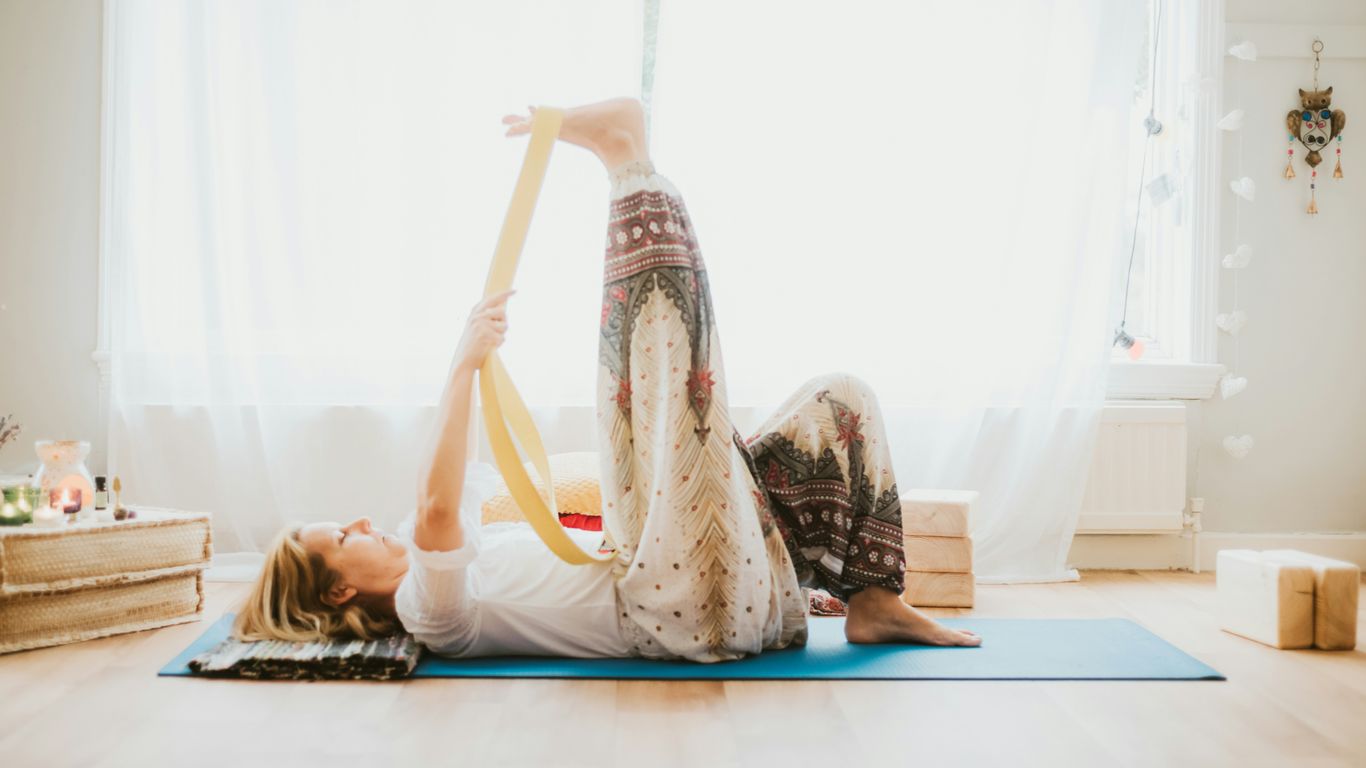
A taller practitioner may want to try a longer strap, while someone with a shorter reach might find a 6- or 8-foot option easier to manage. Treat that as a reason to test a length, not a strict sizing formula. If you can, compare the strap against the positions you use most rather than choosing from a height chart alone.
Account for arm length and shoulder mobility
Two people of similar height can have different arm spans and shoulder ranges. In a shoulder-opening stretch, one person may comfortably hold a shorter loop while another needs more room to keep the shoulders relaxed. A strap should give you enough slack to set up the movement without pulling your arms into an uncomfortable position.
Adjust for flexibility and range of motion
Your current range of motion helps determine how much distance the strap needs to bridge. If you’re working toward a pose gradually, a little extra length can make it easier to set up without tugging. For a practical comparison of these sizing factors, see this yoga strap length guide.
A simple way to assess your needs is to notice what happens at the end of your reach:
- Check whether your hands can hold the strap without your shoulders lifting.
- Notice if you need a larger loop to position your arms comfortably.
- See whether you can keep a gentle bend or relaxed posture in the stretch.
- Consider whether you will use the strap in other poses, too.
If a position only works when you strain or pull hard, try a different setup or more length. The strap should make the movement easier to arrange, not pressure you to go farther than feels comfortable.
Match the strap to your yoga practice
The same strap may feel different in a seated stretch than in a standing pose. Think about whether you use it mainly to extend your reach, to create a loop, or to support a position for a longer time. Choosing for your usual practice makes it easier to avoid both a strap that feels too short and one with excess fabric you rarely use.
Choose a length for seated and supine poses
For seated forward folds and supine hamstring stretches, the strap generally needs to connect your hands to your feet while allowing you to keep a comfortable posture. A shorter length can be enough when the reach is modest; a little more length may help you find a relaxed grip. The important measure is whether you can hold on without rounding or pulling yourself forward too aggressively.
Allow extra length for standing poses
Standing stretches can call for more room to create a loop or adjust your grip while staying balanced. If you use a strap to extend your hold on a raised foot, for example, extra length may make the setup simpler. Try the movement slowly and check that the loose end does not distract you or catch underfoot.
Consider restorative yoga and assisted stretching
For supported or longer-held stretches, extra strap length can make it easier to adjust a loop and settle into position. You might prefer more length if you use the strap in several configurations, but it is still worth checking that the material can be managed comfortably. A Bear Creek Yoga Strap from Yune Yoga is an 8-foot strap made from GOTS-certified organic cotton with adjustable metal D-rings, and its documented uses include yoga, stretching, Pilates, and recovery.
A short demonstration can help you picture how strap length changes the setup. Use any video as a visual reference, and keep your own range of motion and comfort in mind.
Factor in strap style and hardware
Length is only part of the fit: the closure and width influence how easily you can adjust and hold the strap. Different designs can take up different amounts of material at the loop, so a strap’s labeled length may not tell the whole story. Check the details before deciding that two straps of the same length will feel identical.
Compare buckle and D-ring closures
A closure should let you create and adjust a loop in a way that feels manageable. D-rings are one common option; check that you can thread the strap through them and tighten or loosen the loop without frustration. The Elk Meadow Yoga Strap from Yune Yoga is made from organic cotton and has adjustable metal D-rings, as described for the product.
Check how much usable length the closure takes up
Some of the strap may be folded or threaded through its closure when you form a loop. That means the length available for reaching can feel shorter than the full measurement suggests. When comparing options, consider the portion you can actually use in a stretch, not only the listed end-to-end length.
Consider wider straps for grip and comfort
Width can affect how a strap feels in your hands, especially when you hold it for several breaths. A wider strap may feel easier to grip for some people, while another practitioner may prefer a narrower one that is simpler to gather. If possible, handle the material and closure before committing, and consider how both feel during the movements you do most.
Test whether a yoga strap fits your needs
A quick test with familiar movements can answer questions that a size chart cannot. Try a couple of stretches at a comfortable effort, and notice whether you can adjust the strap without changing your posture to compensate. These simple checks are more useful than trying to reach the farthest position possible.
Try a shoulder-opening stretch
Hold the strap with both hands and gently move your arms through a shoulder-opening position that feels comfortable. You should have enough length to place your hands where you need them without pulling hard or hiking your shoulders. If the loop is too small, or the strap feels awkward to adjust, try a longer option or change your grip.
Check your reach in a seated forward fold
Sit with your legs extended and place the strap around your feet, then hold the ends in a way that lets you sit upright. You are checking whether the strap bridges the reach comfortably, not trying to pull your chest toward your legs. If you can maintain a relaxed grip and steady posture, the length is likely workable for this use.
Make sure you can adjust the loop without strain
Before beginning a stretch, see whether you can set the loop, secure it, and change its size without struggling. A small setup check can help you decide whether the closure and strap length suit your hands and routine. If choosing gear feels easier when you compare specific criteria, the same practical approach appears in guides to social video editing, biblical life coaching, CoolTone, Home Team Luxury Rentals, and drainage contractors—though each addresses a different subject.
Avoid common sizing mistakes
It is easy to focus on one number and overlook how a strap behaves once it is in your hands. A useful fit supports the movements you actually practice and remains simple to adjust. Take a moment to think through the tradeoffs before settling on a length.
Don’t choose a strap based on height alone
Height can help you decide which lengths to try, but it is not a complete answer. Arm span, shoulder mobility, preferred poses, and comfort with extra material all affect the result. Use your height as a starting point, then test a stretch that reflects your real practice.
Leave room for gradual flexibility changes
Your reach and preferred setup may change as your practice develops, so avoid treating today’s range as permanent. A length that gives you room to adjust can remain useful across different variations. At the same time, there is no need to size up simply because you expect to become more flexible; choose for movements you can do comfortably now.
Avoid excess length that gets in the way
A long strap can offer extra options, but unused fabric may trail across the mat or take longer to manage. Think about how often you will need a large loop or added reach before choosing the longest option. The right size gives you useful room without making setup feel like another pose.
Conclusion
Choose a strap by matching its usable length to your reach, the poses you practice, and the way its closure feels in your hands. A 6-, 8-, or 10-foot option can work well when it supports a comfortable setup; a simple test in your familiar stretches will help you find the one that feels right.
Frequently Asked Questions
Is an 8-foot yoga strap a good all-purpose length?
An 8-foot strap can be a versatile middle option for people who want more reach than a compact strap provides without choosing the longest length. Whether it suits you depends on your poses and how much extra material you like to manage.
Is a 6-foot yoga strap long enough for beginners?
It can be, particularly for basic stretches where only a modest extension is needed. Beginners should choose based on comfortable reach and the movements they plan to practice, rather than experience level alone.
When should I consider a 10-foot yoga strap?
Consider a 10-foot strap if shorter options limit your reach or you often need larger loops. It may also suit some taller practitioners, but testing the strap in a familiar pose is a better guide than height by itself.
How do I know if my yoga strap is too short?
It may be too short if you cannot reach the position comfortably without pulling hard, lifting your shoulders, or changing your posture. Try a longer strap or a different setup and see whether the stretch becomes easier to arrange.
Does yoga strap hardware affect its usable length?
Yes. Some material is used when threading or folding the strap through a closure to make a loop, which can reduce the length available for reaching. Check how the closure works as well as the stated total length.
Should I choose a longer strap for better flexibility?
Not necessarily. Choose a length that supports your current practice comfortably, with enough room for the movements you use. A longer strap is useful only if you need the added reach or loop size.
How can I test a yoga strap before buying it?
If you can, try a shoulder-opening stretch and a seated forward fold with the strap. Check that you can adjust the loop without strain and hold a relaxed position without pulling yourself farther than feels comfortable.

