

Unlock Your Core Strength: The Ultimate Guide to Using an Exercise Fitness Ball
Thinking about shaking up your workout routine? Maybe you've seen those big, colorful balls at the gym and wondered what all the fuss is about. Well, let me tell you, the exercise fitness ball is a seriously underrated piece of equipment. It might look simple, just an inflatable sphere, but this thing can really make a difference in how you train. We're going to dive into what makes this exercise fitness ball so great and how you can use it to get stronger and more balanced. It’s not just for crunches, either; this ball can be used for a whole lot more.
Key Takeaways
- The exercise fitness ball, also known as a stability or Swiss ball, is a versatile tool that can significantly improve your workouts.
- Choosing the right size, material, and inflation level for your exercise fitness ball is important for safety and effectiveness.
- Using an exercise fitness ball engages your core muscles more deeply, leading to better stability and posture.
- Beyond core strength, the exercise fitness ball helps improve overall balance, coordination, and muscle activation.
- Incorporate the exercise fitness ball into your routine with basic exercises, but be mindful of common mistakes to get the most benefits.
Understanding The Exercise Fitness Ball
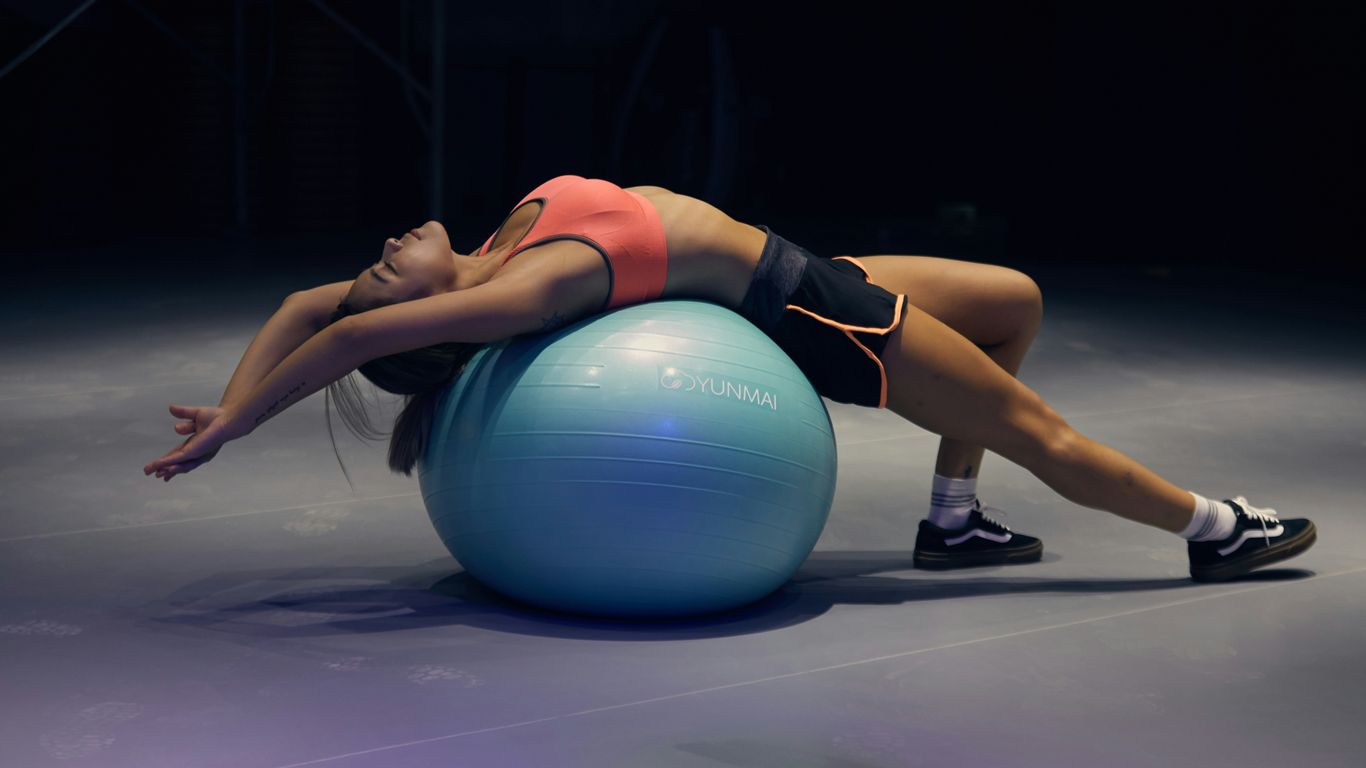
The Versatile Powerhouse Of Fitness
Ever looked at one of those big, colorful inflatable balls and wondered what the big deal is? Turns out, these exercise fitness balls, often called stability balls or Swiss balls, are way more than just a bouncy accessory. They've been around for a while and are a surprisingly effective tool that can really change up your workout game. They add a layer of challenge to simple moves that you just don't get on a flat surface. It’s like giving your regular exercises a secret upgrade.
Key Benefits Of Using An Exercise Fitness Ball
So, what makes these balls so special? For starters, they're incredibly versatile. You can use them for a whole range of exercises, from basic stretches to really intense strength training. The instability they provide forces your body to work harder to keep you balanced, which means more muscles get activated during every single movement. This isn't just about getting stronger; it's about building a more coordinated and stable body overall. Think of it as a way to get more done in less time, hitting more muscle groups with each repetition.
Here’s a quick look at how different exercises get more out of you:
- Squats: On a standard surface, you mainly work your legs and glutes. With a balance ball, you add core and shoulder engagement for stability.
- Push-ups: Normally targets chest, triceps, and shoulders. Using the ball significantly increases core engagement.
- Lunges: Beyond legs and glutes, the ball challenges your core and hip stabilizers.
Choosing Your Ideal Exercise Fitness Ball
Alright, so you've decided to get yourself one of these exercise balls, which is a great move for your fitness. But before you just grab the first one you see, let's talk about picking the right one. It's not super complicated, but a few things make a big difference in how well it works for you.
Selecting The Right Size
This is probably the most important part. If the ball is too big or too small, it's just not going to feel right, and you won't get the most out of your exercises. The general idea is to sit on the ball with your feet flat on the floor. Your knees should be bent at about a 90-degree angle, roughly in line with your hips. If your hips are higher than your knees, the ball is too small. If your knees are higher than your hips, it's too big.
Here's a quick guide based on height:
| Height Range | Recommended Ball Size |
|---|---|
| Under 5'4" (163 cm) | 45-55 cm |
| 5'5" to 5'11" (165-180 cm) | 55-65 cm |
| 6'0" (183 cm) and taller | 65-75 cm |
Picking the right size ball is key for safety and making sure you actually get the benefits. A ball that fits means better form and less chance of slipping or straining yourself. It's worth taking a minute to figure this out before you buy.
Fortifying Your Core: The Foundation Of Fitness
When we talk about getting fit, the core is often mentioned, and for good reason. Your core isn't just your abs; it's a whole network of muscles in your midsection, including your lower back, hips, and pelvis. This group of muscles is super important for pretty much everything you do. It helps you stand up straight, keeps your spine supported, and allows you to move in all sorts of ways. A strong core is the base for all your physical activities, from just walking around to playing sports. Using a stability ball is a fantastic way to really build up that core strength because it constantly challenges these muscles to keep you stable and upright.
Why Core Strength Is Crucial
Think of your core as the central command center for your body. It's not just about looking good; it's about building a stable platform for all your movements. A strong core helps prevent injuries, makes everyday tasks feel easier, and improves your overall athletic performance. Without a solid core, your body has to work harder to compensate, which can lead to strain and discomfort.
How The Exercise Fitness Ball Engages Your Core
The magic of the exercise ball is its instability. When you sit on it, stand on it, or place parts of your body on it, the ball constantly shifts. This forces your core muscles – the deep ones you can't always see – to work overtime just to keep you balanced. It's like a mini-workout for your stability muscles happening all the time you're using the ball, even during simple movements.
Building A Stable Platform For Movement
Using the ball helps you develop what's called proprioception, which is your body's awareness of its position in space. This improved awareness, combined with stronger core muscles, means you'll have better control over your movements. Whether you're reaching for something on a high shelf or making a quick pivot during a game, a stable core allows for more efficient and safer actions. It's the bedrock upon which all other physical activities are built.
The ball makes you work harder just to stay balanced, which means more muscles get involved. It's not just about doing a few crunches; this ball makes you work harder just to stay balanced, which means more muscles get involved.
Fundamental Stability Ball Workouts
Alright, you've got your exercise ball and you're ready to start using it. That's great! This ball isn't just for sitting around or doing basic crunches; it's a tool that can really spice up your regular fitness routine. Think of it as a way to add a little challenge and a lot more engagement to exercises you already do. It's all about making your workouts more dynamic and getting more out of them, muscle-wise. Getting started with the ball doesn't have to be complicated. You can easily add it to exercises you already know to make them tougher.
Classic Core Strengthening Moves
These are your starting points. Think of them as the warm-up for your core, even though they're actual exercises. The goal here is to get a feel for how the ball moves and how your body has to react to keep you steady. Focus on controlled movements and really feeling those muscles engage. Don't worry about speed; form is king right now.
- Stability Ball Crunches: Sit on the ball with your feet flat on the floor, hip-width apart. Walk your feet forward, letting the ball roll under your back until you're in a stable, reclined position. Your lower back should be supported. Hands can be behind your head or across your chest. Exhale as you lift your head and shoulders off the ball, squeezing your abs. Inhale as you slowly lower back down.
- Stability Ball Bridges: Lie on your back with your feet flat on the ball. Lift your hips off the ground, squeezing your glutes and core. This is fantastic for your hamstrings and glutes.
- Plank with Forearms on Ball: Get into a plank position with your forearms resting on the ball. Keep your body in a straight line from head to heels.
Adding Challenge To Familiar Exercises
So, you've mastered the basics? Now let's make things a little more interesting. The instability of the ball means your muscles have to work harder just to keep you steady. This is where you really start to feel the burn and see the gains.
- Push-ups with Hands on Ball: Instead of doing push-ups on the floor, place your hands on the ball. This requires more core stability and shoulder control.
- Ball Squats: Stand with your back against a wall, placing the ball between your lower back and the wall. Slowly lower into a squat, using the ball for support. This helps with form and adds a bit of a massage.
- Stability Ball Russian Twists: Sit on the ball with your feet flat on the floor. Lean back slightly, lift your feet off the ground, and rotate your torso from side to side while holding the ball.
Ball Squats And Bridges For Strength
Let's dive a bit deeper into two exercises that are great for building a solid base: squats and bridges using the ball. They might seem simple, but they pack a punch.
Ball squats, when done with your back against a wall and the ball in between, offer a unique way to work your quads and glutes. The ball allows for a greater range of motion and can help you maintain better form, especially if you're working on depth. It's a gentler way to challenge your legs while still getting a good workout.
Here's a quick look at how these exercises engage your muscles:
| Exercise Type | Primary Muscles Worked | Secondary Muscles Worked |
|---|---|---|
| Ball Squats | Quadriceps, Glutes | Hamstrings, Core, Lower Back |
| Ball Bridges | Glutes, Hamstrings | Core, Lower Back |
Remember, controlled movements are key here. Focus on squeezing your glutes at the top of the bridge and maintaining a stable core throughout the squat.
Advanced Core Engagement Techniques
Plank Variations With The Ball
Alright, you've mastered the basic plank. Now, let's make it a bit more interesting. Placing your hands or even your feet on the exercise ball really ups the ante for your core. It forces your stabilizing muscles to work overtime just to keep you from wobbling. Try a standard plank with your hands on the ball. Keep your body straight, like a board, and focus on keeping the ball still. It's harder than it sounds! Another option is to place your feet on the ball while your hands are on the floor. This challenges your core in a different way, requiring you to pull your legs towards you to maintain stability.
Dynamic Exercises For Deeper Muscle Activation
Moving beyond static holds, dynamic exercises on the ball really get those deeper muscles firing. Think about exercises where you're moving the ball or moving your body over the ball. A great example is the "ball roll-out." You'll start on your knees, with your forearms resting on the ball. Slowly roll the ball forward, extending your body as far as you can while keeping your core tight. Then, use your core to pull yourself back to the starting position. This movement is fantastic for building strength in your entire midsection. Another dynamic move is the "plank saw." In a plank position with your forearms on the ball, gently rock your body forward and backward, keeping your core engaged. It's a small movement, but it makes a big difference.
Burpees And Bird-Dog For A Full-Body Challenge
Let's talk about taking things up a notch with exercises that hit your whole body while still demanding serious core control. Burpees are already tough, but adding the ball can make them even more effective. You can do a burpee with your hands on the ball, which adds an element of instability to the push-up and jump. This means your core has to work harder to keep you stable throughout the entire movement. Then there's the "bird-dog" exercise. Start on your hands and knees, with the ball under your stomach. As you extend one arm forward and the opposite leg back, you'll need to use your core to keep the ball from rolling. This exercise is excellent for improving balance and coordination while strengthening your back and glutes.
When you introduce instability with the ball, you're not just working the muscles you see in the mirror. You're engaging the smaller, supporting muscles that are vital for posture, injury prevention, and overall functional strength. It's about building a resilient core from the inside out.
Maximizing Your Exercise Fitness Ball Experience
So, you've got your exercise ball and you're ready to really mix things up. That's great! This ball isn't just for sitting or doing basic crunches; it's a tool that can seriously spice up your regular fitness routine. Think of it as a way to add a little challenge and a lot more engagement to exercises you already do. It's all about making your workouts more dynamic and getting more out of them, muscle-wise.
Progressive Overload Strategies
It's easy to get excited and want to do everything at once, but that's how injuries happen. The key is slow and steady progress. Think about adding just one new challenging exercise per week, or increasing the reps or hold time of an exercise you already do. Your body will tell you when it's had enough. Pushing through sharp pain is never a good idea. It's better to back off, rest, and try again when you're feeling stronger. Consistency over intensity is the name of the game here.
Here’s a simple way to think about increasing difficulty:
- Increase Reps: If you're doing 10 reps of an exercise, try for 12 or 15.
- Increase Hold Time: For exercises like planks or holds, extend the duration by 5-10 seconds.
- Add Resistance: Use light weights or resistance bands alongside the ball.
- Reduce Base of Support: Make the exercise harder by bringing your feet closer together or lifting one limb.
Listening To Your Body
Your body is your best guide. It's easy to get caught up in what you think you should be doing, but paying attention to how you feel is way more important. If something feels off, or you feel a sharp pain, stop. It's not a sign of weakness; it's a sign of intelligence. Rest is when your muscles actually get stronger, so don't skip out on it. Maybe you need an extra rest day, or perhaps you need to dial back the intensity on a particular move.
Pushing through sharp pain is never a good idea. It's better to back off, rest, and try again when you're feeling stronger. Consistency over intensity is the name of the game here.
Consistency Over Intensity
This is a big one. Showing up regularly, even for shorter, less intense workouts, will bring you better results in the long run than sporadic, super-hard sessions. Think about building a habit. It's like watering a plant; a little bit every day makes it grow strong. Trying to do too much too soon can lead to burnout or injury, which sets you back way more than consistent effort ever would. Aim for quality movement and regular practice, and the strength will follow.
Enhancing Balance And Overall Muscle Activation
So, you've got your exercise ball, and you're ready to see what it can really do. This isn't just some fancy prop; it's a tool that can seriously change how you work out, making things tougher and, honestly, more interesting. It's all about making your workouts more dynamic and getting more muscle engagement.
The Role Of Instability In Training
Using a stability ball is a fantastic way to get better at, well, balancing. Every time you shift your weight or make a small movement, your body has to react. This constant need for adjustment sharpens your reflexes and makes you more aware of where your body is in space. It's a great way to train your brain and body to work together more efficiently. Think of it like this: trying to balance on a wobbly surface requires a lot more effort from your midsection than sitting on a solid chair. That extra effort is building real strength.
Improving Coordination And Posture
Balance isn't just for tightrope walkers – it's a part of our daily lives. From walking on uneven surfaces to reaching for objects, good balance and coordination are key for preventing falls and injuries, especially as we age. The stability ball is a great tool for improving this. By creating an unstable surface, it challenges your body's awareness of its position in space. This heightened awareness translates to better overall balance and coordination in your daily activities and sports performance. Many of us spend hours hunched over desks, leading to poor posture and potential back problems. Incorporating stability ball exercises can help counteract these effects, promoting better spinal alignment and reducing strain on your back muscles.
Increased Muscle Fiber Recruitment
When you do exercises on a balance ball, you're often using more muscles than you would on a flat surface. Take squats, for example. Doing them on the ball means your legs are working, but your core, glutes, and even your shoulders are firing up to keep you steady. This means you're getting more out of every move. The instability the ball provides forces your body to engage stabilizing muscles that might be neglected in traditional workouts. This increased engagement of smaller, supporting muscles leads to improved joint stability and better overall body alignment.
Here's a quick look at how different exercises get more out of you:
| Exercise Type | Standard Surface Activation | Balance Ball Activation |
|---|---|---|
| Squats | Legs, Glutes | Legs, Glutes, Core, Shoulders (for stability) |
| Push-ups | Chest, Triceps, Shoulders | Chest, Triceps, Shoulders, Core (significant engagement) |
| Lunges | Legs, Glutes | Legs, Glutes, Core, Hip Stabilizers |
This increased muscle recruitment means you're building a more well-rounded physique and getting a more complete workout, all thanks to the instability the ball provides.
The unstable nature of the ball forces your body to engage stabilizing muscles that might be neglected in traditional workouts. This increased engagement of smaller, supporting muscles leads to improved joint stability and better overall body alignment. As a result, you’re less likely to experience injuries from poor form or muscle imbalances.
Keep Rolling Towards a Stronger You
So, there you have it. We've talked about how this simple ball can really make a difference in your workouts, especially for your core. It's not just about looking good; it's about feeling more stable and capable in everyday life. Remember to pick the right size ball and focus on good form to get the most out of it. Don't be afraid to try different exercises we covered, and just keep at it. Consistency is key, and before you know it, you'll notice you're stronger and more balanced. So grab that ball, get moving, and enjoy the journey to a healthier you.
Frequently Asked Questions
What exactly is a stability ball?
A stability ball, also called a Swiss ball or exercise ball, is a big, inflatable ball used for workouts. It might look simple, but it's great for making exercises harder and helping you get stronger and more balanced.
Why is my core so important?
Your core is like the control center of your body. It includes muscles in your belly, back, and hips. A strong core helps you stand tall, keeps your spine safe, and lets you move easily. It's the foundation for everything you do, from walking to playing sports.
How does the ball make my core work harder?
Because the ball isn't steady, your body has to constantly make small movements to stay balanced. This means your core muscles, which help you stay upright, have to work much harder than they would on a solid surface.
How do I know what size ball to get?
The best way is to sit on the ball with your feet flat on the floor. Your knees should be bent at about a 90-degree angle, about the same height as your hips. If your knees are higher than your hips, the ball is too big. If your hips are higher than your knees, it's too small.
What are some easy exercises to start with?
You can try basic crunches where the ball supports your lower back, or bridges where you lie on your back with your feet on the ball and lift your hips. You can also do squats with the ball between your back and a wall for support.
How can I make my workouts more challenging over time?
You can try doing more repetitions of an exercise, holding a position for longer, or taking shorter breaks between sets. You can also try more difficult versions of exercises, like planks with your feet on the ball or adding leg lifts.

