

Mastering Beginners Yoga Positions: A Step-by-Step Guide for New Practitioners
Starting yoga can feel a bit overwhelming with all the different poses and techniques, but it doesn't have to be. This guide is here to help you get comfortable with beginning yoga postures. We'll break down some foundational poses, explain why they're important, and share tips for practicing safely. Whether you're looking to improve your flexibility, build strength, or just relax, these simple postures are a great way to start your journey into yoga.
Key Takeaways
- Beginning yoga postures are simple poses that help build a strong foundation for practice.
- Starting with foundational poses boosts confidence and helps prevent injuries.
- Essential standing poses like Mountain Pose improve balance and stability.
- Grounding poses such as Downward-Facing Dog offer a full body stretch.
- Modifying poses with props makes beginners yoga positions accessible for everyone.
Foundational Beginners Yoga Positions
Understanding The Basics Of Beginning Yoga Postures
Starting yoga can feel a bit overwhelming with all the different poses and techniques, but it doesn't have to be. This section is here to help you get comfortable with beginning yoga postures. We'll break down some foundational poses, explain why they're important, and share tips for practicing safely. Think of these poses as the ABCs of yoga; they're simple movements designed to get you familiar with alignment, balance, and how to breathe properly. They're not the crazy contortions you might see online, but rather the building blocks that help you develop strength and flexibility safely. Great starting points include Mountain Pose, Child’s Pose, and Cat-Cow. These are all about getting comfortable and stable in your body.
Why Start With Foundational Poses?
Why not just jump into the advanced stuff? Well, imagine trying to build a house without a solid foundation. Foundational poses let beginners:
- Build confidence without feeling overwhelmed. It's way less intimidating.
- Learn proper alignment to avoid injuries. Trust me, your body will thank you.
- Understand how breath and movement work together. This is key to getting the most out of yoga.
These poses are also super adaptable. Whether you're young, old, fit, or not-so-fit, you can modify them to suit your needs. It's about learning what your body can do and growing from there. It's a journey, not a race. Remember, you don't need to be flexible to start yoga; flexibility comes with practice. And you don't need special equipment either; a mat and some comfy clothes are usually all you need.
Yoga isn’t about being a pretzel on day one. It’s about learning what your body can do and growing from there. It's a journey, not a race.
Key Takeaways For New Practitioners
- Beginning yoga postures are simple poses that help build a strong foundation for practice.
- Starting with foundational poses boosts confidence and helps prevent injuries.
- Essential standing poses like Mountain Pose improve balance and stability.
- Seated postures can enhance flexibility and relaxation.
- Gentle backbends strengthen the back and open the chest.
By incorporating a variety of these poses—standing poses, balancing postures, and gentle stretches—you can tailor your yoga practice to your needs and goals, whether you’re just starting out or looking to deepen your experience. These essential yoga poses are designed specifically for beginners, aiming to enhance physical strength and improve balance, while also fostering a sense of calm and focus for the mind.
Essential Standing Beginners Yoga Positions
Standing poses are where a lot of the magic happens when you're just starting out with yoga. They're not just about looking strong; they're about building a solid base for your entire practice. Think of them as the building blocks that help you feel more stable, both on and off the mat. If you're new to this, don't worry about wobbling. Everyone does it! It's part of the process of learning to connect with your body and find your center.
Mountain Pose: Building Stability
Mountain Pose, or Tadasana, might seem like you're just standing there, but it's actually quite active. It's all about getting your alignment right and feeling grounded. This pose is the starting point for so many other standing poses, so getting it down is pretty important. You want to stand tall, like a mountain, feeling rooted to the earth.
Here’s a simple way to get into it:
- Stand with your feet either together or hip-width apart.
- Spread your toes wide and really press them into the floor.
- Gently engage your thigh muscles, pulling them up slightly.
- Keep your spine long, let your shoulders relax down away from your ears, and open up your chest.
- Let your arms hang naturally by your sides, with your palms facing forward.
- Hold this for about five to ten breaths, focusing on how you feel standing tall and balanced. This pose really helps with your posture.
Warrior I: Cultivating Strength and Focus
Warrior I, known in Sanskrit as Virabhadrasana I, is a powerful pose that really works your legs and opens up your chest. It’s a fantastic way to build up your strength and feel more confident. It might feel a bit challenging when you first try it, but stick with it. You'll notice yourself getting stronger with each practice.
Remember to always listen to your body. Yoga isn't about pushing yourself past your limits; it's about finding your edge and working within it. You can find some great fundamental standing yoga poses suitable for beginners that will help you get started.
Here’s a basic breakdown:
- Begin in Mountain Pose.
- Step one foot back about three to four feet.
- Turn your back foot out slightly, so it's at an angle.
- Bend your front knee so it's directly over your ankle.
- Raise your arms overhead, with your palms facing each other.
- Hold for five to ten breaths, focusing on keeping your hips as square to the front as possible. This pose is great for strengthening your legs.
Improving Balance and Stability
Balance and stability are key parts of a good yoga practice, especially when you're working with standing poses. Getting better at these skills not only makes your yoga time more enjoyable but also helps with your posture and coordination in everyday life. It's like training your body to be more steady.
To get better at balancing, try to engage your core muscles and keep your knees a little bent. This gives you a stable base. When you're standing on one leg, like in Tree Pose, spread your weight evenly and use your standing leg to support you. Props like blocks or even a wall can offer extra help when you're starting out.
Keep your eyes focused on one steady spot in front of you. This is called a drishti, and it really helps with concentration and balance. Slow, deep breaths can also calm your mind and steady your body, making it easier to hold those balancing poses. Practicing these poses regularly will gradually improve your overall balance and coordination. Always pay attention to your body, and don't be afraid to modify or take a break if you feel unsteady. Progress comes with patience and consistent practice. You can discover the benefits of standing yoga poses that are essential for building strength and establishing a secure foundation for your practice.
Grounding And Restorative Beginners Yoga Positions
Sometimes, after a long day, you just need to feel a bit more connected to the earth, right? That's where grounding and restorative yoga poses come in. They're not about pushing yourself to the limit; they're about finding a sense of calm and stability. Think of them as a gentle hug for your body and mind, helping you to slow down and just be present. These poses are fantastic for anyone looking to de-stress, recover from a tough workout, or simply find a moment of peace in their busy lives. They help you reconnect with yourself and the world around you.
Downward-Facing Dog: A Full Body Stretch
Downward-Facing Dog, or Adho Mukha Svanasana, is a pose that feels like a full-body stretch. It's a bit of a hybrid, really, offering benefits of both inversion and stretching. You start on your hands and knees, then lift your hips up and back, creating an inverted 'V' shape with your body. Your hands should be shoulder-width apart, and your feet hip-width apart. It's important to press firmly through your palms and spread your fingers wide. Let your head hang loosely between your arms. Don't worry if your heels don't touch the floor; that's totally fine. The goal here is to lengthen your spine and get a good stretch through your hamstrings and calves. It's a pose that wakes up the whole body and can be quite energizing, even though it's also very grounding.
- Spinal Lengthening: Focus on pushing your hips up and back to create space between your vertebrae.
- Hamstring and Calf Stretch: Gently work towards straightening your legs, but don't force it. A slight bend is perfectly okay.
- Shoulder and Arm Opening: Press into your hands, feeling the stretch from your wrists all the way to your shoulders.
Child’s Pose: Finding Rest and Relaxation
Child's Pose, or Balasana, is the ultimate resting pose. If you ever feel overwhelmed during a yoga class, this is your go-to spot. You kneel on the floor, bring your big toes to touch, and then widen your knees about hip-width apart. From here, you fold your torso forward, resting your forehead on the mat. Your arms can either stretch out in front of you or rest alongside your body, palms facing up. It’s a pose that encourages you to release tension, especially in your back and hips. It’s a simple yet profound way to connect with your breath and find a moment of quiet introspection. It’s like giving yourself a gentle, comforting embrace.
This pose is a sanctuary. It allows the mind to quiet down, the breath to deepen naturally, and the body to release any held tension. It’s a reminder that it’s okay to pause and rest, and that rest is an active and important part of any practice.
Cat-Cow Pose: Enhancing Spinal Mobility
Cat-Cow Pose, or Marjaryasana-Bitilasana, is a gentle flow that's fantastic for waking up your spine. You'll start on your hands and knees, just like in Downward-Facing Dog, but this time we're focusing on movement. On an inhale, you drop your belly towards the mat, arch your back, and lift your gaze and tailbone – that's Cow pose. Then, on an exhale, you round your spine towards the ceiling, tuck your chin to your chest, and let your head hang – that's Cat pose. You move smoothly between these two poses, linking your breath to the movement. It's a wonderful way to increase flexibility in your spine, relieve tension in your back, and get a gentle massage for your internal organs. It’s a great warm-up for other poses or a nice way to wind down. You can find more about grounding yoga poses that incorporate similar spinal movements.
- Inhale (Cow): Arch your back, lift your chest and tailbone, gaze slightly upward.
- Exhale (Cat): Round your spine, tuck your chin, draw your navel towards your spine.
- Flow: Move mindfully between the two poses, coordinating with your breath.
These poses are all about finding comfort and ease. Don't be afraid to use props like blankets under your knees if you need extra cushioning, or even a block under your forehead in Child's Pose if that feels better. The aim is to feel supported and relaxed, not strained. Exploring restorative yoga poses can also introduce you to more ways to use props for comfort and deeper relaxation.
Adapting Beginners Yoga Positions For Your Body
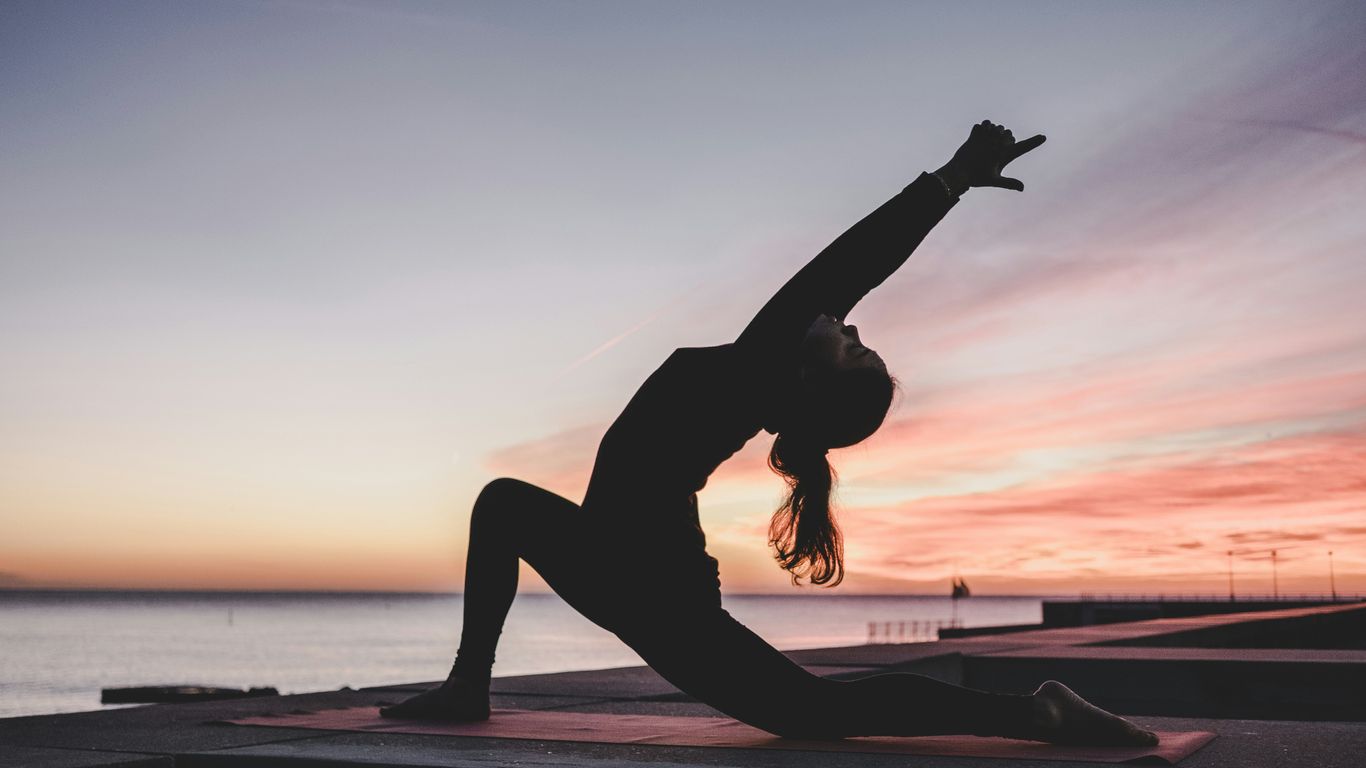
Yoga is a practice that's meant to be personal. It's not about forcing your body into a shape it doesn't want to be in. The goal is to work with what you've got, not against it.
Modifications For Different Body Types
Everyone's body is different, right? You might have tighter hamstrings than your friend, or maybe your shoulders feel a bit stiff. That's totally okay. Instead of trying to do a pose exactly like someone else, focus on what feels right for you. For instance, if a forward fold feels too intense in your hamstrings, just bend your knees a little. It's not cheating; it's listening to your body. If your wrists hurt in poses that put weight on your hands, like Plank or Downward-Facing Dog, try doing those poses on your forearms instead. It still gives you the stretch and strength benefits without the strain.
Here’s a quick look at some common areas and how to adjust:
- Tight Hamstrings: Bend knees in forward folds (like standing forward bend or seated forward fold).
- Knee Sensitivity: Place a blanket or towel under your knees for cushioning in poses like Cat-Cow or kneeling poses.
- Wrist Discomfort: Try forearm planks or placing hands on yoga blocks for more support.
- Limited Shoulder Mobility: Keep arms wider in poses like Cobra or Sphinx, or skip poses that require deep shoulder opening if they cause pain.
Chair Yoga: An Accessible Option
If getting down on the floor feels difficult, or if you're recovering from an injury, chair yoga is a fantastic alternative. You can do many yoga poses while sitting in a chair, or use a chair for balance as you stand. This makes yoga accessible to almost anyone, regardless of their physical limitations. You still get the benefits of movement, stretching, and relaxation, just in a way that suits your body better. It's a great way to build confidence and get comfortable with yoga movements. You can find many beginner-friendly sequences that focus on restorative yoga poses suitable for home practice.
Using Blocks And Straps For Assistance
Yoga props are like helpful tools that can make poses feel more comfortable and accessible. Yoga blocks are super useful for bringing the floor closer to you. For example, in Triangle Pose, placing a block under your bottom hand can help you maintain a straight spine and open your chest. Straps are great for extending your reach. If you can't quite clasp your hands behind your back in a bind, a strap can help bridge that gap. They can also be used to deepen stretches safely. Don't think of props as a sign that you're not
Integrating Beginners Yoga Positions Into Your Practice
So, you've been getting the hang of those basic yoga poses. That's awesome! Now, the real fun begins: figuring out how to weave them into your actual life. It’s not just about knowing the poses; it’s about making them a regular thing. Think of it like learning to cook – you start with simple recipes, and then you start making them part of your weekly meal plan.
Creating A Consistent Yoga Practice
Making yoga a habit can feel like a big hurdle at first. But honestly, it’s more about showing up than doing a perfect hour-long session every single day. Start small. Maybe it’s just five minutes of stretching in the morning or a few poses before bed. The goal is consistency, not intensity. Find a time that actually works for you, even if it’s just a few days a week. Setting aside a specific spot in your home, free from distractions, can also make a big difference. It signals to your brain that it’s time to switch gears.
Here’s a simple way to think about building your routine:
- Start Small: Aim for 10-15 minutes, 3 times a week.
- Be Realistic: Don't plan for an hour if you know you won't have the time.
- Listen to Your Body: Some days you'll have more energy than others. Adjust accordingly.
- Mix It Up: Combine some standing poses for energy with some grounding poses for relaxation.
The most important thing is to be kind to yourself. Yoga is a journey, and there will be days when you feel more flexible and focused than others. That's totally okay. The practice is in the showing up, not in the perfection.
Building a yoga practice that fits your lifestyle is both rewarding and empowering. Start by setting aside a dedicated time and space for your yoga sessions, free from distractions. Begin with beginner-friendly standing poses and gradually introduce more challenging postures as your strength, flexibility, and confidence grow.
Instructor Tips For New Practitioners
If you're still feeling a bit unsure, don't hesitate to seek guidance. Experienced instructors can offer personalized advice that you just can't get from a video. They can spot alignment issues you might not notice and suggest modifications tailored to your body. Many studios offer beginner-specific classes, which are a great place to start. If you're practicing at home, consider attending a workshop or a few sessions with a teacher. They often share little gems of wisdom, like focusing on your breath during poses or how to transition smoothly between them. For instance, an instructor might tell you to really feel your feet grounded in Mountain Pose before moving to Warrior I. It’s these small details that make a big difference in how the poses feel and benefit you. You can find some great beginner-friendly classes that focus on these foundational elements.
Gradually Increasing Your Practice
Once you've got a consistent routine going, you might feel ready to expand. This doesn't mean you need to suddenly start doing handstands! It could be as simple as holding a pose for a few extra breaths, adding one new pose to your sequence each week, or extending your practice time by five minutes. Pay attention to how your body feels. Are you feeling stronger? More flexible? If so, that's a sign you're ready to explore a little more. Maybe try holding your Downward-Facing Dog for a count of ten breaths instead of five, or see if you can hold your balance in Tree Pose a little longer. Remember, the goal is to keep it enjoyable and sustainable. It’s all about steady progress, not rushing into anything that feels too difficult. This gradual approach helps you build a stronger yoga foundation without getting discouraged.
Keep Going!
So there you have it, a bunch of basic yoga poses to get you started. Remember, it's totally okay if you can't do them perfectly right away. Nobody expects you to be a yoga master on day one. The most important thing is just showing up and giving it a try. Keep practicing these poses, listen to your body, and don't be afraid to modify things if you need to. Yoga is a journey, and these simple steps are your first ones. You've got this!
Frequently Asked Questions
What are the easiest yoga poses for someone just starting out?
Great beginner poses include Mountain Pose for standing tall, Cat-Cow for spine movement, Downward-Facing Dog for a full-body stretch, Child's Pose for rest, and Warrior I for strength. These poses help you learn how to move your body and breathe without feeling overwhelmed.
Do I really need to be flexible to start yoga?
Not at all! Yoga is actually a great way to *become* more flexible. You don't need to be a pretzel to begin. The practice itself helps you gain flexibility over time. Just start with what feels comfortable for your body.
What if I can't do a pose exactly like the pictures?
That's perfectly normal! Yoga is about listening to your body. You can always change poses to fit you. Using things like yoga blocks or straps can help make poses easier, or you can bend your knees or take a smaller step. The goal is to feel it in your body, not to look a certain way.
How often should I practice yoga as a beginner?
Starting with a consistent practice, even if it's just 2-3 times a week for 20-30 minutes, is more important than doing long sessions infrequently. As you get stronger and more comfortable, you can gradually increase the length and frequency of your practices.
Is yoga just about the physical poses?
While the poses (asanas) are a big part of yoga, it's also about connecting your mind and body. Paying attention to your breath and how your body feels during the poses is just as important. It's a way to relax your mind and focus on the present moment.
What's the best way to get started with yoga at home?
You don't need much! A yoga mat and some comfortable clothes are usually all you need. You can find lots of free beginner yoga videos online that guide you through poses step-by-step. Trying a few poses at home can make you feel more confident when you try a class.

