

Mastering 4 Person Yoga Poses: A Guide for Groups
Practicing yoga poses for 4 people is a great way to build trust and connection. Start with simpler, stable poses to build a strong foundation together. Clear communication is vital for safety and success in group yoga. Focus on teamwork and supporting each other throughout the practice. Don't be afraid to laugh and have fun as you learn new yoga poses for 4 people.
Key Takeaways
- Practicing yoga poses for 4 people is a great way to build trust and connection.
- Start with simpler, stable poses to build a strong foundation together.
- Clear communication is vital for safety and success in group yoga.
- Focus on teamwork and supporting each other throughout the practice.
- Don't be afraid to laugh and have fun as you learn new yoga poses for 4 people.
Foundational 4 Person Yoga Poses
When you're gathering a small group to start four-person yoga, picking the right base poses makes all the difference. Building comfort and trust is what these initial group positions are all about. There's no need for super flexibility or wild balancing moves in the beginning. These starter poses give everyone a chance to feel included and steady without pressure.
Unity Heart Pose: Building Connection
This pose is like hitting reset for the whole group — all four people come together, facing inward, sitting close with knees slightly bent. Each person reaches out, connecting hands with neighbors to form a heart-shaped circle. Your arms wrap gently, elbows bent, and you can all find a shared rhythm in your breath. It’s not about stretching as deep as possible, but rather about feeling stable and connected.
Key steps:
- Everyone sits close, feet planted and knees bent.
- Grab hands or wrists with neighbors.
- Sync up your breathing for a few relaxed breaths.
- Try to keep backs straight to avoid slouching.
- If anyone feels strain, adjust seats or loosen grips.
- Use simple, checking-in communication as needed.
Take a moment in this pose just to notice: how’s everyone feeling? A little check-in here makes sure the group energy feels balanced.
Three-Way Boat Pose: Establishing Trust
Boat pose already works the core for one person, but for four people, it really turns into a trust-building move. Three people link feet in a triangle, sitting on the floor, then lean back and reach for each other's hands to form a stable connection point. The fourth can support from behind, lightly holding shoulders to keep the group from tipping back too far.
Steps to try:
- Three participants sit in a circle, legs out, feet touching in the center.
- Grab hands tightly for support.
- The fourth person kneels behind, placing hands on two people’s shoulders for balance.
- Gently lift feet off the floor, holding position.
You’ll probably wobble or even giggle a bit the first few tries—and that’s the fun of it! What matters is that you’re talking, maybe laughing, and learning to adjust together.
For newcomers to yoga, checking out these 12 fundamental yoga poses can offer ideas that transition well into group practice.
Exploring Dynamic 4 Person Yoga Poses
Alright, so you've got the hang of the basics and you're ready to move things up a notch. This section is all about poses that get you guys working together in a more active way. We're talking about building on that trust and coordination you've already started to develop. These aren't just about holding still; they involve more movement and a bit more give-and-take between everyone. It's a great way to build on the foundational poses and really start to feel the group's energy flow.
Triple Downward Dog: Trust and Coordination
This is a really cool variation on a classic pose. Instead of just one person in Downward Dog, you're creating a sort of yoga "mountain range." The first person gets into a standard Downward-Facing Dog. Then, the second person places their hands on the first person's lower back and steps their feet onto the first person's back, making a longer, angled line. The third person does the same, mirroring the second person. It's a fantastic way to build trust and coordination.
Here's what to keep in mind:
- Talk it out: Constant communication is key. Let your partners know if you feel wobbly or need to shift.
- Core power: Everyone needs to engage their core. This keeps you stable and prevents strain.
- Patience is a virtue: This pose takes practice. Don't get discouraged if it's not perfect the first few times. Enjoy the process of learning together.
Three Person Plank Pose: Collective Stability
Plank pose is a staple for core strength, and doing it with three people adds a whole new layer of challenge and connection. You'll be supporting each other, literally. The basic idea is to form a line of planks, but there are ways to make it more dynamic. For instance, you could have two people in a standard forearm plank, and the third person could place their hands on their shoulders, creating a slight incline. Or, you could all be in a high plank, hands on the floor, shoulders stacked over wrists. The key here is that everyone's stability directly impacts the others. It's a great way to feel that collective effort and build a strong sense of teamwork. You can explore four-person yoga poses that build on this kind of collaborative stability.
The success of these dynamic poses hinges on the quiet understanding and shared energy between partners. It's about moving as one unit, where each person's action influences the whole group's balance and flow.
Advanced 4 Person Yoga Poses for Enhanced Synergy
Alright, you've moved past the beginner stuff and even some intermediate group poses. Now, let's talk about really pushing your limits with some advanced four-person yoga. These poses demand a serious level of trust, coordination, and individual strength. They aren't for the faint of heart, but when you and your group nail them, the feeling of accomplishment is pretty amazing.
Triple Warrior III Foundation: Balance and Strength
This pose takes the familiar Warrior III and turns it into a team effort. Imagine one person acting as the solid base, with two others balancing on their back, and a fourth person perhaps supporting the base or adding another layer of stability. It's a significant test of individual balance and core strength, but more importantly, it shows how well you can support each other. The base person needs to be incredibly grounded, while those balancing require immense focus. It's all about finding that stillness together.
Here's a breakdown of roles:
- Base Person: Needs a strong, stable stance, engaging the core and keeping hips level. Think of being an unshakeable foundation.
- Middle Person(s): Carefully place hands on the base's shoulders or upper back. Find your center of gravity and move with intention.
- Top Person (if applicable): Adds another layer of balance, requiring precise placement and communication.
This pose is a fantastic way to build trust and coordination.
Standing Dancer Pose Trio: Mutual Support
This variation builds on the individual Dancer's Pose, turning it into a cooperative effort. Three people stand side-by-side, each holding onto the ankle of the person next to them for support. The fourth person can either join the line or offer support from the front or back. It's a beautiful way to feel a good stretch and practice moving in sync with your partners. This pose is a nice reminder that we are stronger when we work together. You can find more beginner-friendly options for three-person yoga that focus on these foundational movements.
3-Way Lord of the Dance Pose: Teamwork in Motion
This advanced pose takes the elegance of Lord of the Dance and multiplies it. Three people stand in a line, each holding the ankle of the person in front of them, creating a flowing, connected line. The fourth person can act as a spotter or join the line for an even greater challenge. It requires significant balance from each individual, but also a deep sense of connection and responsiveness to the group's movement. It's a beautiful display of teamwork in motion.
When you're in a pose that requires you to support each other, you can't help but feel more connected. You have to trust the person holding you up, and they have to trust you to be stable. This kind of reliance builds a strong bond. It's like a mini-lesson in teamwork, showing how much easier things can be when you work together.
Remember, clear communication and a willingness to adapt are key to successfully holding these advanced poses. It's about more than just physical strength; it's about the synergy you create as a group.
Key Principles for Group Yoga Poses
Alright, so you're getting into the groove with four-person yoga. It's more than just striking a pose; it's about how you move and connect as a unit. Think of it like a well-oiled machine, where every part has to work together smoothly. If one gear grinds, the whole thing suffers. So, what makes these group practices actually work?
Communication is Paramount
Seriously, talking it out is non-negotiable. Before you even get into a pose, have a quick chat. What's everyone feeling? Any aches or pains? What's the goal for this particular shape? During the pose, keep it simple and clear. Instead of mumbling, try something like, "Okay, on three, let's lift," or "My left side feels a bit shaky, can we adjust?" Your body language speaks volumes too – a grimace or a trembling limb tells a story. Trust that your partners will speak up if something feels off, and be ready to listen. It's about making sure everyone feels safe and respected, creating a space where voices are heard.
Building Trust and Stability
This is where the real magic happens. In poses where one person is literally supporting another, who's supporting a third, you're building a lot of faith. Start with poses that feel solid and grounded, like the Three-Way Boat Pose. As you practice more, you'll naturally start to feel more secure. This physical steadiness often translates into emotional trust. You learn to count on each other, and that feeling is pretty powerful. It’s about finding that shared center, that collective balance point.
Focus on Breath and Alignment
Don't forget the basics of yoga itself. Synchronizing your breath is like giving your group a shared heartbeat. When you inhale and exhale together, it creates a rhythm that can steady even the most challenging poses. Alignment is also key. Even in a simple pose, if one person is out of whack, it affects everyone. Take a moment before each pose to check in: Are your spines relatively straight? Are your weight distributions even? It's not about being perfect, but about making a conscious effort and adjusting together. This attention to detail, combined with shared breathing, makes the practice feel cohesive and grounded.
Group yoga isn't just about the physical shapes you make. It's about the energy you create together. When you're in sync, supporting each other, and breathing as one, you tap into something special. It's a reminder that we're often stronger and more capable when we collaborate.
Benefits of Practicing 4 Person Yoga Poses
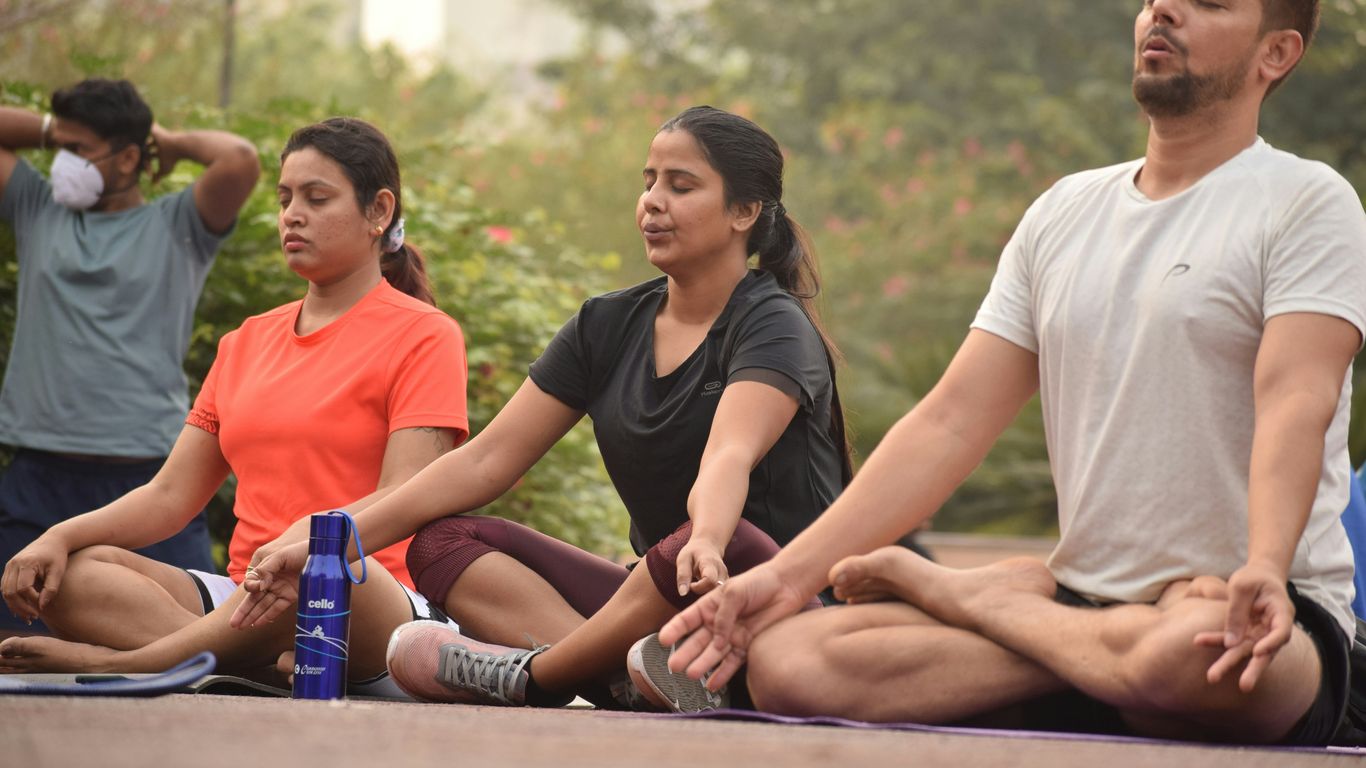
So, you've been trying out these group yoga poses, huh? It's more than just a fun way to hang out with friends. Doing yoga with a group, especially in poses designed for four, really does something special for everyone involved. It's not just about striking a cool pose; it's about what happens between you and your partners.
Enhanced Connection and Teamwork
When you're in a pose that requires you to support each other, like a triple warrior, you can't help but feel more connected. You have to trust the person holding you up, and they have to trust you to be stable. This kind of reliance builds a strong bond. It's like a mini-lesson in teamwork, showing how much easier things can be when you work together. You learn to communicate without even saying much, just by feeling how your partners move and adjust. This practice really highlights how we're stronger when we cooperate, which is a pretty neat takeaway from just doing some yoga. It's a great way to build trust and coordination.
Improved Physical Strength and Balance
Let's be real, some of these poses are tough! Holding up another person or being held up takes a good amount of strength. You'll notice your muscles getting stronger, especially your core and legs, as you work to maintain stability. It's not just about brute force, though. You also get way better at balancing. When you're relying on others, you become more aware of your own center of gravity and how to adjust it quickly. This kind of practice can really help improve your individual balance and coordination, which is useful way beyond the yoga mat. It's a great way to stay active as a pair or group, offering a fun and motivating method to keep moving.
Shared Sense of Accomplishment
There's a unique satisfaction that comes from successfully holding a complex four-person pose. It's a collective victory, a testament to your group's ability to communicate, support, and synchronize. This shared success can be incredibly uplifting and can translate into a greater sense of camaraderie off the mat. You've all worked together, perhaps overcome some wobbles and laughs, and achieved something as a unit. This feeling of shared achievement is a powerful motivator and a wonderful way to wrap up a group practice, leaving everyone feeling good about their effort and their partners.
Remember, the most important thing is to keep communicating and supporting each other. Don't worry if things feel a little wobbly at first; that's totally normal. Building trust and balance takes time, and it's all part of the fun. Keep practicing these beginner poses, and you'll find yourselves getting stronger and more connected with every session. It's a great way to bond and enjoy the benefits of yoga as a team.
Keep Practicing Together
So, you've tried some four-person yoga poses. That's awesome! Remember, the most important thing is to keep communicating and supporting each other. Don't worry if things feel a little wobbly at first; that's totally normal. Building trust and balance takes time, and it's all part of the fun. Keep practicing these beginner poses, and you'll find yourselves getting stronger and more connected with every session. It's a great way to bond and enjoy the benefits of yoga as a team.
Frequently Asked Questions
Does everyone in the group need to be a yoga expert?
Not at all! It's more about working together and talking. In many poses, one person might be the strong base, another might be more flexible, and someone else might have great balance. As you try harder poses, having similar strength can help, but for beginners, focusing on talking to each other is the most important thing.
How often should we practice yoga with four people?
For beginners, trying easy poses once or twice a week is a great start. As you get more comfortable and try harder poses, you might practice two or three times a week. The key is to practice regularly so you can build trust and get better together.
What are the most important safety tips for group yoga?
Safety first! Always warm up before you start. Make sure everyone agrees on how to move and counts together for transitions. If anyone feels unsteady or uncomfortable, it's okay to stop or adjust the pose. Listening to your bodies and talking to each other is super important.
What are some good yoga poses for beginners to try with three other people?
Yes, absolutely! Starting with simple poses like the Unity Heart Pose or the Three-Way Boat Pose helps build trust and coordination. These poses are stable and don't require too much strength or flexibility right away. Think of them as building a good foundation.
How can we talk to each other effectively during yoga?
Communication is everything! Talk about how you're feeling, what feels good, and if you need to adjust. Use clear words for movements, like 'Up on three' or 'Hold.' Also, pay attention to your partners' body language. Being able to trust each other makes the practice much safer and more enjoyable.
What if one person is much stronger or more flexible than the others?
That's totally fine! In group yoga, different strengths can actually help. The stronger person can be the base, while the more flexible person can help guide movements or reach further. The main thing is to communicate about what feels right for each person and adjust as needed. It's about working together, not competing.

