
Exercise in yoga: A beginner’s guide to building strength, flexibility, and balance
Key Takeaways
An exercise in yoga can be gentle, challenging, or somewhere between the two. A steady practice builds body awareness while making room for strength, mobility, balance, and rest.
- Begin with simple poses and controlled breathing.
- Use alignment and comfort as your guide, not depth.
- Progress gradually through standing, core, and balance work.
- Props and modifications make practice more accessible.
- Consistency matters more than long or demanding sessions.
What exercise in yoga involves
An exercise in yoga usually combines poses, transitions, breathing, and brief periods of stillness. Some sessions move slowly, while others link postures into a continuous flow. The aim is not simply to stretch farther, but to coordinate movement with attention and control.
How yoga combines strength, mobility, balance, and breathwork
A single sequence may ask your legs to stabilize, your shoulders to support weight, and your hips or spine to move freely. Breathing gives the sequence a pace and helps you notice when effort is becoming excessive. That combination makes yoga feel both physical and deliberate.
How yoga differs from traditional workouts
Many traditional workouts focus on repetitions, speed, distance, or external load. Yoga often uses body weight, leverage, pauses, and precise positioning instead. You can still work hard, but the session may feel less like chasing a number and more like learning how your body responds.
For a broader look at how postures and flowing sequences became associated with exercise, see this overview of yoga as exercise. It offers useful context without changing the practical way a beginner can approach the mat.
Fitness benefits of regular yoga practice
Regular practice can improve your control in everyday movements, help you hold stable positions, and gradually make common ranges of motion feel easier. It can also provide a structured pause in a busy day. Small, repeatable efforts are usually more useful than forcing an occasional heroic session.
Progress is easier to notice when you track how steadily you breathe, how comfortably you transition, and whether you recover well afterward. A heart-rate-based workout may use different measures, so beginners comparing approaches can review these heart rate zones without treating them as a requirement for yoga.
Choosing a yoga style based on your goals
Choose a slower, instructional class if you are learning alignment or returning after time away. A flowing class may suit you if you enjoy continuous movement, while restorative practice gives more time for supported shapes and relaxation. When unsure, start with a beginner-level session and leave room to adjust.
How to prepare for an exercise in yoga session
Preparation does not need to be elaborate. A clear floor, comfortable clothing, and a few minutes to settle can make the practice feel more inviting. Plan for enough space to extend your arms and step forward without bumping furniture.
Essential equipment and clothing
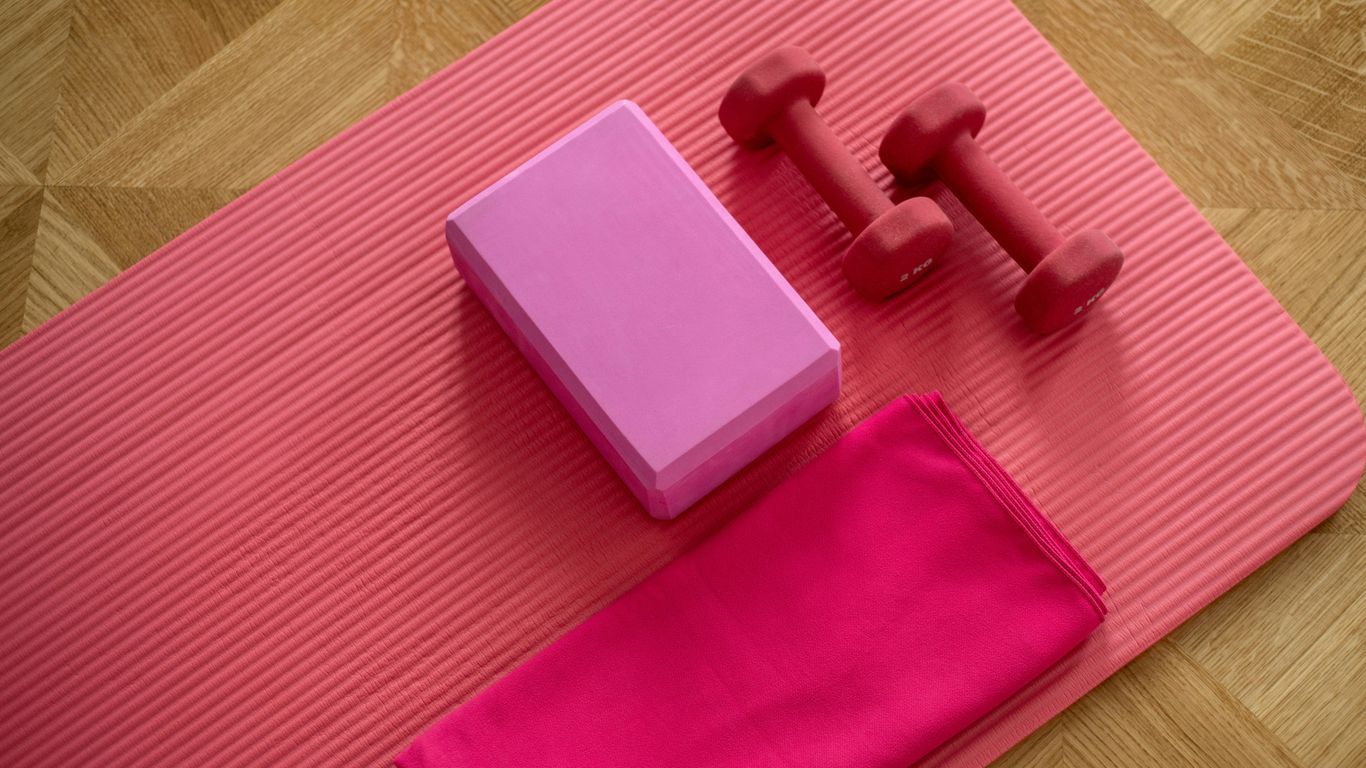
A mat gives you a defined surface and helps your hands and feet stay organized. Wear clothes that allow your hips and shoulders to move without constant adjustment; barefoot practice is common, but use whatever feels secure. A strap, folded blanket, or two firm books can also help with reach and support.
For a portable setup, the Timon Yoga Mat is described as having non-slip traction and supportive cushioning for practices including vinyasa, hot yoga, yin, Pilates, and meditation. The right choice is the one you can carry, clean, and use consistently.
Setting up a safe practice space
Place the mat on a stable, uncluttered surface and check that it does not slide when you step. Keep water nearby, but avoid practicing beside sharp corners or unstable furniture. If you practice outdoors or in a hotel room, take a moment to inspect the ground before beginning.
Warming up your body and joints
Start with easy movement rather than dropping straight into a deep pose. Shoulder rolls, wrist circles, gentle spinal motions, and slow marching can raise awareness and prepare the joints. Cat-cow movements and a few relaxed forward folds are useful ways to introduce range without rushing it.
A short guided routine can help when you want a clear starting point; this collection of beginner yoga poses is a practical reference for familiar shapes and basic instructions.
Understanding intensity, alignment, and rest
Intensity should feel manageable enough that you can keep breathing smoothly. Alignment is not a rigid picture that every body must copy; it is a way to organize the pose so that you feel supported. Rest whenever your attention, breath, or control begins to fade.
Safety habits also apply to any home equipment setup, which is why a general solar battery safety guide is a reminder of a useful principle: inspect your environment and equipment rather than assuming everything is ready.
Foundational yoga exercises for beginners
The basic poses below are less about performing a perfect shape and more about learning how to distribute effort. Move slowly enough to feel where your weight is going. If a pose creates sharp pain, come out of it and choose an easier variation.
Mountain pose for posture and body awareness
Stand with your feet comfortable and your weight spread across the soles. Let your arms rest by your sides, soften your shoulders, and imagine the crown of your head lifting upward. Mountain pose looks quiet, but it teaches you to notice posture without bracing.
Downward-facing dog for full-body mobility
From hands and knees, tuck your toes and lift your hips back and up. Keep your knees bent if that helps your spine lengthen, and let your head remain relaxed between your arms. Press through your hands while reaching your hips away from your shoulders rather than forcing your heels down.
Chair pose for leg and core strength
Stand tall, bend your knees, and send your hips back as though reaching for a chair. Keep your chest lifted and your weight balanced across your feet. Hold for a few breaths, then stand slowly; a shorter hold with good control is more useful than a shaky one.
Cobra pose for spinal movement and chest opening
Lie on your stomach with your hands near your ribs. Press lightly into the floor and lift your chest only as high as you can without compressing your lower back. Keep the elbows softly bent and think of lengthening forward rather than pulling yourself upward.
Child’s pose for recovery and relaxation
Lower your hips toward your heels and fold your torso forward, widening your knees if needed. Rest your forehead on the mat or on a folded blanket. Stay for several calm breaths, using the pose as a reset between stronger movements.
Yoga exercises for strength and stability
Strength in yoga comes from holding positions, moving slowly, and controlling transitions. Stability improves when your feet, hands, and trunk work together instead of compensating for one another. Begin with short holds and add time only when your breathing stays steady.
Building lower-body strength with standing poses
Warrior I, Warrior II, and chair pose can train the legs while also challenging balance and posture. Keep the front knee tracking in the same direction as the toes, and adjust your stance so you can breathe comfortably. A stable base matters more than making the stance look wide or dramatic.
Engaging the core with plank variations
In plank, place your hands beneath or slightly ahead of your shoulders and create a long line from head to heels. Lower your knees for a supported version, or shorten the hold to maintain control. Draw the front ribs gently inward rather than holding your breath or dropping the hips.
Improving upper-body strength with weight-bearing poses
Downward-facing dog, plank, and tabletop work the arms and shoulders through different angles. Spread your fingers, press evenly through the hands, and keep the shoulders away from the ears. If your wrists tire quickly, take more frequent breaks and experiment with a raised surface only when it is stable.
Progressing safely toward arm balances
Arm balances require coordination as much as strength. Practice shifting your weight forward in a supported position before trying to lift both feet, and keep a clear space around you. Falling out safely is part of learning, so stop when you can no longer control the landing.
Yoga exercises for flexibility and balance
Flexibility develops through patient exposure to movement, not through forcing a joint into its farthest position. Balance also improves through repetition, visual focus, and calm corrections. A prop can turn a frustrating pose into a productive one.
Improving hip and hamstring mobility
Low lunges, half splits, and seated forward folds can explore the hips and backs of the legs. Keep the spine long and bend the front or extended knee as much as necessary. You should feel gradual tension, not a sharp pull or a need to hold your breath.
Releasing tension in the shoulders and spine
Thread-the-needle, gentle twists, and supported chest openers can create space around the upper back and shoulders. Move with the breath and avoid pushing the head or neck into position. Small, comfortable rotations repeated often are usually kinder than one forceful stretch.
Developing balance with single-leg poses
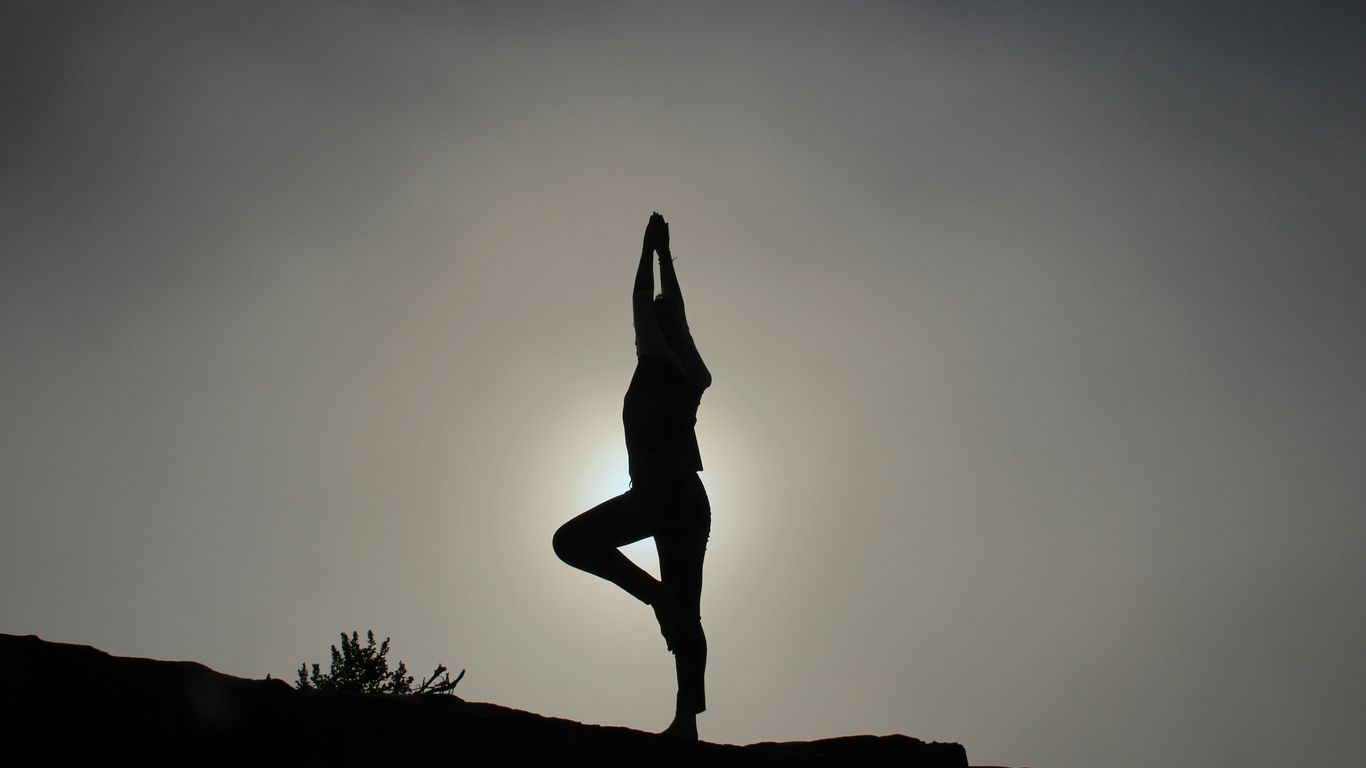
Try tree pose near a wall, placing the lifted foot below or above the knee rather than directly on the joint. Keep your standing knee soft and let your gaze rest on one unmoving point. Wobbling is normal; calmly touching the wall and trying again still counts as practice.
Using props and modifications to support flexibility
Blocks bring the floor closer, straps extend your reach, and blankets can cushion knees or support the head. Choose the prop that helps you maintain a relaxed breath and a clear shape. For more ideas about short, accessible routines, you can also explore 10-minute core yoga as a starting point, adapting any movement that does not suit your body.
Creating an exercise in yoga routine
A useful routine has a beginning, a middle, and an ending. Start with awareness, build toward a modest challenge, then give your breathing and muscles time to settle. You do not need a new sequence every day; repeating a familiar pattern makes progress easier to recognize.
Structuring a 10-minute beginner session
Spend two minutes breathing and moving gently, followed by two minutes of tabletop or cat-cow work. Use four minutes for mountain pose, downward-facing dog, chair pose, and a low lunge, taking short rests between shapes. Finish with two minutes in child’s pose or a comfortable seated position.
Planning a balanced 30-minute practice
A longer session can include five minutes of warm-up, fifteen minutes of standing and strength work, five minutes of mobility, and five minutes of cooling down. Keep transitions simple so the clock does not become the focus. A mat such as the Repose Mat is described as offering non-slip cushioning for yoga, Pilates, mobility, and bodyweight training, which can suit a home practice that changes from day to day.
Combining poses into a simple sequence
Link poses by giving each transition a purpose. For example, mountain pose can lead into a forward fold, then a tabletop, plank, downward-facing dog, low lunge, and a return to standing. Repeat on both sides before slowing down.
A short sequence is easier to remember when it follows a clear arc:
- Arrive with breathing and gentle joint movement.
- Build heat through standing poses and controlled transitions.
- Add one strength or balance challenge.
- Ease the body with mobility work and a longer rest.
This structure leaves enough flexibility to shorten a hold, repeat a pose, or pause without losing the thread of the session.
Adjusting your routine for different fitness goals
For strength, use repeated standing poses and brief plank variations. For mobility, reduce the pace and spend longer in supported positions. For balance, include single-leg work near a wall and practice steadiness rather than chasing difficulty.
The same planning mindset appears in other forms of personal improvement, from wedding photography tips that organize a complex day to digital success fundamentals that prioritize meaningful actions. The yoga version is simpler: choose one goal, make the session repeatable, and review how it felt.
Practicing yoga safely and consistently
Yoga becomes more useful when it fits your actual life. A ten-minute practice on a busy day can maintain the habit, while a longer session can provide more room for exploration. Keep the standard flexible, but keep showing up with attention.
Recognizing the difference between effort and pain
Effort may feel warm, tiring, or mildly uncomfortable as muscles work. Pain that is sharp, sudden, pinching, or concentrated in a joint is a reason to stop and reassess. Never use breathing, determination, or a teacher’s pace as a reason to override a clear warning from your body.
Modifying poses for injuries and limitations
Reduce the range of motion, use a wall or prop, or choose a related pose that does not aggravate the affected area. If you have an injury, persistent pain, or a medical condition, seek qualified guidance before beginning or changing a routine. A modification is not a lesser version; it is a way to practice responsibly.
For a separate example of why dosage and gradual adjustment matter, read this guide to functional THC coffee dosing, while remembering that its topic is unrelated to yoga and should not be treated as exercise advice.
Avoiding common alignment mistakes
Common problems include locking the knees, collapsing through the shoulders, turning the feet farther than the hips can support, and forcing the spine into a shape. Use fewer repetitions and more observation. When possible, practice near a mirror or work with an instructor who can offer specific feedback.
Measuring progress beyond flexibility
Notice whether you can transition with less hesitation, hold a pose with calmer breathing, or recover more comfortably afterward. You might also track consistency, confidence, range that feels useful, and the ability to adapt a session when circumstances change. Those signs often reveal meaningful progress before a deeper stretch does.
A compact gear choice can support that consistency, particularly for people who practice away from home. Keep the setup simple enough that beginning feels easy rather than like another task to postpone.
Conclusion
An exercise in yoga does not need to be complicated to be worthwhile. Begin with foundational poses, build strength and balance gradually, use props without embarrassment, and let steady practice guide your progress. The best routine is one you can perform safely, enjoy, and return to wherever the day takes you.
Frequently Asked Questions
Is yoga a good exercise for beginners?
Yes. Beginners can start with basic poses, short sessions, and gentle transitions, adjusting the range and pace to match their current ability.
How often should I practice yoga?
Two or three consistent sessions each week can establish a useful habit. Even brief sessions count when they are comfortable and repeatable.
Can yoga build strength?
Yes. Standing poses, planks, and weight-bearing positions can challenge the legs, core, shoulders, and arms through body-weight resistance and controlled holds.
Do I need to be flexible to start yoga?
No. Flexibility is not a prerequisite. Props, bent knees, shorter ranges, and supported versions allow you to begin where you are.
How long should a beginner yoga session last?
A session can be as short as 10 minutes. As your practice develops, you may prefer 20 or 30 minutes, but duration should not come at the expense of comfort or control.
What should I do if a pose hurts?
Stop or ease out of the pose and assess the sensation. Sharp, sudden, or joint-focused pain calls for caution, and persistent symptoms should be discussed with a qualified health professional.
Can I practice yoga at home?
Yes. Choose a clear, stable surface, keep enough room to move, and follow an appropriately paced class or sequence. A quiet, repeatable setup can make home practice easier to maintain.

