
Enhance Your Workout: The Ultimate Guide to Using a Pilates Yoga Ball
So, you've seen those big inflatable balls and wondered what they're all about, right? Maybe you're looking to shake up your usual gym routine or just add a little something extra. Well, the pilates yoga ball is a pretty cool piece of gear. It might look simple, just a big sphere, but it can really change how you work out. We're going to go over what makes this pilates yoga ball so useful and how you can use it to get stronger and steadier on your feet. It's not just for abs, either; this ball can do a whole lot more.
Key Takeaways
- The pilates yoga ball is a versatile tool that can really improve your workouts by adding instability.
- Picking the right size and making sure your pilates yoga ball is inflated correctly is important for safety and getting the best results.
- Using a pilates yoga ball makes your core muscles work harder, which helps with balance and how you stand.
- Beyond just your core, a pilates yoga ball helps make your overall balance, coordination, and how your muscles work better.
- You can use a pilates yoga ball for lots of different exercises, but it's good to know how to use it right to avoid common slip-ups.
Choosing the Perfect Pilates Yoga Ball for Your Fitness Goals
So, you've decided to add a Pilates yoga ball to your fitness routine. That's a great move! These balls, sometimes called stability balls or Swiss balls, are super versatile and can really shake up your workouts. But before you just grab the first one you see, let's chat about picking the right one. It makes a bigger difference than you might think for comfort, safety, and actually getting the results you want.
Understanding the Key Features of a Pilates Yoga Ball
These aren't your average bouncy balls. Pilates yoga balls are designed to be sturdy and supportive. They're typically made from a durable PVC material, though some higher-end options might use rubber for extra longevity. A really important feature to look for is the "anti-burst" rating. While not always standard, this means the ball is designed to deflate slowly if punctured, rather than suddenly popping. This is a big safety plus, especially when you're in the middle of a challenging pose or exercise. Think of it as a little insurance policy for your workout.
Selecting the Right Size and Material for Your Needs
Getting the size right is probably the most critical step. If the ball is too big or too small, your body won't be in the best position, and exercises can feel awkward or even strain your back. The general rule of thumb is to sit on the ball with your feet flat on the floor. Your knees should form about a 90-degree angle and be roughly level with your hips. If your knees are higher than your hips, the ball is too small. If your hips are higher than your knees, it's too big.
Here’s a quick guide to help you pick:
- Under 5'4" (163 cm): Aim for a 45-55 cm ball.
- 5'5" to 5'11" (165-180 cm): A 55-65 cm ball is usually a good fit.
- 6'0" (183 cm) and taller: Look for a 65-75 cm ball.
As for material, PVC is common and works well for most people. If you plan on using the ball a lot or doing more intense exercises, a rubber ball might be a worthwhile investment for its durability. Remember, the goal is to find a ball that feels stable and supportive for your body.
Safety Tips for Using a Pilates Yoga Ball
Safety first, always! Before you even start, make sure you have enough clear space around you. You don't want to be kicking furniture or tripping over stray dumbbells. Keep pets and little kids out of the workout zone – trust me, a curious cat can turn a yoga session into a chaotic mess real fast. Also, always check the ball's weight capacity to make sure it's suitable for your body weight. It's better to be safe than sorry.
A safe workout environment means you can focus on your movements without worrying about bumping into things or having unexpected visitors interrupt your flow. Clear space and a secure setup let you get the most out of your exercise.
Proper Inflation Techniques for Optimal Performance
Don't just guess with the air! The inflation level is super important for how the ball performs. If it's too soft (underinflated), it'll be too squishy and won't provide the stable base you need. This can actually make exercises harder and less effective. On the flip side, if it's too hard (overinflated), it'll be too stiff and bouncy, which isn't ideal and could even be a bit risky. You want the ball to feel firm enough to support you properly but still have a little give when you press into it. Most balls come with a pump and instructions, but it might take a bit of trial and error to get it just right. Take the time to get this part right; it really impacts your workout.
Warming Up the Right Way with a Pilates Yoga Ball
Alright, so you've got your Pilates yoga ball and you're ready to get moving. That's great! But before you dive into the main part of your workout, let's talk about warming up. Skipping this step is like trying to run a marathon without stretching – not a good idea. A proper warm-up gets your blood flowing, wakes up your muscles, and gets your body ready for the work ahead. It’s not just about preventing injuries, though that’s a big plus; it’s also about making your actual workout more effective. Think of it as prepping your engine before a big race.
Seated Bounces to Activate Your Core
This is a super simple way to start. Just sit on your ball with your feet flat on the floor, about shoulder-width apart. Now, gently bounce up and down. Don't go crazy here; it's just a gentle rhythm. As you bounce, you'll naturally start to engage your core muscles to keep you stable on the ball. Do this for about a minute or two. It’s a low-impact way to get your heart rate up a little and really get that core ready to work.
Hip Circles for Improved Mobility
Once you're feeling a bit more awake, let's loosen up your hips and lower back. While still seated on the ball, keep your feet planted firmly on the ground. Now, imagine you're drawing a circle with your hips. Move them slowly and deliberately, first in one direction (say, clockwise) for about 30 seconds, and then switch to the other direction. This helps to release any tightness in your hip flexors and lower back, which can get pretty stiff from sitting around all day. It’s a great way to improve your range of motion.
Gentle Stretching Supported by the Ball
Now we can use the ball to help us get a little deeper into some gentle stretches. One good one is to lean back over the ball. Let the ball support your spine as you extend your arms overhead. This feels really nice on your chest and abs. You can also hug the ball to your chest while seated and round your back, giving your upper back a nice stretch. Another option is to lie on your back with the ball under your shoulders, letting your chest open up. Hold each stretch for about 20-30 seconds, focusing on your breath. Remember, the goal here isn't to push yourself hard, but to gently prepare your body for movement.
Core-Focused Exercises to Transform Your Stability
Alright, so you've got your exercise ball and you're ready to actually use it. This isn't just some fancy pillow for your office chair; it's a tool that can seriously change up your regular fitness routine. Think of it as a way to add a little challenge and get more muscles working during exercises you already know. It's all about making your workouts more dynamic and getting more out of them, muscle-wise. The instability of the exercise ball forces your stabilizing muscles, especially those in your core, to work much harder than they would on a solid surface. This means you're getting a more complete workout, even with simple movements. Incorporating fitball exercises into Pilates or core training enhances flexibility, mobility, strength, balance, and proprioception.
Seated Balances for Enhanced Control
Getting started with the ball doesn't have to be complicated at all. You can easily add it to exercises you already do to make them tougher. The instability means your body has to work harder just to keep you steady. This is where you really start to feel the burn and see the gains. Focus on smooth, controlled movements and really pay attention to feeling those core muscles engage. Don't worry about speed; good form is way more important right now.
- Stability Ball Crunches: Sit on the ball with your feet flat on the floor, about hip-width apart. Walk your feet forward, letting the ball roll under your back until you're in a stable, reclined position. Your lower back should feel supported. You can place your hands behind your head or across your chest. As you exhale, lift your head and shoulders off the ball, squeezing your abs. Inhale as you slowly lower back down.
- Ball Bridges: Lie on your back with your feet flat on the ball, knees bent. Lift your hips off the ground, squeezing your glutes and core. This move is fantastic for your hamstrings and glutes, and it really makes your core work to keep your hips level.
Ball Passes to Strengthen the Entire Core
These exercises take things up a notch, demanding more control and coordination. They're designed to push your core muscles to work harder, building that solid foundation you're aiming for. When you use an exercise ball, you're basically creating an unstable surface. Unlike doing exercises on the floor, the ball moves and shifts. This means your core muscles have to constantly adjust and contract to keep you from falling off.
- Plank with Forearms on Ball: Get into a plank position, but instead of your forearms being on the floor, rest them on the ball. Keep your body in a straight line from your head to your heels. The goal is to keep the ball as still as possible, which means your core is working overtime to prevent wobbling.
- Plank Variations: Try holding a standard plank with your hands resting on the ball. Keep your body straight, like a board, and focus on keeping the ball from rolling. It's a subtle difference, but your abs will feel it. Another option is to place your feet on the ball while your hands are on the floor. This makes your legs heavier and requires your core to work harder to keep your hips from dropping.
Stir the Pot for Advanced Abdominal Engagement
This move is a real test of your abdominal strength. It feels intense, but it's fantastic for hitting those deep abdominal muscles that are so important for posture and stability. The ball makes things wobbly, forcing your smaller stabilizing muscles, especially around your spine and hips, to wake up and work. This builds a stronger, more resilient core.
Start on your knees with the ball in front of you, forearms resting on its surface. Slowly roll the ball forward, extending your body as far as you can while keeping your core tight and your back flat. Don't let your lower back sag! The goal is to use your abs to pull yourself back to the starting position.
This exercise is excellent for hitting those deep abdominal muscles that are so important for posture and stability. It really makes your core work to keep your hips level and your body stable.
Total-Body Workouts to Maximize Results with a Pilates Yoga Ball
Alright, so you've got your Pilates ball, and you're ready to move beyond just core work. That's awesome! This ball is a fantastic tool for hitting your entire body, not just your abs. The unstable surface means your muscles have to work overtime just to keep you balanced, making even simple moves way more effective. It's like giving your regular exercises a super-boost.
Boosting Lower Body Strength with Squats and Bridges
Let's talk legs and glutes. You can really amp up classic lower body moves with the ball. For instance, try wall squats with the ball behind your lower back. It adds a nice challenge, forcing your muscles to engage more to keep you stable against the wall. Then there are hamstring curls – lie on your back, heels on the ball, and curl it towards you. It’s a burner, but so good for those hamstrings. And don't forget glute bridges; with your feet on the ball, lifting your hips engages your glutes and core even more. The instability is key to activating more muscle fibers.
Dynamic Upper Body Moves: Push-Ups and Rows
Who says the ball is just for your lower half? You can totally challenge your upper body too. Push-ups with your hands on the ball are a whole different ballgame – literally. Your chest, shoulders, and triceps will feel it, and your core has to work like crazy to keep you steady. You can also try dumbbell rows while kneeling with your chest resting on the ball. This position really targets your back and biceps while demanding core stability. It's a great way to add intensity without needing a ton of equipment.
Hamstring Curls and Glute Activation Techniques
We touched on these, but they're worth highlighting. Hamstring curls are straightforward: lie on your back, place your heels on the ball, lift your hips, and pull the ball towards you. Repeat for a few sets. For glute activation, try a glute bridge with your feet on the ball. Lift your hips, squeeze your glutes at the top, and hold for a second before lowering. Doing these consistently can really help build strength and improve posture. You can find a great 20-minute Pilates workout that incorporates these moves.
Progressive Overload for Long-Term Gains
To keep seeing results, you can't just do the same thing forever. You need to gradually make your workouts harder. This is called progressive overload. It doesn't mean you have to go crazy; small changes make a big difference. You could try adding a few more reps to your sets, holding a position for longer, or even reducing the base of support for certain exercises. The goal is to consistently challenge your body just enough so it keeps adapting and getting stronger.
Here’s a simple way to increase the challenge:
- Increase Repetitions: If you're doing 10 reps, aim for 12 or 15.
- Extend Hold Times: For exercises where you hold a position, add 5-10 seconds.
- Add Resistance: Incorporate light weights or resistance bands.
- Reduce Stability: Bring your feet closer together or try single-limb variations.
Remember, listening to your body is super important. Pushing through sharp pain isn't the goal. It's better to ease back, rest, and try again when you feel ready. Consistency is more important than intensity when you're building a solid fitness routine.
Stretching and Recovery Techniques for a Well-Rounded Routine
After a good workout, it's super important to cool down properly. This isn't just about feeling good; it helps your body get back to its normal state and can cut down on that sore muscle feeling later. Think of it as a gentle transition from working hard to chilling out.
Static Stretching for Improved Flexibility
Holding stretches for a bit longer after your main workout can really help your muscles lengthen and become more flexible. Aim to hold each stretch for about 20 to 30 seconds. Focus on the muscles you just worked. For example, if you did a lot of leg exercises, spend time stretching your hamstrings, quads, and calves. The ball can be a great prop here. You can lie back over it to open up your chest and shoulders, or use it to support your legs as you reach for your toes.
Deep Breathing and Relaxation on the Ball
This is where the ball becomes your personal relaxation station. Lie down on your back with the ball under your lower back or hips. Let your body sink into it. Close your eyes and just focus on your breath. Take slow, deep breaths in through your nose, filling your belly, and exhale slowly through your mouth. This helps calm your whole system down. It's a simple way to reduce stress and just be present.
Gentle Muscle Rolling for Effective Cool Down
Sometimes, after a tough session, you might have little knots or tight spots in your muscles. Using the ball for some gentle self-massage can really help. You can lie on the floor and roll your back over the ball, or place it under your hamstrings or calves and use your arms to roll back and forth. Pay attention to where you feel tightness. Don't push too hard into any really sore spots; the goal is a gentle release, not more pain. It's like giving yourself a mini sports massage right at home.
Listening to your body during recovery is key. If a stretch feels too intense or rolling causes sharp pain, ease up. It's better to do a little less and recover well than to push too hard and risk injury. Recovery is where your muscles actually get stronger.
Advanced Strategies for Challenging Your Balance and Coordination
Alright, so you've gotten pretty comfortable with the basics. You can hold a plank on the ball without feeling like you're going to topple over, and maybe you've even mastered a few of those core exercises. That's awesome! But if you're looking to really push your limits and make your workouts even more effective, it's time to step things up. This is where we get into the really fun stuff – challenging your balance and coordination in ways that will make your body work harder and smarter.
One-Legged Stands and Dynamic Transfers
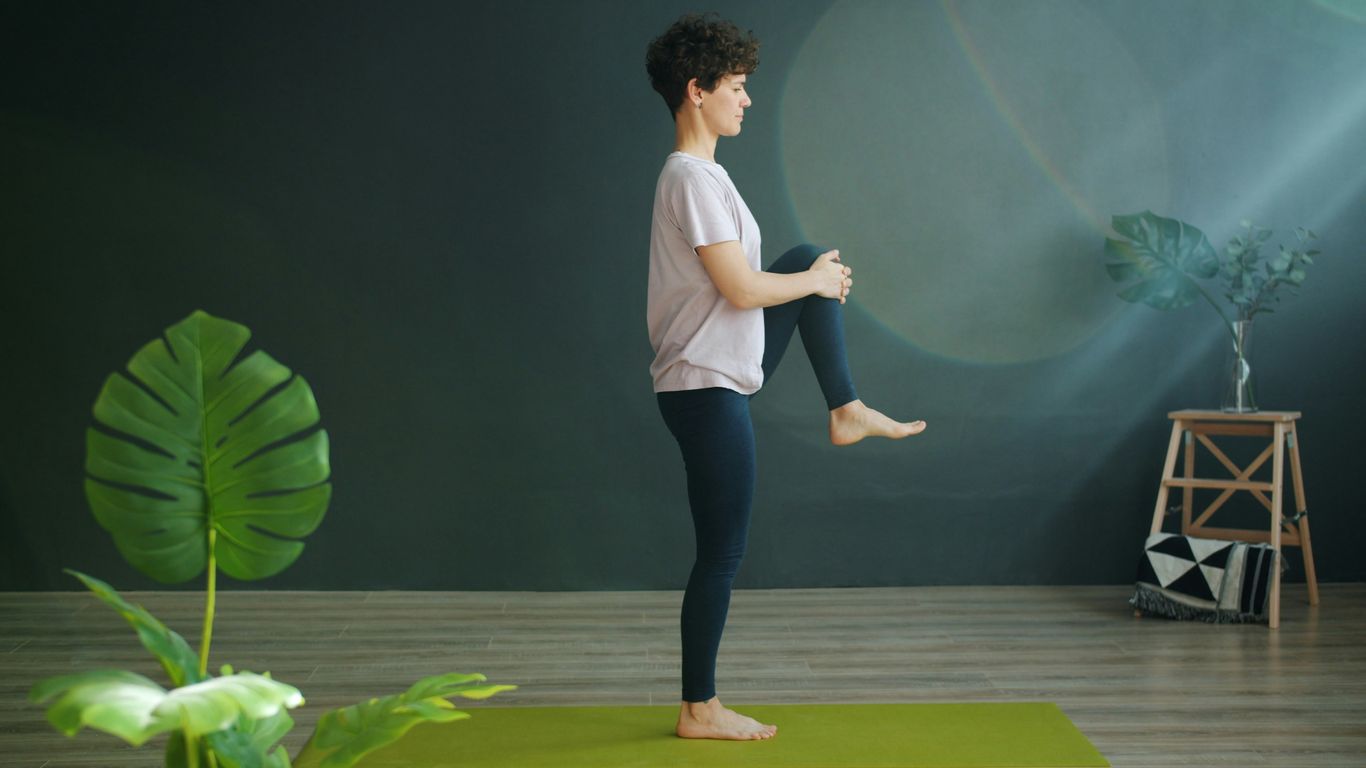
Ready to feel a little wobbly? Good! Standing on one leg while your other foot is either off the ground or lightly touching the ball is a fantastic way to test your stability. Start small, maybe just holding it for 10-15 seconds at a time. As you get better, you can try lifting your leg higher or even closing your eyes for a few seconds (carefully, of course!).
Another cool move is the dynamic transfer. This involves shifting your weight smoothly from sitting on the ball to lying on your back, and then back up again, all while keeping your core engaged. It sounds simple, but it requires a lot of control. Think about moving slowly and deliberately, using your core muscles to guide the motion rather than just flopping around.
Adding Resistance Bands for Extra Intensity
Want to make those exercises you already know even tougher? Grab some resistance bands! You can loop them around your feet during bridge exercises, hold them while doing arm raises in a plank, or even use them for seated rows. The added resistance forces your muscles to work harder, not just to move against the band, but also to stabilize against the ball's instability. It’s a double whammy for strength and control.
Here’s a quick idea of how to integrate bands:
- Banded Squats: Stand with your feet on the ball, loop a band around your thighs, and perform squats. Your glutes and quads will burn!
- Banded Plank Pull-Throughs: Get into a plank with your feet on the ball. Loop a band around one ankle and hold the other end in the opposite hand. Pull the band across your body, engaging your obliques.
- Banded Chest Press: Lie on the ball with the band under your upper back and hold the ends in each hand. Perform a chest press motion.
Incorporating the Ball into Rehabilitation Programs
This might sound a bit more serious, but the Pilates ball is actually a really useful tool for people recovering from injuries. Because it's unstable, it forces your body to use smaller stabilizing muscles that might have become weak. A physical therapist might use it to help you regain strength and balance after a knee or ankle injury, for example. It's all about controlled movements to rebuild that foundation.
Working with an unstable surface like the Pilates ball requires your body to constantly make micro-adjustments. This is brilliant for waking up dormant muscles and improving proprioception – that's your body's awareness of where it is in space. It’s a gentle yet effective way to rebuild strength and coordination, making everyday movements feel easier and safer.
Setting and Tracking Fitness Goals with the Pilates Yoga Ball
Alright, so you've got your Pilates yoga ball, and you're ready to get serious about your fitness. That's awesome! But before you just start randomly bouncing around, let's talk about goals. Having a clear idea of what you want to achieve is super important. Just saying "I want to get fit" is a bit like saying "I want to go somewhere" – it's not very helpful, right?
Developing Actionable Fitness Targets
Think about what you really want to accomplish with this ball. Do you want to feel stronger in your core? Be able to hold a plank for longer? Maybe improve your balance so you don't wobble when you stand up? The more specific you are, the better. Instead of "get stronger," try "be able to do 15 controlled push-ups with my feet on the ball" or "hold a seated balance on the ball for 60 seconds without tipping." Write these down! It makes them feel more real.
Here are some ideas to get you started:
- Core Strength: Aim to increase the duration of core holds (like planks or seated balances) by 10-15 seconds each week.
- Flexibility: Target holding a specific stretch supported by the ball for an extra 30 seconds.
- Balance: Set a goal to perform a new balance exercise (like a one-legged stand) for a set duration, gradually increasing it.
- Endurance: Increase the number of repetitions for exercises like hamstring curls or ball passes by 2-3 reps per session.
Don't try to do too much too soon. Start with goals that feel achievable. It's better to hit a smaller goal and feel good about it than to aim too high and get discouraged. Small wins add up!
Effective Methods for Tracking Your Progress
So, you've set your targets. Now, how do you know if you're actually getting there? You've got to keep tabs on your progress. This doesn't mean you need a fancy app or a complicated journal, though you can totally do that if you want. A simple notebook or even just your phone's notes app will work just fine.
Try jotting down:
- The date of your workout.
- The exercises you did.
- How many reps or sets you completed.
- How long you held any static positions.
- How you felt during and after the workout (e.g., "felt easier today," "struggled with balance").
Seeing your numbers go up or noticing that an exercise feels less difficult over time is incredibly motivating. It shows you that your hard work is paying off. If you're not seeing the changes you expect, it's also a good signal that you might need to adjust your routine or your approach.
Mixing Up Your Routine to Stay Motivated
Let's be honest, doing the exact same thing every single day can get pretty boring. And when things get boring, it's easy to skip a workout or just go through the motions without really putting in the effort. The Pilates yoga ball is super versatile, so use that to your advantage!
- Try New Exercises: Look up different ball exercises you haven't tried before. There are tons of resources out there.
- Change the Order: Simply rearranging the order of your exercises can make your workout feel fresh.
- Adjust Intensity: If an exercise is getting too easy, try increasing reps, hold times, or adding a slight challenge like moving your limbs while balancing.
- Combine with Other Tools: Don't be afraid to incorporate resistance bands or light weights into your ball workouts.
Keeping your routine varied doesn't just prevent boredom; it also challenges your body in new ways, which is key for continued progress. It keeps your muscles guessing and your mind engaged, making your fitness journey more enjoyable and effective in the long run.
Wrapping It Up
So, there you have it. Using a Pilates or exercise ball can really change up your fitness game. It's not just about adding a new piece of equipment; it's about finding new ways to challenge your body and get more out of every move. Whether you're just starting out or you've been working out for ages, this ball can help you build strength, improve your balance, and just make exercise a bit more interesting. Don't be afraid to experiment with different exercises and see what works best for you. Keep at it, stay consistent, and you'll definitely notice a difference.
Frequently Asked Questions
What exactly is a Pilates yoga ball, and how is it different from other balls?
A Pilates yoga ball, often called a stability ball or Swiss ball, is a big, soft, inflatable ball. It's not like a medicine ball, which is heavy and hard. The Pilates ball is light and mostly used in Pilates or core workouts to make exercises tougher and more interesting by making you balance.
How do I know what size ball is right for me?
Picking the right size is important for safety and to get the most out of your workout. Generally, when you sit on the ball with your feet flat on the floor, your knees should be bent at about a 90-degree angle. If the ball is too big or too small, it can make exercises harder to do correctly and might even be unsafe.
Is it safe to use a Pilates yoga ball, especially if I'm new to it?
Yes, it's safe if you use it correctly! Always make sure your workout area is clear of clutter. Check that the ball is properly inflated and can hold your weight. Start with basic exercises and don't push yourself too hard. If you feel any sharp pain, stop. It's also a good idea to have a wall or stable object nearby for support when you're first starting out.
How do I properly inflate my Pilates yoga ball?
Most balls come with a pump. You'll want to inflate it until it's firm but still has a little give when you push on it. The goal is for it to be stable enough to support you but also soft enough to cushion your body. Over-inflating can make it too stiff and hard, while under-inflating makes it too wobbly and less effective.
What are the main benefits of using a Pilates yoga ball in my workouts?
Using a Pilates yoga ball makes your muscles work harder to keep you balanced, especially your core muscles. This helps improve your stability, posture, and coordination. It also adds a new challenge to regular exercises, making them more effective for building strength and toning your body.
Can I really do a full-body workout with just a Pilates yoga ball?
Absolutely! While it's famous for core work, you can definitely use the ball for your whole body. You can do exercises for your legs, arms, chest, and back. The unstable surface means even simple movements become more challenging, engaging more muscles for a great all-around workout.


