
Enhance Your Practice: The Ultimate Guide to the Rectangular Yoga Bolster
So, you're curious about the rectangular yoga bolster, huh? It's a pretty handy tool that can really change how you feel on the mat. Whether you're a beginner or you've been doing yoga for ages, this guide is all about showing you how this simple prop, the rectangular yoga bolster, can make your practice better. We'll cover what it is, how it helps, and how to pick the best one for you. Let's get started!
Key Takeaways
- A rectangular yoga bolster is a firm cushion designed to support your body, making poses more comfortable and accessible.
- It helps improve comfort by providing padding and support, allowing for deeper relaxation and reduced strain.
- Using a rectangular yoga bolster aids in better alignment and posture, which can prevent injuries and enhance pose benefits.
- This versatile prop can be used in various poses, from supported forward folds and seated positions to restorative sequences and Savasana variations.
- Choosing the right rectangular yoga bolster involves considering its size, shape, filling, cover material, and desired firmness for your specific needs.
Understanding The Rectangular Yoga Bolster
What Is A Rectangular Yoga Bolster?
A rectangular yoga bolster is basically a firm, pillow-like prop used in yoga. Think of it as a supportive friend for your body during practice. It's designed to give you extra comfort and help you get into poses more easily, especially if you're doing gentler styles like restorative or yin yoga. It can also be a lifesaver for prenatal yoga or just for making your regular practice a bit more comfortable.
Key Differences From Other Bolster Types
So, what makes a rectangular bolster stand out from the crowd? Well, compared to round bolsters, which are shaped like a cylinder, the rectangular one offers a flatter, more stable surface. This makes it really handy for back support or when you want to sit up against it. Round bolsters are often longer and heavier, and while they can be great for chest openers or under the knees, they can sometimes feel a bit wobbly if you're trying to sit on them. Then there are meditation pillows, or zafus, which are specifically for sitting to keep your back straight. And pranayama bolsters? They're usually longer and thinner, meant for a bit of chest elevation or knee support. The rectangular shape is just super versatile.
Here's a quick look:
- Rectangular Bolster: Flat, stable surface. Great for back support, seated poses, and general comfort.
- Round Bolster: Cylindrical shape. Good for chest opening, under knees/ankles, but can be less stable for sitting.
- Meditation Pillow (Zafu): Round or square cushion for sitting, designed to elevate hips and support the spine.
- Pranayama Bolster: Longer, thinner shape. Used for slight chest elevation or knee support.
Materials And Construction
When you look at a rectangular yoga bolster, you'll notice they're built to last and provide good support. The outside is usually covered in a durable fabric, often cotton or a cotton blend. Cotton is nice because it's breathable and feels good against the skin. Some might have linen covers, which are tough and have a nice texture. Inside, you'll find the filling. Common options include:
- Cotton Batting: This is a popular choice. It's firm and supportive, giving you that solid base without being too hard.
- Foam: Some bolsters use foam, which can offer a good mix of cushion and support. It's often lighter than cotton-filled ones.
- Buckwheat Hulls: These are less common in rectangular bolsters but offer a moldable, firm support that conforms to your body.
The combination of a sturdy cover and a supportive filling is what makes a rectangular bolster so effective. The weight usually hovers around five pounds, giving it enough heft to stay put during your practice without being too heavy to move around. The construction aims for a balance between firmness for support and a bit of give for comfort.
Enhancing Your Yoga Practice With A Rectangular Bolster
Improving Comfort During Poses
Sometimes, just lying flat on your mat feels a bit… uninspired. That's where the rectangular bolster really shines. It's not just about making things cushier, though that's a nice perk. Think of it as a gentle guide, helping your body settle into poses it might otherwise resist. For instance, in Savasana, placing the bolster lengthwise under your spine can subtly lift your chest. This small adjustment can make a world of difference in how you breathe and release tension, especially after a day spent hunched over a desk. It feels like a gentle hug for your back, allowing you to truly unwind.
Supporting Alignment And Posture
Getting into certain poses can be a real challenge, especially if your hamstrings are feeling tight. A bolster can be a game-changer here. In forward folds, instead of straining to reach your toes, you can sit with your legs extended and rest your forehead on the bolster. This lets you relax into the stretch without any unnecessary pressure on your back or legs. It's a way to access deeper stretches more safely.
Here's how it helps with seated poses too:
- Meditation & Pranayama: Sitting cross-legged on the floor for extended periods can put pressure on your knees and lower back. Placing a bolster under your hips elevates them, making it easier to maintain a straight spine and stay comfortable for longer. You can sit cross-legged on top of it, or even kneel with it between your calves.
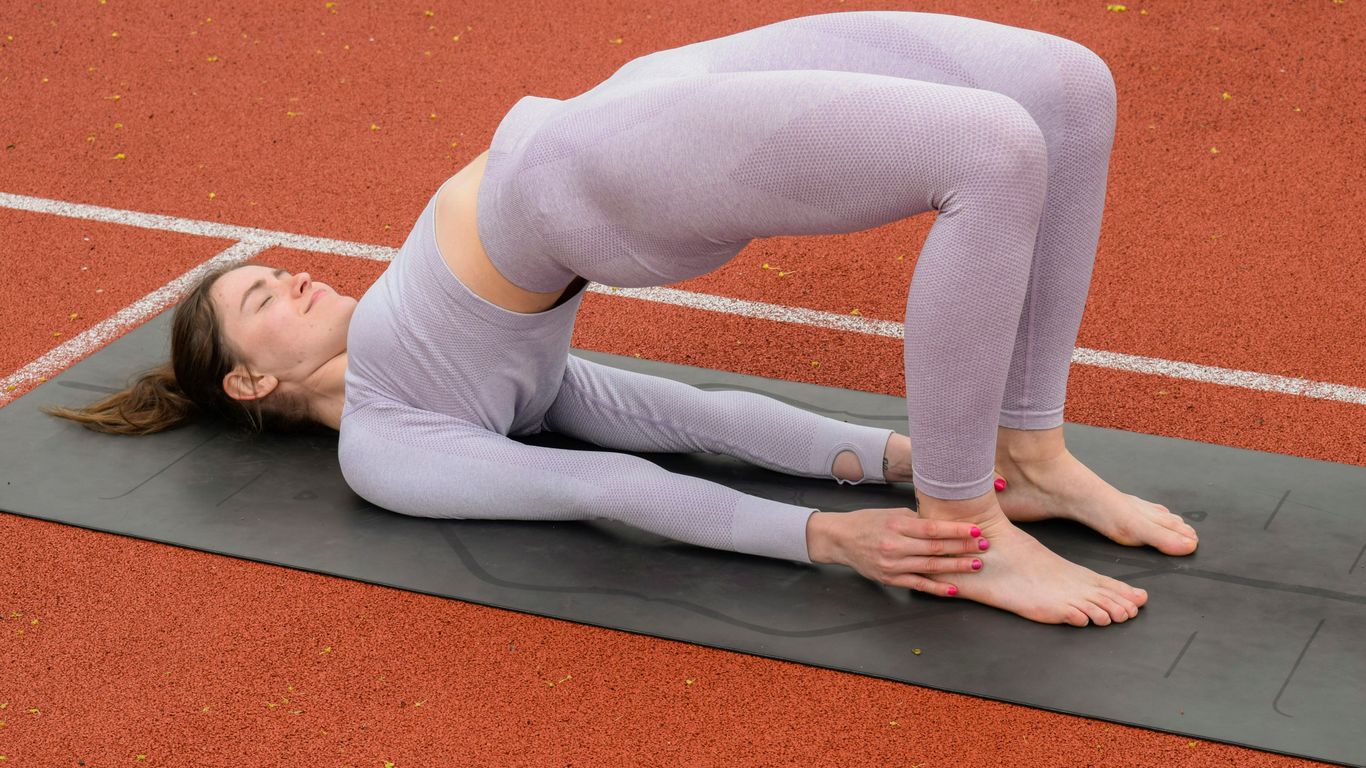
- Supported Poses: In poses like Supported Bridge Pose, the bolster can be placed under your sacrum, offering a gentle lift and opening through the chest and shoulders.
- Restorative Poses: For poses like Supported Child's Pose, the bolster provides a soft surface to rest your torso on, reducing any strain on your hips and knees.
The key is that the bolster isn't doing the work for you; it's creating an environment where your body can find its natural alignment with less effort and more ease.
Facilitating Deeper Relaxation
Beyond just comfort, the bolster is a tool for deeper relaxation. When your body feels fully supported, your nervous system can switch off that 'fight or flight' response. This allows you to sink into a more restful state. In restorative sequences, the bolster acts as a gentle prop, holding you in a pose so you don't have to exert any muscular effort. This passive support encourages your muscles to release tension and your mind to quiet down. It's like giving your body permission to completely let go, which is something we often forget to do in our busy lives.
Creative Applications For Your Rectangular Yoga Bolster
So, you've got this rectangular yoga bolster, and you're wondering how to really make it work for you beyond just basic support. It's a pretty versatile tool, honestly. Think of it as a prop that can help you explore different sensations and find new levels of ease in your practice. It's not just for making things easier; it's about opening up possibilities.
Heart-Opening Savasana Variations
Lying flat in Savasana is great, but sometimes you want a little more. Placing your rectangular bolster lengthwise under your spine can gently lift your chest and shoulders. This subtle shift can really help you feel more open and breathe a bit deeper. It's a nice way to release tension, especially if you've been sitting or working at a desk a lot. You can play around with the exact placement to find what feels best for your back. It's like a gentle massage for your spine, encouraging a bit more space.
Supported Forward Folds And Seated Poses
Forward folds can be a challenge for many, especially if your hamstrings feel tight. Using a bolster here makes them much more accessible. For seated forward folds, sit with your legs extended and place the bolster on your lap. Then, just fold forward, letting your forehead rest on the bolster. This lets you relax into the stretch without any strain. It's a good way to ease into a deeper stretch and let go of tension in your back and legs. For seated poses like meditation or pranayama, sitting on the edge of the bolster can elevate your hips. This helps align your spine and takes pressure off your lower back, allowing you to sit more comfortably for longer periods. You can also kneel with the bolster between your legs for added support.
Utilizing The Bolster In Restorative Sequences
Restorative yoga is where the bolster really shines. It's designed to support your body so you can relax completely. Think about placing the bolster under your knees in a reclined position to ease lower back tension. Or, use it as a support for your chest in a gentle backbend, allowing your heart to open. You can also place it under your hips in a supported bridge pose. The key is to use the bolster to take the effort out of the pose, allowing your body to soften and release.
Here are a few ideas for using your bolster in restorative sequences:
- Supported Child's Pose: Place the bolster under your torso or between your thighs and calves for comfort.
- Supported Bridge Pose: Lie on your back with knees bent, feet flat on the floor. Slide the bolster under your sacrum (the flat, bony part at the base of your spine) for a gentle backbend.
- Supported Supine Spinal Twist: Lie on your back and place the bolster under your knees. Gently let your knees fall to one side, keeping your shoulders grounded.
The goal with restorative poses is to let the prop do the work. You're not actively stretching or holding yourself up; you're allowing gravity and the support of the bolster to create a sense of ease and release in your body. It's about passive relaxation and letting go.
Choosing The Right Rectangular Yoga Bolster
So, you've decided a rectangular yoga bolster is the way to go. Smart choice! These are super versatile. But with so many out there, picking the perfect one can still feel a bit tricky. Let's break down what to look for so you get a bolster that really works for you.
Considering Size And Shape
When you're looking at rectangular bolsters, think about your own body. Are you on the taller side? You might want a longer bolster, maybe around 25-28 inches. If you're more petite, a slightly shorter one could feel just right. The width is usually pretty standard, around 11-12 inches, which gives you a nice stable surface. The thickness is where you'll see more variation, typically from 4 to 10 inches. A thicker bolster gives more lift, which is great for poses like supported backbends, while a thinner one is good for general support or when you need less elevation.
- Length: Consider your height. Taller individuals often prefer longer bolsters.
- Width: Most rectangular bolsters are similar in width, providing a stable base.
- Thickness: This impacts the amount of lift and support. Thicker for more elevation, thinner for general use.
Evaluating Filling And Cover Materials
What's inside and outside your bolster makes a big difference in how it feels and how long it lasts. For the filling, you'll often find cotton, kapok, or foam. Cotton is a classic choice, offering a good balance of firmness and give. Kapok is a natural fiber that's lighter and a bit softer. Foam is also common, and it tends to hold its shape well. The cover is usually made of cotton, linen, or a blend. Cotton is breathable and easy to wash, linen is durable and feels nice, and blends can sometimes be more resistant to spills.
Here's a quick look at common materials:
| Material Type | Filling Options | Cover Options |
|---|---|---|
| Natural | Cotton, Kapok, Buckwheat | Cotton, Linen, Hemp |
| Synthetic | Foam, Polyester | Polyester Blends |
Think about how you'll use the bolster. If you plan to use it a lot for restorative poses or Savasana, a softer filling might feel more comfortable. If you need it for more active support in seated poses, a firmer filling will be better.
Firmness And Support Levels
This is a big one. You want a bolster that's firm enough to support you without feeling like a brick. It should hold its shape when you put weight on it, but still have a bit of cushioning. Too soft, and you might sink in too much, losing the intended support. Too firm, and it could be uncomfortable, especially for longer holds. The ideal bolster feels supportive yet yielding, like a comfortable couch cushion. When you press down on it, it should give a little but not collapse. If possible, try to feel the bolster before you buy, or check reviews that specifically mention firmness.
Maximizing Benefits With Proper Positioning
Strategic Placement For Specific Poses
Getting the most out of your rectangular yoga bolster really comes down to where you put it. It's not just about tossing it down and hoping for the best, you know? Think about what you're trying to achieve in each pose. Are you looking for a little extra support under your knees in Savasana to ease lower back tension? Or maybe you're aiming to open up your chest in a supported backbend? The placement makes a huge difference. Sometimes, just a tiny adjustment can totally change how effective the bolster feels. Don't be afraid to experiment with different angles and positions to find what feels right for your body. It's like finding the perfect spot for a pillow – takes a little fiddling.
Combining With Other Yoga Props
Don't feel like you have to use the bolster all by itself. It works great on its own, sure, but it can be even better when you pair it with other yoga props. Think blocks, blankets, or straps. For instance, in a seated forward fold, you might put a block on top of the bolster to give your head a little extra height and support. Or, in a supported bridge pose, a folded blanket on top of the bolster can add some nice cushioning for your shoulders. It's like building a team of props, where each one helps you get into the pose safely and comfortably. You can find all sorts of yoga accessories online if you need to stock up.
Listening To Your Body's Needs
This is probably the most important tip of all. Yoga is all about connecting with your body and respecting its limits. A bolster is there to help you, not to force you into a position that feels wrong. If you feel any pain or discomfort, just adjust the bolster or come out of the pose. There's absolutely no shame in modifying things! Remember, everyone's body is different, and what works for one person might not work for another. Pay attention to your breath, notice what sensations come up in your body, and adjust as needed. It's easy to get caught up in trying to achieve the "perfect" pose, but the real magic of yoga happens when you listen to your body and honor its needs. A bolster is just a tool to help you do that, so use it with intention.
The goal isn't to achieve a specific shape, but to find a place of ease and support that allows you to relax and breathe fully. Your body will tell you what it needs if you just pay attention.
Final Thoughts on Your Bolster Journey
So, we've talked a lot about the rectangular yoga bolster. It’s pretty clear that this isn't just some extra cushion to toss around. It’s a real tool that can seriously change how you feel on the mat. Whether you're trying to get more comfortable in a pose, need a little help keeping your body lined up right, or just want to relax a bit deeper, this bolster can do it. It’s not complicated, and you don't need to be a yoga pro to use it. If you've been thinking about adding something to your practice that makes a noticeable difference, give a bolster a try. You might be surprised at how much easier and more enjoyable your yoga sessions become.
Frequently Asked Questions
What exactly is a rectangular yoga bolster?
Think of a rectangular yoga bolster as a long, firm pillow made for yoga. It's designed to give your body extra support and make poses more comfy, helping you relax and hold stretches longer without feeling strained.
How can using a bolster help my yoga practice?
A bolster can make your yoga sessions much better! It helps you feel more comfortable, keeps your body lined up correctly, and lets you relax more deeply. It's like a little helper for your body on the mat.
What kinds of yoga are bolsters best for?
You can use bolsters in lots of yoga styles, but they're especially great for restorative yoga, Hatha, and Yin yoga. These styles focus on relaxation and support, which is exactly what a bolster provides.
What are yoga bolsters made of?
Yoga bolsters are usually filled with things like cotton, foam, or kapok (a fluffy fiber). They often have covers made of cotton or linen that you can take off to wash. This makes them easy to keep clean.
How do I pick the best bolster for me?
When you're shopping for a bolster, think about its size and shape. You'll also want to check the materials inside and out. The most important thing is that it feels good and supportive for your body.
Can I use regular pillows or blankets instead of a yoga bolster?
Absolutely! If you don't have a yoga bolster, you can totally use rolled-up blankets, couch cushions, or other firm pillows from home. They can work just as well to give you that extra support.

