

Easy Yoga Exercises for Beginners to Try at Home
Thinking about trying yoga but feel a bit lost on where to begin, especially when you're at home? It's totally doable! You don't need to be super flexible or have all the fancy gear to get started. This guide is all about making yoga accessible for beginners right in your own space. We'll cover how to set up your practice area, what simple things you might want, and how to use your breath to help you relax. Plus, we'll walk through some easy poses that build strength and help you feel more flexible. Ready to roll out your mat and give it a go?
Key Takeaways
- Creating a calm, clutter-free space is the first step to a good home yoga practice.
- Focusing on your breath helps calm your mind and makes poses more effective.
- Basic poses like Mountain Pose and Upward Salute build a strong foundation.
- Gentle poses such as Downward Facing Dog and Baby Cobra improve flexibility and strength.
- Restorative poses like Child's Pose and Corpse Pose are great for relaxation and winding down.
Getting Started With Yoga Exercises for Beginners at Home
Starting yoga at home can feel a little daunting, but honestly, it's way simpler than you might think. You don't need a fancy studio or a guru to guide you. The most important thing is just showing up for yourself, even if it's just for a few minutes. Think of it as carving out a little pocket of peace in your day. The real magic happens when you make it a habit, not when you do it perfectly.
Creating Your Comfortable Practice Space
Finding your spot is key. It doesn't have to be a whole room; even a corner of your living room can work. The main goal is to make it a place where you feel relaxed and can focus. Try to clear away any clutter that might pull your attention away. Maybe put on some calming music or light a candle if that helps you unwind. Some people find it useful to have a blank wall nearby, especially when they're starting out, as it can help with balance in certain poses. It's all about making a little sanctuary for yourself.
Essential Yoga Equipment for Home Practice
While you can technically do yoga in anything, having a few basic items can make a big difference. First up, a yoga mat is pretty much a must-have. It gives you grip and a bit of cushioning, making poses much more comfortable. You might also find yoga blocks helpful. They're like little helpers that can bring the floor closer to you, giving you support and helping you get into poses safely. Think of them as props to tailor the pose to your body, not as a sign you're not flexible enough. A thick blanket can also be nice for extra padding, especially under your knees or hips, or just to snuggle under during relaxation poses. A yoga strap can be useful too, especially for reaching poses that feel a bit out of reach right now.
Here's a quick rundown of helpful items:
- Yoga Mat: Provides grip and cushioning.
- Yoga Blocks (2): Offer support and help adjust pose depth.
- Yoga Strap: Aids in reaching for stretches.
- Thick Blanket: Adds comfort and padding.
Remember, these props aren't crutches; they're tools to help you explore the poses more fully and safely. They make yoga accessible to everyone, no matter your current flexibility or strength level.
Focusing on Your Breath for a Calmer Mind
Breathing is the heart of yoga. Before you even start moving, take a few moments to just breathe. Notice the air coming in and going out. Try to make your breaths a little deeper and slower. This simple act can really help quiet your mind and prepare your body for practice. As you move through the poses, try to keep your breath steady and smooth. It's like an anchor, keeping you present and calm. If your mind starts to wander, just gently bring your attention back to your breath. It's a practice, after all, and it takes time. You can find some great beginner yoga classes online that offer good verbal cues for breathing to help you start your yoga journey.
Foundational Yoga Poses for a Strong Practice
Alright, let's get down to the nitty-gritty of building a solid yoga practice right from your living room. These aren't just random stretches; they're the cornerstones, the poses that give you a real sense of what yoga is all about. Getting these right makes everything else feel so much easier.
Mountain Pose for Grounding and Stability
This might seem too simple – just standing up, right? Wrong. Mountain Pose, or Tadasana, is where you learn to really connect with the earth beneath you. It’s about finding your center and standing tall, not just physically, but mentally too. Think of it as your yoga anchor.
- Stand with your feet together, or hip-width apart if that feels better for you.
- Distribute your weight evenly across both feet. Feel all four corners of your feet pressing down.
- Engage your leg muscles slightly, drawing your kneecaps up.
- Lengthen your spine, imagining a string pulling the crown of your head towards the ceiling.
- Let your arms hang naturally at your sides, palms facing forward or towards your body.
- Relax your shoulders down and away from your ears.
This pose teaches you to be present and stable, no matter what's going on around you. It’s amazing how much you can feel just by standing with intention. You can even practice this while waiting in line or during a commercial break – it’s that accessible.
Upward Salute for Energy and Expansion
Once you've found your grounding in Mountain Pose, Upward Salute (Urdhva Hastasana) is the natural next step. It’s like reaching for the sky, opening yourself up to new energy and possibilities. It’s a beautiful, simple movement that really wakes up the body.
From Mountain Pose:
- As you inhale, sweep your arms out to the sides and then up towards the ceiling.
- Bring your palms to touch, or keep them a few inches apart if that’s more comfortable for your shoulders.
- Keep your shoulders relaxed, away from your ears.
- Gaze gently forward or slightly upward.
This pose helps to lengthen the sides of your body and can give you a nice stretch through the chest and shoulders. It’s a great way to start feeling more open and energized for your day. You can find more about standing poses like this in various yoga poses.
Warrior I for Inner Strength and Confidence
Warrior I (Virabhadrasana I) is a powerful standing pose that builds strength, stamina, and a sense of inner resolve. It’s called Warrior for a reason – it helps you tap into your own courage and confidence.
Here’s how to get into it:
- Start in Mountain Pose. Step your left foot back about three to four feet, turning your left foot out slightly so it's at about a 75-degree angle.
- Bend your right knee so it’s directly over your right ankle. Your front thigh should be roughly parallel to the floor.
- Square your hips and torso forward as much as possible. This is often the trickiest part!
- Raise your arms overhead, palms facing each other or touching.
- Keep your shoulders relaxed and your gaze forward.
Holding Warrior I requires focus and a steady breath. It's a pose that challenges you to stand firm while also reaching upward, embodying both strength and aspiration. Don't worry if your hips don't fully square forward at first; just work towards it with each breath.
Remember to breathe deeply throughout the pose. You’ll feel this in your legs and core. After holding for a few breaths, you'll switch sides. This pose is a fantastic way to build a strong foundation, and you can find more beginner-friendly poses in fundamental yoga poses.
Gentle Yoga Exercises for Flexibility and Balance
Alright, let's talk about getting a little more bendy and steady with some yoga poses you can do right at home. Sometimes, just moving through these gentle exercises can make a big difference in how you feel day-to-day. It’s not about being a pretzel, it’s about finding a bit more ease in your body.
Downward Facing Dog for Full Body Stretch
This is a classic for a reason. Downward Facing Dog, or Adho Mukha Svanasana, is like a full-body wake-up call. You start on your hands and knees, then lift your hips up and back, making an inverted V shape with your body. It really works to stretch out your whole body, from your hands all the way down to your heels. Don't worry if your heels don't touch the floor – that's totally normal for most people, especially when you're starting out. Just focus on lengthening your spine and feeling that stretch in the back of your legs. It's a great way to build a bit of strength in your arms and legs too.
Head to Knee Pose for Hip Opening
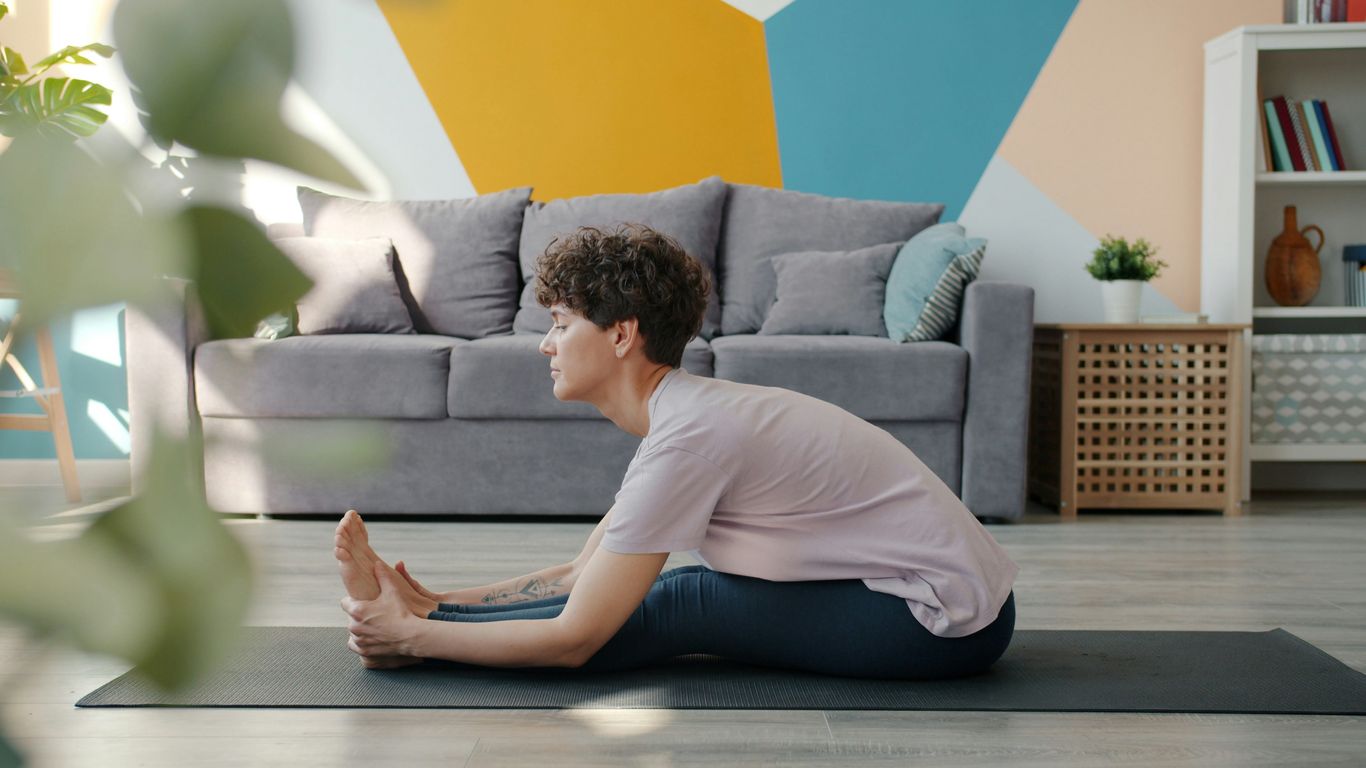
This one is a seated pose that feels really good for your hips and hamstrings. You sit with one leg extended and the other bent, bringing the sole of your bent foot to your inner thigh. Then, you gently fold forward over the extended leg. It’s a nice way to get a stretch in your hips and the back of your thigh. Remember to do it on both sides so you get an even stretch. If reaching your foot is a stretch, using a strap or even a towel can make it more comfortable.
Baby Cobra for Spinal Strength
Baby Cobra is a gentle way to build some strength in your back. You lie on your stomach, hands under your shoulders, and then lift your chest just a little bit off the floor, keeping your hips and legs grounded. It’s not a big backbend, just a small lift that helps wake up those back muscles. This pose is fantastic for improving posture and counteracting the effects of sitting for long periods.
Here’s a quick rundown of how to approach these poses:
- Downward Facing Dog: Start on hands and knees, lift hips up and back. Keep a slight bend in your knees if needed.
- Head to Knee Pose: Sit with legs extended, bend one knee, fold gently over the straight leg. Switch sides.
- Baby Cobra: Lie on your stomach, lift chest slightly using back muscles, keep hips down.
Remember, the goal here isn't perfection. It's about listening to your body and moving in a way that feels good. Even a few minutes of these gentle movements can help you feel more open and balanced throughout your day. You can find more beginner-friendly poses to help improve your flexibility.
Restorative Yoga Exercises for Relaxation
Sometimes, after a long day or a particularly busy week, your body and mind just need a break. That's where restorative yoga comes in. It's all about slowing down, supporting your body, and letting go of tension. Think of it as a gentle hug for your nervous system.
Child's Pose for Back Body Release
Child's Pose, or Balasana, is like a mini-vacation for your body. It's a pose that really lets you sink into the mat and feel supported. To get into it, start on your hands and knees. Bring your big toes to touch and widen your knees about hip-width apart, or a bit wider if that feels better. Then, exhale and fold your torso forward, letting your forehead rest on the mat. You can extend your arms out in front of you or bring them back alongside your body, palms facing up. The key here is to let gravity do the work and feel your back body lengthen.
Happy Baby Pose for Hip Awareness
Happy Baby Pose, or Ananda Balasana, is a fun one that feels really good for your hips and lower back. Lie on your back and hug your knees into your chest. Then, reach for the outside edges of your feet, grabbing your ankles or shins if that's more accessible. Open your knees wider than your torso, drawing them towards your armpits. Keep your ankles stacked over your knees and flex your feet. You can gently rock side to side if that feels nice. This pose helps open up the hips and can release tension stored there. It's a great way to bring more awareness to this area. You might find it helpful to spend a few minutes in this pose, especially if you've been sitting a lot. This stretch is great for bringing better awareness to your hips.
Corpse Pose for Deep Relaxation
Corpse Pose, or Savasana, is perhaps the most important pose in any yoga practice, especially for relaxation. It's where you integrate all the benefits of the poses you've done. Lie flat on your back, letting your legs extend long and your arms rest by your sides, palms facing up. Allow your feet to fall open naturally. Close your eyes and consciously release any tension you're holding in your body, starting from your toes and moving all the way up to your head. The goal is to be completely still and allow your body to rest deeply.
Here's a quick guide to getting the most out of Savasana:
- Let your breath be natural; don't try to control it.
- Scan your body for any remaining tension and consciously soften those areas.
- Allow your mind to wander without judgment; simply observe your thoughts.
- Stay in this pose for at least 5-10 minutes to truly reap its benefits.
Restorative yoga isn't about pushing yourself; it's about allowing yourself to be supported and to find a sense of calm. It's a practice of surrender, where you give yourself permission to simply be.
Integrating Yoga Exercises into Your Daily Routine
So, you've been trying out some beginner yoga poses at home and feeling pretty good about it. That's awesome! Now, the real magic happens when you start weaving these practices into your everyday life. It's not about doing a full hour-long session every single day, especially when you're just starting out. Think of it more like adding little moments of calm and movement throughout your day.
Morning Yoga for a Productive Day
Getting up and rolling out your mat first thing can really set a positive tone. Even just five to ten minutes can make a difference. You could start with a few rounds of Mountain Pose to feel grounded, followed by Upward Salute to reach for the sky. A gentle Downward Facing Dog can wake up your whole body. This simple sequence can help shake off sleepiness and prepare your mind for whatever comes next. It's a way to greet the day with intention, rather than just jumping straight into the hustle.
Mindful Movement and Breath Awareness
Beyond the set poses, try to bring that same awareness to other parts of your day. When you're waiting for the kettle to boil, take a moment to notice your breath. While walking, pay attention to how your body moves. These small acts of mindfulness connect you back to yourself and can make even mundane tasks feel a bit more peaceful. It’s about finding those pockets of calm, even when life feels busy. You can find some great tips for finding inner peace through yoga that can be applied off the mat too.
Consistency Over Intensity for Beginners
When you're new to yoga, it's easy to get caught up in wanting to do the most difficult poses or practice for hours. But honestly, showing up regularly, even for short sessions, is way more effective. It's better to do a 10-minute practice consistently every day than a 60-minute practice once a week. This approach helps build a habit and allows your body and mind to adapt gradually. Remember, yoga is a practice, not a performance. Focus on how you feel, not just how the poses look. Starting with short, 5-10 minute sessions is a fantastic way to build this consistency.
Keep Going!
So there you have it – a few simple yoga moves you can totally do right in your living room. Remember, nobody starts out as a yoga master. It’s all about showing up for yourself, even if it’s just for a few minutes. Don’t worry about getting every pose perfect; just focus on how it feels in your body and how your breath is moving. Keep practicing, be kind to yourself, and you’ll start to notice some pretty cool changes, both inside and out. You’ve got this!
Frequently Asked Questions
Do I really need special equipment to start yoga at home?
Not at all! While a yoga mat can make things more comfy and give you better grip, you can start on any soft surface. Many poses don't need anything extra. As you get more into it, you might like to try yoga blocks or a strap to help you with certain stretches, but they're not a must-have when you're just beginning.
How often should I practice yoga as a beginner?
It's better to practice a little bit often than to do a super long session just once in a while. Aim for 2-3 times a week when you're starting out. Even 15-20 minutes can make a difference. Listen to your body, and don't push yourself too hard, especially in the beginning.
I'm not flexible at all. Can I still do yoga?
Absolutely! That's one of the biggest myths about yoga. You don't need to be flexible to start yoga; yoga actually helps you *become* more flexible over time. Focus on how the poses feel in your body, not on how they look.
What's the most important thing to focus on when doing yoga?
Your breath is key! Yoga is all about connecting your mind and body, and your breath is the bridge. Try to breathe deeply and smoothly through your nose. If a pose feels too hard and you're holding your breath, it's a sign to ease up a bit.
What if I can't do a pose exactly like the instructor?
That's perfectly fine! Everyone's body is different. Yoga instructors often show different ways to do a pose to make it easier or harder. Do what feels right and safe for your body. It's your practice, so make it work for you.
How can I make sure I'm doing the poses correctly at home?
Watching videos from qualified instructors is a great way to learn. They'll show you the proper form and give tips. Also, pay attention to how your body feels. If something hurts, stop or adjust the pose. It's better to do a modified pose correctly than a full pose incorrectly.

