
Discover How Yoga Can Relieve Stress and Restore Calm
Life can get pretty hectic, right? Between work, errands, and just trying to keep up, it's easy to feel overwhelmed. If you've ever found yourself holding your breath with your shoulders all bunched up, you know what I mean. Stress shows up in our bodies in so many ways. That's why simple physical practices, even just a few minutes of moving or breathing mindfully, can make a big difference. Yoga is one of those practices that can help you slow down, release some of that built-up tension, and just reconnect with yourself. Let's look at how yoga can help relieve stress and how you can give it a try.
Key Takeaways
- Yoga helps calm your body's stress response by activating the system that helps you relax. This can lower stress hormones and improve how you handle difficult situations.
- Gentle movements and stretches in yoga release physical tension, especially in areas like the shoulders and back, which can ease discomfort and promote a sense of calm.
- Focusing on your breath and being present during yoga helps quiet a racing mind, reducing overthinking and making it easier to let go of worries.
- Slower yoga styles like Hatha, Restorative, and Yin are particularly good for stress relief because they encourage stillness and deep relaxation.
- Poses like Child's Pose, Legs-Up-the-Wall, and Corpse Pose are great for grounding, calming the nervous system, and allowing your body to deeply rest and release tension.
Understanding How Yoga Relieves Stress
When life gets hectic, our bodies often react by kicking into a sort of 'fight or flight' mode. This means your heart might start pounding, your breathing gets shallow, and your muscles feel all tight. It’s a useful response when you're in real danger, but for many of us, it becomes our default setting, which can really wear us down over time. This is where yoga steps in as a helpful practice.
The Body's Stress Response and Yoga's Intervention
Yoga helps to gently shift your body out of that constant state of alert. It does this by influencing your autonomic nervous system. Think of it as turning down the volume on your body's alarm system. This practice can help lower stress hormones, like cortisol, which are often elevated when we're feeling overwhelmed. It also helps improve something called heart rate variability, which is a good sign your body is able to adapt to different situations. By combining movement, focused breathing, and paying attention to the present moment, yoga creates a sense of safety and calm within your body, even if the outside world is still chaotic.
Activating the Parasympathetic Nervous System
One of the main ways yoga works its magic is by activating your parasympathetic nervous system. This is the part of your nervous system that's responsible for rest and digestion – the opposite of the 'fight or flight' response. When this system is engaged, your heart rate slows down, your blood pressure can decrease, and your body can begin to relax. It’s like giving your system a much-needed break. This shift is key to counteracting the negative effects of chronic stress. Learning to activate the parasympathetic nervous system through yoga can make a big difference in how you feel day-to-day.
Enhancing Emotional Regulation and Resilience
Beyond the physical effects, yoga also plays a big role in how we handle our emotions. By practicing mindfulness and becoming more aware of our thoughts and feelings without judgment, we get better at managing them. This increased awareness helps us respond to stressful situations more thoughtfully instead of just reacting impulsively. Over time, this can build up your emotional resilience, making you better equipped to bounce back from challenges. It's not about eliminating stress entirely, but about developing a stronger capacity to cope with it when it arises.
Key Benefits of Yoga for Stress Reduction
Yoga does more than just stretch your body; it really helps calm your mind too. When you're feeling stressed, your body goes into that 'fight or flight' mode, which isn't great for long-term health. Yoga helps switch that off.
Promoting Physical Relaxation and Releasing Tension
Lots of us hold tension in our bodies without even realizing it, especially in our necks, shoulders, and backs. Yoga poses gently work to release these tight spots. Think of it like untangling knots. As you move through poses and focus on your breath, your muscles start to relax. This physical release can feel incredibly freeing and helps reduce that overall feeling of being wound up.
- Muscle Tension Release: Poses like Child's Pose or gentle twists help to lengthen muscles and ease stiffness.
- Improved Circulation: Certain poses can help blood flow better, which aids in flushing out stress-related byproducts.
- Reduced Physical Discomfort: Less tension often means less pain, making everyday movements feel easier.
Cultivating Mindfulness and Present Moment Awareness
One of the biggest gifts yoga gives us is the ability to be present. When you're on your mat, you're encouraged to focus on your breath, how your body feels, and the movements you're making. This practice pulls your attention away from worries about the past or future. It's like hitting a pause button on your racing thoughts. Over time, this skill of staying present can spill over into your daily life, helping you handle stressful situations with more composure. You start noticing your thoughts without getting swept away by them.
The practice of yoga encourages you to pay attention to what's happening right now. This focus on the present moment is a powerful tool for managing stress because it interrupts the cycle of worry and rumination that often fuels anxiety. By anchoring yourself in the sensations of your body and the rhythm of your breath, you create a mental space that is less reactive to stressors.
Improving Mood Through Endorphin Release
Ever notice how you feel a bit lighter after a yoga session? That's partly thanks to endorphins. Physical activity, including yoga, prompts your brain to release these natural mood boosters. They act like a natural pick-me-up, helping to counteract feelings of sadness or low energy that often come with stress. Regular practice can lead to a more stable and positive outlook over time, making you feel more resilient when challenges arise. It's a great way to support your mental health naturally.
Incorporating Yoga into Your Daily Routine
So, you're ready to bring some yoga into your life to help with stress. That's great! The good news is, you don't need to block out hours or become a pretzel overnight. It's all about finding what works for you and making it a regular thing. Think of it less like a chore and more like a little gift to yourself each day.
Starting Small and Building Consistency
Seriously, start small. Even two minutes can make a difference. Maybe it's just a few deep breaths when you wake up, or a simple stretch after you've been sitting for a while. The key is consistency. It's better to do a little bit every day than a lot once in a blue moon. This helps build a habit that feels manageable, not overwhelming. You can try linking it to something you already do, like doing a forward fold right after you brush your teeth. It's amazing how quickly these small moments add up.
Creating a Calming Personal Practice Space
Find a little corner in your home where you can move around without bumping into things. It doesn't have to be fancy. Maybe it's just a clear spot on the floor. Dimming the lights or putting on some quiet music can help too. If you like certain smells, lighting a candle or using an essential oil diffuser might make the space feel even more relaxing. The goal is to create a spot that signals to your brain, "Okay, time to relax and breathe."
Focusing on Sensation Over Perfection
This is a big one. Yoga isn't about looking a certain way in a pose. It's about how it feels in your body. Are you feeling a stretch? Is your breath flowing? If your mind wanders or a pose feels awkward, that's totally fine. Just gently bring your attention back to your breath. The real magic happens when you tune into your body's signals rather than striving for an Instagram-worthy pose. Try closing your eyes during a pose to really feel what's happening inside, rather than worrying about how it looks.
Remember, yoga is a practice, not a performance. There's no right or wrong way to feel. Each time you come back to your breath, you're doing it exactly right. Be kind to yourself throughout the process.
Gentle Yoga Styles for Stress Relief
When life feels like it's moving too fast and your nerves are frayed, the idea of a vigorous yoga class might feel like just another thing to add to your to-do list. That's where gentle yoga styles come in. These practices are specifically designed to help you unwind, not amp up. They focus on slow movements, mindful breathing, and deep relaxation, making them perfect for anyone looking to dial down the stress.
The Supportive Nature of Hatha Yoga
Hatha yoga is often the starting point for many people exploring yoga for stress relief. It's generally slower-paced than styles like Vinyasa, giving you ample time to really settle into each pose and connect with your breath. This deliberate pace allows you to focus on proper alignment and the physical sensations in your body without feeling rushed. It’s less about achieving a perfect shape and more about experiencing the pose. Think of it as a moving meditation that helps you release physical tension and quiet the mental chatter.
Finding Stillness with Restorative Yoga
If your goal is pure relaxation, Restorative yoga is your best friend. This style uses props like bolsters, blankets, and blocks to fully support your body in gentle poses. You'll hold these poses for extended periods, allowing your muscles to relax deeply and your nervous system to shift into a calmer state. It’s about actively inviting rest, rather than pushing yourself. This practice can be incredibly helpful for recharging your energy when you're feeling depleted.
Exploring the Benefits of Yin Yoga
Yin yoga takes the concept of stillness even further. It involves holding passive poses for several minutes, targeting the deeper connective tissues like fascia and ligaments. While it can feel intense at times, the goal is not strain but a slow, sustained release. This practice cultivates patience and encourages you to sit with your sensations, which can be a powerful way to build resilience. It’s a great way to explore your body's limits in a safe and supported way, promoting a sense of inner peace.
The key with these gentler styles is to listen to your body. There's no competition, no judgment, just an invitation to be present with yourself and find a sense of ease.
Transformative Yoga Poses for Calmness
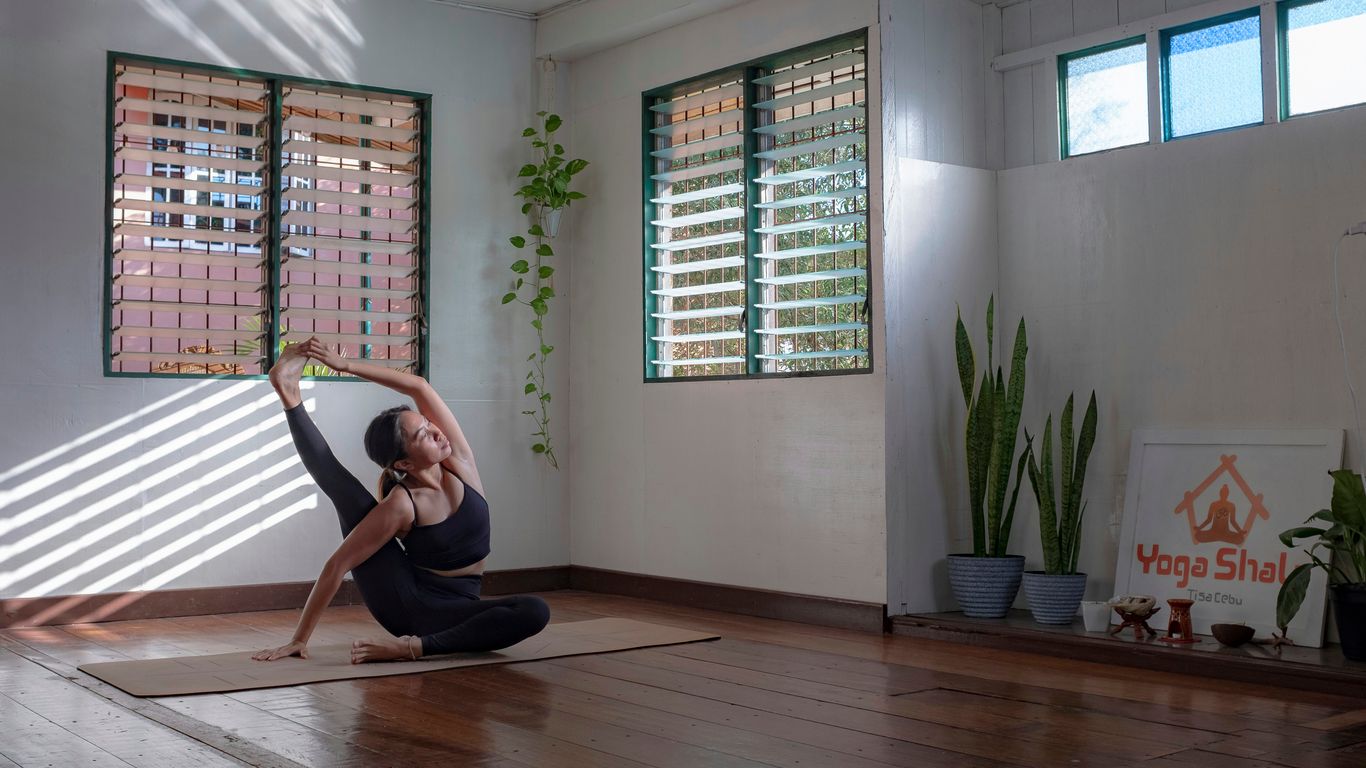
Sometimes, just thinking about all the things we have to do can make our shoulders tense up. Yoga offers some simple poses that can really help melt that tension away and bring a sense of peace. These aren't complicated poses; they're more about gentle movement and finding a moment to just be.
Child's Pose for Grounding and Comfort
This pose is like a big, comforting hug for your body. You start on your hands and knees, then sink your hips back towards your heels, letting your torso rest between your thighs. Your forehead can rest on the mat, or you can use a cushion if that feels better. Arms can stretch out in front or rest alongside your body. It's a great way to feel grounded and bring your focus inward. It helps quiet the mental chatter and brings a sense of security.
Legs-Up-the-Wall Pose for Circulation and Calm
This one sounds a bit funny, but it's incredibly relaxing. You lie on your back with your legs resting straight up against a wall. Your hips can be close to the wall or a little bit away. It's a passive pose that helps your blood circulate and can really calm down a busy nervous system. It's perfect for when you feel a bit frazzled after a long day. You can hold this for a good chunk of time, maybe 5 to 15 minutes, just letting yourself unwind. It's one of those calming yoga poses that feels amazing.
Cat-Cow Flow for Spinal Mobility and Presence
This is a gentle flow that connects your breath with movement. Starting on your hands and knees, you inhale as you drop your belly, lift your chest, and look up slightly (Cow Pose). Then, you exhale as you round your spine towards the ceiling, tucking your chin to your chest (Cat Pose). Moving back and forth between these two poses helps to wake up your spine and brings you into the present moment. It’s a simple way to release tension that might be stuck in your back.
Corpse Pose for Deep Rest and Release
Often done at the end of a yoga session, Corpse Pose (Savasana) is where you lie flat on your back, letting your body completely relax. Your arms are by your sides, and your legs are a little apart. The idea is to just let go of any effort and allow your body to absorb the benefits of your practice. It’s a powerful pose for deep rest and can help release both physical and mental tension. It’s a good reminder that sometimes, doing nothing is exactly what we need. You can find more information on yoga poses for stress relief that include this one.
The Power of Breath in Yoga for Stress Relief
Breath as an Anchor for the Mind
When life gets hectic, our breathing often gets shallow and quick. It’s like our body’s alarm system going off, telling our brain to stay on high alert. But here’s the cool part: yoga teaches us to use our breath as a way to dial down that alarm. Think of your breath as a steady point, something you can always come back to when your mind starts to race. It’s a simple tool, but incredibly effective for grounding yourself in the present moment. By focusing on each inhale and exhale, you create a mental anchor that keeps you from getting swept away by stressful thoughts.
Slowing Exhales to Calm the Nervous System
Did you know that making your exhales longer than your inhales can actually signal your nervous system to relax? It’s true. When you breathe out slowly, you’re telling your body it’s safe to let go of tension. This is a really direct way to shift from that fight-or-flight mode into a more peaceful state. It’s not complicated, just a simple adjustment in how you breathe.
Pranayama Techniques for Stability
Pranayama, which is the practice of breath control in yoga, offers some really powerful techniques for finding calm. These aren't just random breaths; they're specific methods designed to balance your energy and quiet your mind. For instance, techniques like alternate nostril breathing can help even out your mental state. Another simple yet effective method is called 4-6 breathing, where you inhale for a count of four and exhale for a count of six. Practicing these can make a noticeable difference in how you feel, helping you manage anxiety and stress more effectively. You can explore these techniques to find what works best for you, bringing a sense of stability even when things feel chaotic. If you're looking for ways to quickly calm anxiety, structured breathing exercises like these are a great place to start structured breathing techniques.
The breath is a constant companion, and learning to work with it consciously is one of yoga's greatest gifts for stress management. It's always available, requires no special equipment, and can be practiced anywhere, anytime.
Finding Your Calm
So, there you have it. Yoga isn't some magic cure, but it's a pretty solid way to deal with all the stress life throws at you. Whether you try a few simple stretches at home or find a class that feels right, the key is just to start. Even a few minutes of focusing on your breath and moving your body can make a real difference. Don't worry about doing it perfectly; just focus on how it feels. Over time, you might find yourself feeling a bit more relaxed, a bit more centered, and a lot more ready to handle whatever comes your way. Give it a shot and see how it works for you.
Frequently Asked Questions
How does yoga actually help calm down a stressed-out body?
When you're stressed, your body goes into a 'fight or flight' mode, making your heart beat faster and muscles tense. Yoga helps switch your body to its 'rest and digest' mode. It does this by calming down your stress hormones and making your nervous system feel safer and more relaxed. This combination of moving your body gently and breathing deeply helps you feel more in control and less worried.
Do I need to be super flexible to do yoga for stress relief?
Not at all! You don't need to be flexible to start yoga. The main goal is to pay attention to how your body feels and to breathe. Being more flexible might happen over time, but it's not the most important part. If a pose feels tricky, there are always ways to change it or use things like pillows to help you feel comfortable.
What kind of yoga is best if I'm feeling stressed out?
Slower types of yoga are usually the best when you're feeling stressed. Hatha yoga is a good choice because it's not too fast, giving you time to focus on your breathing and how you're holding the poses. Restorative yoga is also fantastic because it uses lots of props like blankets and bolsters to help your body completely relax. Yin yoga, where you hold poses for a longer time, can also bring a sense of quiet.
Can just a few minutes of yoga make a difference for stress?
Yes, absolutely! You don't need to spend hours on the mat to feel better. Even just two or three minutes of simple movements or deep breathing can help shift your mood and calm your mind. Starting small and doing it regularly is more important than doing long sessions occasionally.
What are some easy yoga poses that help me feel calm?
Poses that help you relax and slow down your breathing are great for stress. Child's Pose is wonderful for feeling grounded and safe. Legs-Up-the-Wall Pose is super relaxing and helps your blood flow. The Cat-Cow flow is good for moving your spine gently, and Corpse Pose (Savasana) at the end is perfect for letting your whole body rest deeply.
How does focusing on my breath in yoga help with stress?
Your breath is like an anchor for your mind. When you're stressed, your breathing often gets quick and shallow. By intentionally slowing down your exhales, you send a signal to your brain that it's safe to relax. This simple act of controlled breathing can quickly calm your nervous system and help you feel more centered and less overwhelmed.

