

Beyond the Mat: Elevate Your Workout with Versatile Yoga Balls
You've probably seen those big, inflatable balls in gyms or maybe even at home. They look pretty simple, but these yoga balls are actually super useful for all sorts of things. I recently started using one, and it's really changed up my home workouts. It's not just for sitting on; you can do a lot with it. Whether you want to get stronger, move better, or just feel better sitting at your desk, this ball can help. Let's look at how yoga balls can make a difference for you.
Key Takeaways
- Yoga balls are great for building core strength and making your body more stable.
- Using yoga balls can help you get better at balancing and coordinating your movements.
- They are a useful tool for increasing how flexible you are and how far you can move your joints.
- You can use yoga balls for many exercises, from simple bodyweight moves to more complex yoga and Pilates routines.
- Beyond workouts, yoga balls can also help with posture and reduce back pain when used as a chair.
Unlock Your Core Strength With Yoga Balls
You might look at a yoga ball and just see a big, bouncy sphere, but it's actually a pretty smart tool for getting your middle muscles working harder. Because it's not a solid surface, your body has to constantly make tiny adjustments to stay balanced. This means your abs, your back, and all those smaller muscles deep inside have to fire up just to keep you from wobbling. It’s this constant effort that really builds up your core strength and makes you feel more stable overall.
Enhance Core Engagement
When you do exercises like planks or bridges on a yoga ball, your core muscles work overtime. They're not just holding you up; they're actively trying to keep you from tipping over. This extra work means you're getting a more thorough workout for your entire midsection, not just the parts you can see.
Activate Stabilizer Muscles
These are the smaller muscles around your spine and hips that often don't get much attention during regular workouts. The unstable nature of the yoga ball forces these muscles to step in and help out, making them stronger and more responsive. This can lead to better posture and fewer aches and pains.
Boost Proprioception
Proprioception is basically your body's awareness of where it is in space. When you're on a yoga ball, your brain is getting a lot of feedback from your muscles about your position. This constant communication sharpens your balance and coordination. It's like giving your body a tune-up for better control during all sorts of movements, from simple daily tasks to more complex exercises.
The instability of the ball means your body has to work harder to maintain control, leading to greater muscle activation and improved functional strength without needing extra weights.
Here's a quick look at how the ball challenges your body:
- Plank Variations: Placing your forearms or feet on the ball makes a standard plank much harder, forcing your core to work harder to keep your body straight.
- Crunches with Support: Resting your lower back on the ball can allow for a deeper range of motion and more focused abdominal contraction.
- Leg Slides: Lying on your back with your heels on the ball, you can perform hamstring curls or leg extensions, engaging your core to stabilize your pelvis.
Amplify Bodyweight Exercises Using Yoga Balls
Think your regular bodyweight moves are getting a bit too easy? Adding an exercise ball can seriously shake things up. It introduces an unstable surface, which means your muscles have to work way harder to keep you steady. This isn't just about making things harder; it's about engaging those smaller, stabilizing muscles that often get missed in standard workouts. The instability of the ball forces your body to constantly adjust, leading to better coordination and a stronger core without needing extra weights.
Challenging Squats and Lunges
When you do squats with the ball, you can place it behind your lower back while leaning against a wall. This setup lets you perform squats as usual, but you'll feel your core working much more to keep you stable. Another option is to hold the ball between your knees during squats. This really targets your inner thighs and adds an extra challenge.
For lunges, try holding the ball in front of you or even overhead. This adds a balance component to the exercise and also engages your upper body, making it a more complete movement.
Intensified Push-Up Variations
Push-ups get a serious upgrade when you incorporate the ball. Placing your hands directly on the ball makes the exercise significantly harder, really hitting your shoulders and core. If that's too intense, you can try placing your shins on the ball with your hands on the floor. This variation still challenges your core and shoulders but is more accessible.
Here's a quick look at how the ball challenges your body:
| Exercise Type | Standard Version | Ball Variation | Muscles Targeted |
|---|---|---|---|
| Squat | Feet flat on floor | Ball behind lower back against wall | Quads, Glutes, Hamstrings, Core |
| Push-up | Hands on floor | Hands on ball | Chest, Shoulders, Triceps, Core |
| Lunge | Bodyweight | Holding ball overhead | Quads, Glutes, Hamstrings, Core, Shoulders |
Dynamic Core Stability
Using the ball for core work means your muscles are constantly making tiny adjustments to keep you balanced. This is great for building a strong, resilient core that helps with everyday activities. It's not just about crunches; it's about training your entire midsection to work together.
The constant need for micro-adjustments on an unstable surface like a yoga ball significantly increases the activation of deep core muscles. This leads to improved spinal support and better overall body control, making everyday movements feel easier and safer. You can find great resources for gym ball exercises to get started.
This approach to training your core is more functional than traditional exercises, preparing your body for real-world demands.
Integrate Yoga Balls Into Pilates and Yoga Routines
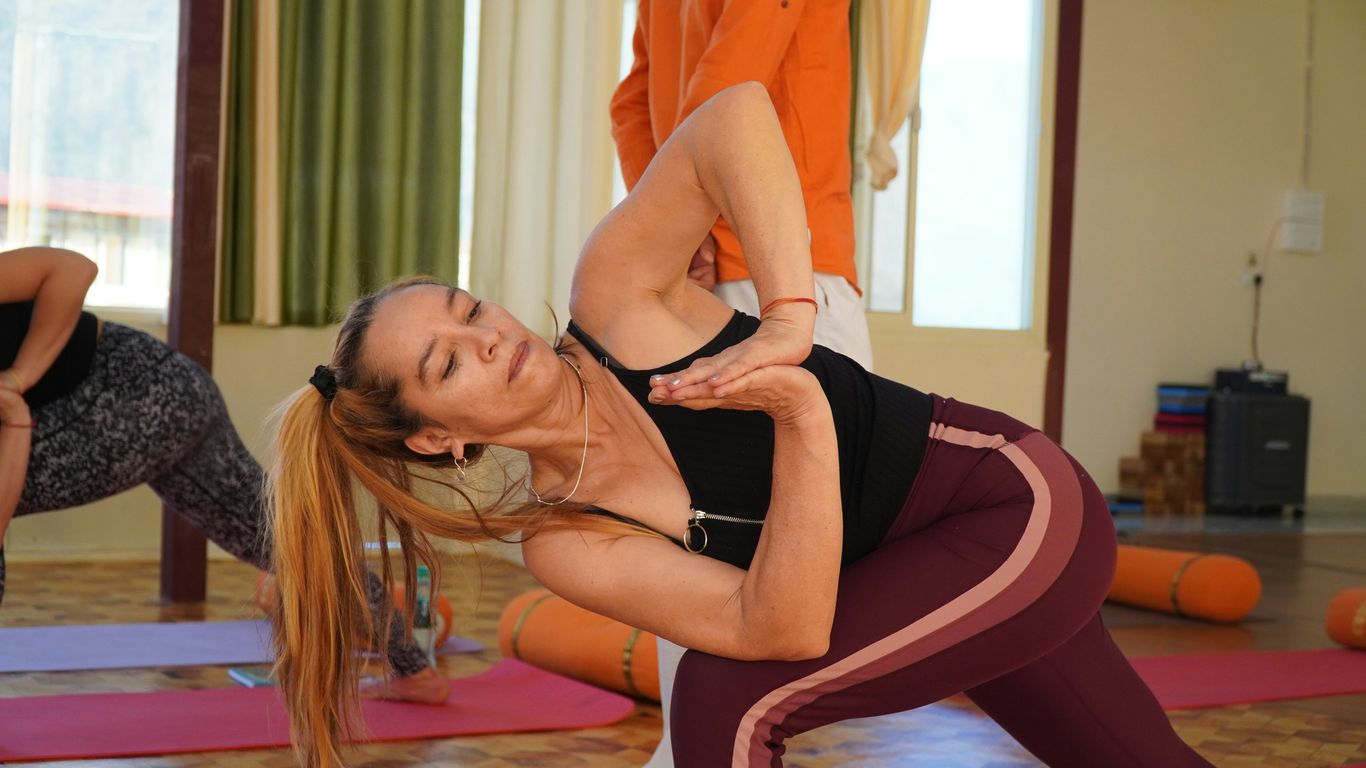
If you're already into Pilates or yoga, adding a yoga ball can really mix things up. It's not just for crunches, you know. This ball can actually help you get more out of your regular poses and movements, whether you're on the mat for a flow or working through a Pilates sequence.
Deepen Yoga Poses
Yoga balls can act like a supportive friend for some of those trickier poses. Think about using it to help you get a better stretch or to give you a little extra stability when you're trying to hold a balance pose. For example, lying over the ball can open up your chest and shoulders in a way that's hard to do on your own. It lets you ease into deeper stretches without pushing too hard.
Elevate Pilates Movements
In Pilates, the ball is fantastic for making your core work even harder. Exercises like the Hundred or leg circles get a serious upgrade when you're trying to stay steady on or with the ball. It forces those deep abdominal and back muscles to fire up more than they would on a flat surface. It’s also great for adding resistance or support to movements, making them more effective.
Improve Spinal Mobility
Sitting on the ball with your feet flat on the floor and gently twisting your torso side to side is a simple yet effective way to get your spine moving. This kind of gentle rotation can help loosen up stiffness and improve how your spine moves through its natural range. It’s a good way to warm up or cool down, or even just to break up long periods of sitting.
Here are a few ways to start incorporating it:
- Spinal Twists: Sit tall on the ball, feet grounded, and gently twist your upper body left and right. Keep your hips stable.
- Supported Bridge Pose: Lie on your back with your feet on the ball. Lift your hips off the floor, engaging your glutes and hamstrings. You can also try lifting one leg for an added challenge.
- Cat-Cow Stretch: Start on your hands and knees with the ball nearby. You can place your hands on the ball for a deeper stretch in your upper back and shoulders, or gently roll your spine over the ball in a "cow" position.
Using the ball in these routines isn't about making things impossible; it's about finding new ways to challenge your body and mind. It encourages you to be more aware of your movements and how your muscles are working together.
Beyond The Workout: Functional Benefits Of Yoga Balls
So, you've got this exercise ball, right? It might seem like just a big inflatable sphere, but it's actually a pretty neat tool that can help you out in ways you might not expect, even when you're not actively working out.
Improve Balance and Coordination
Ever feel a bit wobbly or uncoordinated? Using an exercise ball can actually help with that. When you're on the ball, your brain is constantly getting signals from your muscles about where your body is in space. This process, sometimes called proprioception, gets a good workout. You'll likely find yourself getting better at coordinating your movements, whether you're just standing up or doing something more involved. It's like giving your body a little tune-up for better control.
Increase Flexibility and Range of Motion
Don't just think of this ball for strength stuff. It's also a really good tool for stretching. You can lean into it to get a deeper stretch for your back, hips, and chest. Because the ball supports your body, you can often get into positions that feel more comfortable and allow you to move more freely than you might be able to on your own. It's a gentler way to explore how flexible you are.
Enhance Posture During Daily Activities
This is where the ball can really make a difference in your everyday life. Sitting on the ball, even for short periods, can help you sit up straighter. Your core muscles have to work a bit to keep you balanced, which naturally encourages better posture. Think about it: instead of slouching in a chair, you're subtly engaging your muscles. This can be especially helpful if you sit at a desk for long hours. Even just making small movements while sitting on the ball can help reduce stiffness.
Using the ball for short bursts throughout the day, like swapping out your desk chair for an hour or using it for a quick stretch break, can add up. It's about making fitness a natural part of your routine, not just an occasional event.
Here's a quick look at how the ball helps beyond structured exercise:
- Core Engagement: Your abdominal and back muscles work harder to keep you centered.
- Stabilizer Muscles: Smaller, often overlooked muscles get activated.
- Brain-Body Connection: Your awareness of where your body is in space sharpens.
The Science Behind Yoga Ball Effectiveness
The Power Of Instability
So, what makes a big inflatable ball so effective for your workout? It really comes down to instability. Unlike a solid floor or bench, a yoga ball is constantly shifting. This means your body can't just relax; it has to work overtime to keep you balanced. Think about doing a plank on the floor versus doing one with your forearms on the ball. Suddenly, your abs, back muscles, and even those smaller muscles deep inside have to fire up to keep you from wobbling. It's this constant micro-adjustment that builds serious strength and makes you more stable overall.
Neuromuscular System Activation
When you're on an unstable surface like a yoga ball, your brain gets a serious workout too. Your body is constantly sending signals about where it is in space, a process called proprioception. This gets a major boost when you're using the ball. You'll find yourself getting better at coordinating your movements, whether you're doing a simple squat or a more complex exercise. It's like giving your body a mini-reboot for better control and awareness.
- Core Engagement: Your abdominal and back muscles work harder to keep you centered.
- Stabilizer Muscles: Smaller, often overlooked muscles get activated.
- Proprioception Boost: Your brain-body connection sharpens.
Functional Movement Efficiency
Because the yoga ball forces your body to work harder to stabilize and coordinate across different planes of motion, it translates directly into better everyday movement. You're not just building isolated strength; you're improving how your body works as a whole. This means better balance, improved posture, and more efficient movement patterns that can help prevent injuries and make daily tasks feel easier.
The instability of the ball forces your body to constantly adjust, leading to better coordination and a stronger core without needing extra weights. It's a simple tool, but it really makes your muscles work in new ways.
Maximizing Your Yoga Ball Experience
So, you've got your yoga ball, and you're ready to get the most out of it. That's great! It's not just about picking one up and hoping for the best. A little bit of thought upfront can make a huge difference in how effective and safe your workouts are. Let's talk about making sure you're set up for success.
Proper Inflation For Safety
This is probably the most overlooked step, but it's super important. An underinflated ball is wobbly and less effective, while an overinflated one can be too stiff and even a bit dangerous. You want it firm, but with a little give when you press into it. The sweet spot is when your knees are at about a 90-degree angle when you're sitting on it with your feet flat on the floor. If you're using it for exercises, you want it to feel stable enough to support you but still provide that challenge. Too much air and it's like sitting on a rock; too little and it feels like a deflated balloon.
Here’s a quick guide to ball sizes based on your height, which also relates to how much air you'll need:
| Height Range | Recommended Ball Diameter |
|---|---|
| 4'11" - 5'6" | 55cm |
| 5'7" - 6'0" | 65cm |
| 6'1" - 6'5" | 75cm |
Remember, these are general guidelines. If you're unsure, it's often better to go with the slightly larger size, especially if you plan to use it for active sitting. You can always adjust the inflation level a bit to fine-tune the feel.
Utilize Included Workout Resources
Many yoga balls come with some sort of guide or access to online workouts. Don't just toss that booklet aside! These resources are put together by people who know how to use the ball effectively. They can give you ideas for exercises you might not have thought of and show you proper form. It's a good way to get started and make sure you're not just guessing. If you got a ball that came with a pump and a workout guide, definitely check it out. It can save you a lot of trial and error and help you get a better workout right from the start. You might even find some great stretches using an aerobic ball that you can incorporate into your routine.
Using the ball for more than just crunches is key. Think about how it can support your back during stretches or add a balance challenge to simple movements. The instability is the magic ingredient, so look for ways to introduce it into various exercises.
Incorporate Into Daily Routines
Don't let your yoga ball just collect dust between workouts. Think about how you can use it more often. For instance, if you work at a desk, try swapping your chair for the ball for an hour or two each day. This passive core engagement can really help your posture and reduce back strain over time. Even simple things like sitting on the ball while watching TV can help keep your core active. It's about making fitness a part of your everyday life, not just something you do for 30 minutes a few times a week. Small changes add up, and using the ball throughout your day is a simple way to boost your overall activity and body awareness.
Wrapping It Up
So, there you have it. The exercise ball isn't just some fancy piece of equipment; it's actually pretty useful for a lot of different things. Whether you're trying to get a better handle on your core strength, want to improve your posture while sitting at your desk, or just looking to add a bit more challenge to your regular workouts, this ball can do it. It's a simple tool, but it really makes your muscles work in new ways. Give it a try – you might be surprised at how much it can help you reach your fitness goals.
Frequently Asked Questions
What makes yoga balls so good for your core?
Imagine trying to balance on a wobbly surface! When you use a yoga ball, your tummy and back muscles have to work extra hard to keep you steady. This constant effort makes them stronger and helps you keep your body balanced better, not just during workouts but in everyday life too.
Can I really make regular exercises harder with a yoga ball?
Absolutely! Think about doing push-ups with your hands on the ball instead of the floor. Your arms and chest still work, but your core has to do way more to prevent you from tipping over. It's a simple way to level up exercises like squats, lunges, and planks without needing more weights.
How does a yoga ball help with flexibility?
The ball can act like a gentle support system for stretching. You can lean back on it to open up your chest or use it to help you get into deeper stretches for your back and hips. Since it supports some of your weight, you can often move more freely and comfortably.
Is a yoga ball good for improving balance?
Yes, it's fantastic for balance! When you're on the ball, your brain is constantly getting messages from your muscles about where your body is. This practice makes your brain and body work together better, so you'll feel more coordinated and less clumsy.
What's the most important thing to remember when using a yoga ball?
Make sure it's inflated correctly! If it's too soft or too hard, it won't work as well and could even be unsafe. Also, using it regularly, even for just a few minutes a day, is key to seeing real benefits for your strength and posture.
Can I use a yoga ball if I'm new to exercise?
Definitely! Yoga balls are great for beginners because they help you focus on form and engage muscles you might not normally feel. Many balls come with workout guides or videos to show you how to get started safely and effectively.

